Paddling for New Zealand: Liam McEwan and the Canoe Polo World Championships
Milson Rotary Club meeting, Monday 19 October 2026
Tonight we welcomed back Liam McEwan, the young Palmerston North paddler the club helped sponsor to the 2026 ICF Canoe Polo World Championships in Duisburg, Germany. Liam came home with a silver medal around his neck and plenty of stories, and he was kind enough to share both with us.
Meet Liam
Liam is 21, works as a joiner, and loves the outdoors. For the past year he has also been an operational volunteer with Land Search and Rescue, which he says is a great way to give back to the community. He picked up canoe polo at Palmerston North Boys' High School and is now in his tenth year in the sport.
This year he was one of just eight players selected for the New Zealand Under 21 men's team. Four of them are based here in Palmerston North, with the rest coming from Hawke's Bay, Auckland and Tauranga.
So what is canoe polo?
For anyone who hasn't seen it, think water polo played from kayaks, with paddles in hand. Teams have five players on the water and can substitute at any time. Goals hang two metres above the water, and each team has a 60 second shot clock to get a shot away. A player can only hold the ball for five seconds before passing, shooting or flicking it at least a metre ahead to dribble.
It is a physical game. Players can be tackled when they have the ball, and boats must come in at an angle rather than ramming side on at 90 degrees. Asked about injuries, Liam said he has been fairly lucky, though broken fingers, black nails and the odd knock to the head come with the territory. Face cages and regular rule changes have made the game much safer than it once was.
The road to Duisburg
Preparation started long before the team was named, with three national training camps beginning in late January and plenty of cold, dark winter sessions on the water at home. A typical day for Liam meant getting up at 4am, working from 6am until 4 or 5pm, then heading to training.
The squad arrived in Europe about three weeks before the championships to get used to conditions and the European style of play. They played a warm up tournament in Belgium, spent time in the Netherlands and France, and trained alongside German teams. Germany has long been the powerhouse of the sport, so that was a valuable experience.
There was time for sightseeing too. Liam described visits to castles, cathedrals and churches, and some deeply moving wartime sites, including memorials to the Battle of Arnhem and old German bunkers. He said you know the history, but walking past those photographs brings it right home.
The tournament
Games are 20 minutes of all out effort. New Zealand opened in a pool including Spain, Switzerland and China. A 4 to 2 loss to Switzerland stung, especially under a new format where results carried forward into the second pool stage. Even so, the team made the top 12 and kept building, including a strong 3 to 1 win over Poland.
The semi final was the highlight. Against the tournament favourites it finished 3 all, sending the game into golden goal overtime, where the first team to score wins. New Zealand won the sprint for the ball and found the net within seconds. Liam was wide open under the goal calling for the pass, and laughed that his teammates had other ideas, but nobody was complaining about the result.
That win put a New Zealand Under 21 men's team into a world championship final for the first time. France proved too strong on the day, but the team came home with a historic silver medal. Liam said facing a haka from the rest of the New Zealand contingent before the final was a surreal moment he won't forget.
"It's 20 minutes, it's all out. Being able to make a decision, deal with it, and reset yourself after a bad pass is everything."
What he brought home
Beyond the medal, Liam valued seeing how European and Asian teams each play their own style. He also coaches, and is keen to bring those ideas back to help develop younger players here. He spoke too about mental strength, resilience and thinking on the fly, because however well you plan, the game never goes quite the same way twice.
The local club has worked hard over the past five years to get juniors involved, with kids starting as young as about nine. The only real entry requirement is being able to swim, so anyone curious is welcome to head down and give it a go.
Thank you from Liam
The four week tour was entirely self funded, costing each player around $13,000 to $14,000, with very little support from government or other sources. Liam thanked Milson Rotary warmly for its sponsorship, saying it meant fewer hours at work and more time training. He said he is very grateful to have his community backing him.
We're proud to have played a small part in a historic result. Congratulations Liam, and thank you for a great evening.
Christine Archer-Lockwood on singing your way to better breathing
Music therapist Christine Archer-Lockwood joined us to talk about Sing Your Lungs Out, known to its members as SYLO, a weekly singing group for people living with chronic lung conditions. She brought along two of her members, who shared stories that had the whole room listening closely.
Christine said it felt special to be with us, as walking in brought back memories of her late parents.
A Palmy girl comes home
Christine was born and raised in Palmerston North. She left school to follow her love of music, heading to London to train and study, and ended up spending some 43 years away. She returned to New Zealand in 2017, first to Wellington, but when her parents' health began to fail she came home to Palmy and set up here.
Where the idea came from
The idea of singing for lung health was already well established in England. A friend of Christine's, a fellow musician who is also a respiratory physician, set up the first Sing Your Lungs Out group in Wellington and researched it from the very beginning. Her findings were published in a British medical journal.
Christine was quick to make it clear that singing doesn't cure anything. Members still live with their lung conditions. But regular sessions help people manage their breathing much better, and the feel-good factor turned out to be huge. Participants reported things like getting through a winter without a hospital admission, or being able to cut back on medication.
There are now groups in Wellington Central, Wairarapa, Nelson and Palmerston North, where the local group has been running for nine years.
Why singing works
Most of us breathe without thinking about it, but not always well. Christine explained that many people breathe high in the upper chest rather than using the diaphragm the way we all did as babies. For people with lung conditions, the focus tends to be on getting air in, because that's where the anxiety sits.
The trick is actually to breathe out slowly. Relax at the end of the out-breath, and the air fills back in naturally through the nose, without you having to tell yourself to do it. And since you can only sing on the out-breath, singing becomes a far more enjoyable way to practise than counting slowly to ten. Christine chooses songs with an easy pace and enough space between lines for a comfortable refill.
"It's not about the singing. That just happens, and I can guarantee we'll find a song that you enjoy singing."
Christine Archer-Lockwood
Inside a session
The Palmerston North group meets weekly at the Learning Centre and is timed to follow an existing walking exercise group, so members don't have to go home and come out again. Getting out the door takes real effort for many of them. When Christine first spoke to the walkers, some told her they could hardly talk, let alone sing. She told them to just come along.
Each session opens with a picture on the screen, often a piece of New Zealand art or a photo of one of Palmy's public sculptures. Members trace its outline with long, slow breaths to settle in. Then it's on to the songs.
Christine picked the songs at first, but the group soon took over. Many members grew up on country music and have been teaching her some great songs. They sing Creedence Clearwater Revival and Crowded House, and they keep an eye on what's happening around the city, recently tackling numbers from 42nd Street. The members have become discerning too, telling Christine when a song's range is too big to sing comfortably. Without ever being taught, the group now drifts naturally into harmony.
The music has a proper rhythm section behind it. Christine leads from the keyboard, her partner plays bass, and pianist Chris Dan joins them for community events. Afterwards there's a cup of tea and plenty of chat about songs, singers and who's who, with lots of laughter.
From the back seat to the stage
Christine originally insisted SYLO was not a performance group. Then the members asked to perform. Each year they now sing a half-hour lunchtime concert at St Peter's Church, and they've been invited to sing at other venues around the city. The pride they take in those outings is plain to see.
Member Fay told us it was the first time in her life she had spoken to a group. She had always loved singing but had to give up singing in church because she would start coughing and couldn't stop. Her healthcare worker suggested SYLO, and after the first session she was hooked. Once the quiet one in the back seat, she now sings in public, and when family suggest she skip a session, the answer is simple: sorry, I've got singing.
Arne grew up in a big family that sang constantly. He learned harmony at the kitchen sink, stuffing a tea towel in one ear so his older sister's harmony line wasn't drowned out by the others singing the tune. Years of heavy smoking took their toll, and by the time he quit, climbing stairs meant three steps and a rest. About nine years ago, he heard singing coming from the room next door. Back then he could manage only two or three words before needing a breath. Today he sings long phrases with ease. He told us, with real emotion, that he doesn't know whether he would still be here without the group.
Keeping it going
Around 18 to 22 people come each week, with about 30 on the books. Some members have passed away, and Christine makes a point of honouring them and remembering how much they loved the sessions. One long-standing member recently messaged her from a hospital bed to say she was lying there doing the breathing exercises. For Christine, that's the real win: people taking what they learn home with them, especially for those anxious moments waking in the night.
Funding remains a struggle. For the first two years, Christine donated her time and paid the room hire herself. Grants have covered a projector; a keyboard was donated, and a one-off health grant of $3,000 helped for a year but wasn't renewed. Today a koha bucket goes around each week. Running the group costs roughly $5,000 a year, covering about $1,000 in room hire and a modest fee for Christine's sessions, plus all her preparation time.
New members come through doctors, flyers and word of mouth. The group is kept for people with respiratory conditions, so everyone can feel comfortable with their glass of water, take their time, and never feel embarrassed about a cough.
Christine warmly invited club members to sit in on a session and see SYLO in action. If you know someone who might benefit but is convinced they can't sing, pass this on.
Thanks to Christine, Fay, and Arne for a moving and uplifting evening.
At Monday night's club gathering, we had the great pleasure of recognising two remarkable Milson Rotary Club members, Glen Caves and Mark Fearon, who have each given more than 50 years of service to Rotary and our community.
That's over a century of combined dedication: countless projects, fundraisers and helping hands, all driven by Rotary's spirit of Service Above Self.
Glen and Mark, thank you for everything you've given. Your commitment has made a lasting difference, and you continue to inspire us all. 👏
Dr Karleen Edward and John Fowke on MASH Trust and the quiet work of looking after people
This week we welcomed John Fowke, board chair of MASH Trust, and Dr Karleen Edward, the trust's chief executive, who between them gave us an excellent overview of an organisation many of us drive past every week without quite realising how big it has become.
MASH began in 1989, and the origin story is a good one. Three rather bossy ladies, as they were fondly described, decided something had to be done for vulnerable people being displaced from the old Railway Hostel, so they set about finding them housing. From that very modest beginning, MASH has grown into one of the major social support providers in the lower North Island, with around 600 staff and 1,900 clients.
From institutions to person centred care
John and Karleen traced the journey from the closure of the big institutions such as Lake Alice and Kimberley through to the modern, person centred model of support we have today. It is a shift from housing people in large facilities to supporting them as individuals, in homes and communities, with the help they actually need.
MASH now runs 28 disability homes and 23 mental health residential homes, alongside extensive community support services and day programmes. It also delivers the Monarch addiction recovery programme, which has been notably successful. When funders suggested the programme be shortened, MASH declined, because the ten week model is the thing that makes it work.
They do currently about 40 to 50 free breakfasts a day.
Luck, the drop in centre in Berryman's Lane
One of the most engaging parts of the talk was the description of Luck, a drop in centre tucked away in Berryman's Lane that many people in town would not know is there. It offers showers, donated clothing, meals and, just as importantly, somewhere to sit and be among others. It now has around 800 regular users, and serves roughly 40 to 50 free breakfasts every day.
Demand has surged, with a 31 percent increase in the number of people facing food or housing insecurity. Funding for Luck is limited, but MASH keeps it running because the need is simply too great to walk away from.
Respite care and living independently
MASH also runs a child and youth respite service, the only one of its kind in the southern North Island. Alongside that is a growing shift towards supported independent living, where people stay in their own homes with support tailored around them rather than moving into a facility.
The relief this brings families is considerable. One group told MASH it was the first time in 40 years that they had been able to take a holiday without worrying.
A place where people can tell their story once, and then get the help they need.
A Health and Wellbeing Hub
Looking ahead, Karleen outlined an ambitious vision for a Health and Wellbeing Hub, a one stop community space where someone can tell their story once and receive coordinated support rather than being sent from door to door. With rising rents, overcrowding, and thousands of Palmerston North residents not enrolled with a GP, the case for it is easy to see.
The model has already been proven in Christchurch, where it has reduced duplication and lowered costs for providers, while giving vulnerable people dignified and straightforward access to help.
Thinking ahead on housing
John and Karleen also shared some future housing ideas, including clusters of small self contained units laid out rather like the old motels. The appeal is that residents get their own front door and a real sense of independence and pride, while support staff can look after a group of people efficiently in one place.
Between them, John and Karleen painted a picture of an organisation quietly doing extraordinary work. It is practical, compassionate, and deeply embedded in our community. Their message was a simple one. The need is growing, but so is their determination to meet it.
Our thanks to John and Karleen for a genuinely eye opening morning. You can find out more at www.mashtrust.org.nz.
Milson Rotary Club, Palmerston North Bulletin Editor: Bruce Manninen
Kiara Taylor on rain, revenge playlists, and rethinking her future
On 8 September 2026, Milson Rotary was treated to a delightful and thoroughly entertaining report from Kiara Taylor, the student we sponsored to attend the 2026 Innovative Young Minds programme, known to everyone as IYM.
Kiara began by cheerfully admitting she is "not great at speaking in front of people," but from the moment she started, she had the room smiling. She had the club in stitches describing the week's weather, which she summed up as terrible, raining, then not raining for a second, then raining again. The group spent plenty of time outdoors, often soaked through, but always laughing.
New horizons open up
One of the most charming parts of Kiara's talk was hearing how much the programme broadened her thinking. She had arrived at IYM planning to pursue dentistry, but after meeting a week's worth of passionate mentors and peers, she is now considering environmental engineering instead, especially once she learned it involves telling people whether their building is environmentally friendly.
I get to boss people around!
Friendships, Parliament, and the Baby Shark revenge
Kiara spoke warmly about the friendships she formed over the week and the lively visit to Parliament, one of the programme highlights. She also told the story of the infamous 6am wake up calls, with Baby Shark blasted through the dorms every morning without fail. Her group eventually staged a hilarious revenge mission of their own, armed with the most annoying music they could find.
Kiara's enthusiasm, humour and gratitude made her presentation a genuine joy to hear. She thanked members warmly for sponsoring her, and it is clear the IYM experience has sparked new confidence and curiosity about her future path.
You can find out more about the programme at www.iym.org.nz.
Monday 17 August 2026 | Mayor Grant Smith, Steve Maharey and Chris Dyhrberg, Central Districts Water
Three visitors came to the club this week with one shared message: the way water services are run in this part of the country is about to change. Mayor Grant Smith opened proceedings with a nod to the wavy tablecloth standing in for a projector screen, saying it was rather appropriate given the topic, and a fair sign of how lean the new organisation intends to be.
Who is Central Districts Water?
Central Districts Water is a new water services organisation owned by three councils: Palmerston North City Council, Horowhenua District Council and Rangitīkei District Council. An iwi advisory group sits alongside the board, representing Rangitāne along with a number of other iwi across the wider region.
The board was appointed roughly three months ago and is chaired by Steve Maharey. Chris Dyhrberg, who has spent a number of years at Palmerston North City Council, has recently been appointed chief executive. The organisation will look after all three waters, meaning drinking water, wastewater and stormwater, from around Tāihape in the north down towards Ōtaki in the south.
Steve began his part of the evening with a story about a rural fire brigade that smashed through fences, drove straight into the middle of a burning paddock and put the fire out. Presented with a reward for their bravery, the fire chief was asked what they would spend it on. Brakes, he said.
Not until 1 July next year
One point was made very firmly, and it is worth repeating. Central Districts Water does not take over operations until 1 July next year. Until then, water services remain entirely with the councils, and any faults, leaks or questions should still go to your local council in the usual way. Between now and then the new team is essentially a start up, employing staff, taking over assets and getting the systems in place.
Steve was also clear that this is not privatisation. The company is owned by the three councils, which in turn are owned by the ratepayers who elect them. There is no provision in the legislation for private ownership and no party proposing it, and he said personally he would regard any move out of public ownership as a very poor step.
Why the change is happening
Three pressures are driving the reform. The first is ageing infrastructure that has not been renewed as quickly as it should have been, despite councils in this region working hard to keep up. The second is a steadily rising bar of regulation, which requires an organisation with the depth to cope with it. The third is growth. Horowhenua is the fastest growing part of the new organisation at somewhere around three percent a year, while Palmerston North sits closer to one percent, although anyone driving out towards Prospect Avenue and beyond would be forgiven for thinking otherwise.
Scale is the key to making it work, Steve said, and not simply for the sake of being bigger. The right scale lets the organisation pool resources, share expertise and, most importantly, borrow over long periods at lower interest rates. Water assets last for decades, and the cost of them is spread across the generations who use them rather than paid for on day one.
"On day one we do not think anybody will notice much. The tap will run and the toilet will flush just as normal. What we hope is that in time people will say a difference has been made here."
Steve Maharey, Chair, Central Districts Water
The size of the job
The investment programme sits at around $1.4 billion over the next decade, most of it going into renewing and upgrading existing assets rather than building new ones. Those are sobering numbers for communities of this size, particularly in Rangitīkei, where roughly 12,500 people are spread across a very large area.
Council spending on water has tended to be lumpy, with a great deal in one year and very little the next. Smoothing that out over time is one of the things the new organisation is designed to do, which should also help to smooth what households eventually pay. Grant Smith noted that Palmerston North has quietly put a very large sum into underground renewals over the past four years, work that rarely wins any praise. You never get votes for anything under the ground, he said, though shiny things above it are another matter.
People and training
Chris Dyhrberg explained that the organisation will eventually employ around 250 people. Under the legislation, the three councils identify the staff who work predominantly on water and, after consultation, transfer them across. Perhaps two thirds of the workforce will arrive that way, with the remaining roles advertised. Depot teams in Marton, Tāihape, Bulls and Foxton will keep working in their own communities, because they know those networks better than anyone.
Workforce shortages across the water sector are significant, and in answer to a question from the floor about apprenticeships, Chris said graduate and cadet schemes are firmly on the agenda. Palmerston North already runs a small trainee pipeline, and having a bit of scale makes such programmes far more achievable than they are for a small council on its own. Grant added that in a combined water organisation people can become genuine specialists, rather than splitting their week between roading, parks and a bit of water.
What it will mean for your bill
Nobody was promising cheaper water. Prices are rising and will keep rising for a while yet. What the panel did say is that their projections show costs levelling off rather than climbing steeply, and becoming more affordable over time. Doing nothing was never the cheaper option.
Charging will be based on connections, so households on their own tank and septic system will not be billed for services they do not receive. Stormwater is more complicated, since a whole town can benefit from a network whether or not a particular property is connected to it. Water meters are gradually going in across the region, moving charging towards a user pays basis. Charges across the three districts will be harmonised, but gradually, because doing it overnight would create clear winners and losers.
A member pressed the panel on how they will convince ratepayers that rising bills are not simply the new organisation's doing. Steve agreed it is the central communication challenge, and said the team is already working on it. He pointed to Wellington and Hamilton as cautionary examples, including a water bill and a rates bill that arrived separately and left people baffled. The aim is that by 1 July next year people know the organisation exists, understand the problems it was set up to solve, and can see what it is trying to do.
Questions from the floor
Members raised road cones and the cost of traffic management, with one member observing that Australia manages similar health and safety outcomes far more efficiently. Grant did not disagree. Another question asked whether the plans allow for a changing climate and more extreme weather. The answer was that regional flood protection and river management matter enormously to this work, and that no district can afford to stand outside the network, given that the Manawatū catchment stretches from the ranges all the way out to the coast.
The panel finished with a request. They are touring the region this year ahead of consultation on their water services strategy, and they asked members to pass on what they had heard. Tell three people, Steve suggested, and ask them to do the same.
Our thanks to Mayor Grant Smith, Steve Maharey and Chris Dyhrberg for a frank and genuinely useful evening on a subject that affects every household in the region, whether or not we think about it when we turn on the tap.
Milson Rotary Club, Palmerston North | Meeting report, Monday 17 August 2026
Josh gave a warm, confident account of his rapid rise through the refereeing ranks in Touch. Already New Zealand’s top youth referee, he was one of just 15 officials selected for the Asia Pacific Open Touch Cup in Mudgee, Australia, and the youngest referee there at only 17.
Growing up in a family deeply involved in the sport, Josh spent summers at local modules in Palmerston North, learning the game from the sideline before realising he was “a better ref than player.” His international debut was a milestone—made even more special when his father, Touch NZ’s High Performance Director of Referees, presented him with his blazer.
Josh spoke about the steep learning curve of officiating alongside world‑class referees and managing adult players as a teenager. Highlights included refereeing a major Open Mixed semi‑final (NZ vs Philippines), usually reserved for the world’s elite. The experience boosted his confidence, resilience, and communication skills.
He hopes to build on this momentum, aiming for the Asia Pacific Youth Touch Cup, national finals, and ultimately the 2028 World Cup in New Zealand and the 2032 World Cup aligned with the Olympics. He also wants to mentor younger referees so they can progress earlier than he did.
Josh closed by thanking Rotary for helping make his international debut possible—support he says he’ll never forget.
Guest Speaker: Steven Deans, Head Coach, New Zealand U23 Men's Softball Team. Meeting of Monday 20 July 2026
This week the club welcomed Steven Deans, head coach of the New Zealand Under 23 Men's Softball Team, who took members on a journey from local diamonds to armed escorts in Colombia, and shared his passion for keeping young people in sport.
Steven is a local through and through. He grew up in Palmerston North playing softball and rugby in the winter and cricket in the summer, like so many of his generation. When his playing days wound down, he looked at how he could stay involved. Umpiring did not appeal and administration held no attraction, so he chose what he cheerfully called the easier option: coaching. His first appointment was with the Manawatu Under 15s, and he has been learning ever since. Away from the diamond, Steven bought his business around 15 years ago from Steve Lange, a very successful local businessman, and carried on the customer service focused approach that had made it thrive. As a business owner as well as a coach, he sees little difference between the two worlds. Both are about motivating people and creating an environment where they want to be the best version of themselves. Get that secret sauce right, he told us, and you are probably onto a winner.
Hutt Valley, Denmark and the U23s
To test himself at the highest level, Steven shifted to Hutt Valley, where he played senior softball alongside some of the best in the game. He was honest about his own playing ceiling. He was never quite good enough to be a Black Sox, but he learned an enormous amount from the world class players around him, among them the legendary Mark Sorenson, regarded in his day as the best player in the world, and those lessons carried into his coaching.
While coaching Hutt Valley he took on a couple of Danish players, and that connection led to an unexpected chapter: he interviewed for and won the head coaching role with Denmark, moving overseas to lead them through two international series, mainly against China. In 2017 he was appointed coach of the New Zealand Under 23 men, a role he has held ever since. The team's first World Cup was in Argentina in 2021, and just three months ago they competed at the latest edition in Colombia.
The Colombia Campaign
Not knowing quite what to expect in Colombia, the team based its preparation in the more familiar surrounds of Houston, Texas, where locals helped with training and warm up games in 35 degree heat. Along the way the squad visited schools to share New Zealand culture. The haka, the singing and the dancing all went down a treat, although Steven noted with a laugh that what the students really wanted to talk about wasThe Lord of the Rings.
Colombia itself made a deep impression. The team had armed guards around the clock, police escorts of six or seven officers whenever they went out, and further layers of security at the venues. Yet Steven said he never once felt unsafe, and the Colombian passion for sport was extraordinary, with crowds of up to 10,000 turning out for night games.
On the field, the young Black Sox did New Zealand proud. They qualified for the medal rounds, beat Mexico during the tournament, then lost the bronze medal game to the same side by a single run. They also fell to eventual champions Japan by just one run, finishing fourth overall behind Japan, Australia and Mexico. Around half the touring party had parents or family in the stands, a reminder of how much these campaigns mean to softball households.
"I will do anything we can to ease that burden, so they can come out and pick up a bat or a ball."
The Real Cost of the Fern
A sobering thread ran through the talk: money. Every national campaign costs each young athlete around $10,000 to $12,000, and a full team trip can be a $200,000 fundraising exercise. Families with several children in the sport feel it hardest, and Steven confirmed that finances have forced players out of teams. Ahead of one World Cup, three players withdrew simply because they could not afford to go.
High performance funding is tied tightly to results. When the Black Sox, proud seven time world champions, finished eighth at the 2022 World Cup in Auckland, their Sport NZ funding was cut. A silver medal in Canada last year, a campaign Steven was part of, restored both confidence and support. Even so, around $300,000 across a four year cycle does not stretch far. The next journey begins with qualifiers in Christchurch next year.
Steven also touched on the pathways question. Young women now have real opportunities through softball scholarships at American colleges, gaining an education and life experience along the way. The men have no equivalent, beyond a short professional league in the United States where the top players, including three New Zealanders, can earn around $30,000 over two months.
Why It Matters
For all the World Cups and medal games, what animates Steven most is participation. Sport, he argued, teaches resilience, and he worries that young people who are not involved in team sport miss out on that. With participation numbers falling across many codes, his message was simple: it matters less which sport young people choose than that they get out and play something. His job, as he sees it, is to remove every possible barrier standing between a young person and the game.
A lively question and answer session followed, and members thanked Steven warmly for a generous and eye opening insight into life at the top of amateur sport.
Milson Rotary Club, Palmerston North. Read more club news at our website and follow us on Facebook.
Guest Speaker: Bobbie O'Fee Central Economic Development Agency (CEDA)
Championing the Manawatu region's growth, connections and opportunity
Milson Rotary welcomed back Bobbie O'Fee, a former club member who now serves as current chairperson (Heamana) of the Central Economic Development Agency (CEDA). Bobbie opened with a laugh, admitting that explaining CEDA's work can be a tough sell, joking that some people would rather hear about the sex life of a frog than sit through an economic development talk. From there, though, she made a strong case for why the agency's work matters so much to the region.
CEDA was formed when two earlier organisations were merged, and it now answers to two shareholders, the Manawatu District Council (MDC) and the Palmerston North City Council (PNCC). Bobbie explained that this creates an interesting governance challenge, since funding is not split evenly and every major decision has to pass through two separate council processes, sometimes weeks apart. If one council says no, she said, it is back to the drawing board.
Bobbie joined the CEDA board in 2019, just before COVID hit, and found herself helping frightened local businesses navigate lockdowns almost immediately. That early support work has grown into an ongoing programme, the Regional Business Partners scheme, which helps more than 400 businesses a year with everything from cash flow basics to HR and marketing support.
A Region Built on Balance
CEDA's vision for 2030 is for the region to become New Zealand's most progressive, built on three pillars, an exceptional lifestyle, competitive advantage, and standing as a magnet for investment, talent and visitors. Bobbie noted the region's economy is unusually balanced, roughly a third government spending, a third farming, and a third business and manufacturing, which helps it stay steady through tough times.
The Ring Road and the Distribution Hub
One of the biggest pieces of news Bobbie shared was that, just weeks earlier, the region secured 22.5 million dollars in government funding to progress the long awaited ring road, part of a project expected to bring billions of dollars in benefit over the next 20 years. She pointed to the growing distribution hub near the airport, already home to around 90 businesses, including a major Foodstuffs expansion that will make it the largest distribution facility in New Zealand. Ports as far afield as Tauranga and Wellington have also approached CEDA about partnering, keen to tap into the region's rail and road connections.
"It is actually more affordable to have your distribution warehouses here and transport goods to Auckland, than it is to be based in Auckland and pay Auckland prices."
People, Place and Business
Bobbie described CEDA's work as three interlinked pillars, people, place and business, each strengthening the others. She noted the Central North Island region generates 22.4 percent of New Zealand's GDP, prompting her CEO's regular joke that this is bigger than the South Island, so where is the Minister for the Central North Island? Living at Himatangi Beach herself, Bobbie said she loves that CEDA's work spans the whole wider Manawatu, from the Coastal Arts Trail and Manawatu Garden Festival to Manfeild, Tech Week and careers expos for young people.
Telling the Region's Story
CEDA also works to attract people and investment to the region, including helping local employers such as the hospital promote the area to prospective overseas staff. Last year the region was invited to TRENZ, New Zealand's major tourism trade event, for the first time, taking 15 tourism packages to market. This year, with a return invitation, CEDA held more than 60 meetings with people interested in what the region has to offer, from farm stays to bike trails and walking bridges.
Bobbie closed by reflecting on the mixed mood of the past few years, with COVID, global conflict, rising costs and the upcoming election all adding to uncertainty for many locals. She recalled the community's strong reaction when Toyota's future in the region was in question, a reminder of how deeply felt business losses can be here. But she balanced this with optimism, noting growing interest from Australians keen to relocate for the lifestyle and opportunity the region offers, even at a lower salary.
Milson Rotary thanked Bobbie for a candid and wide ranging look at the work being done behind the scenes to grow and connect the Manawatu region.
Andrew Sievwright on Moving Day and what it really takes to shift a farm
On Monday 22nd June 2026 Milson Rotary Club member Andrew, gave us a wonderful behind the scenes look at Moving Day, the first of June, when thousands of dairy farmers, sharemilkers, staff and whole herds across New Zealand shift to new farms for the start of the dairy season. It is the industry's big annual relocation of people, cows and equipment, and Andrew had a front row seat, because his son Jacob was right in the middle of it. As Andrew put it, it makes buying, selling and moving house feel like nothing at all.
A big step up
Jacob had been a farm manager near Opunake, running 100 hectares and 330 cows largely on his own with his wife Katie. This season he decided to bite the bullet, buy his own herd and move to a 50 50 sharemilking arrangement on a much bigger property at Hawera, about half an hour away. The new farm is 300 hectares and will carry around 550 cows, a big enough jump that he has taken on his first full time staff member, and Andrew reckons he may well need another pair of hands before long.
When Jacob told the owner of the Opunake farm what he was planning, the owner, an 85 year old retiree in Christchurch with a serious golf habit and a simulator in his garage, decided to sell up. So the first of June brought a new buyer, a new manager, the old herd leaving and a new herd arriving, all on the same day. There was even a bit of friendly negotiation over how much grass should be left for the incoming cows while the old cows still needed feeding.
It makes buying and selling a house and moving into a new one feel like nothing.
Moving a whole farm
Andrew and Lian went over to lend a hand, which mostly meant looking after Jacob's little one, now almost six months old, so the parents could get stuck in. Jacob was lucky enough to get into the new house two days early, which gave them a bit of breathing room. From there he made around five round trips in his tractor, roughly two hours each way, hauling implements, trailers, calf feeders, fencing material, feed and silage, and an unbelievable amount of tools. As Andrew said, the sheer volume of gear on a farm has to be seen to be believed.
At the other end it was just as hectic, with the outgoing worker moving out and the new one moving in on the same single day, trailers and gear everywhere. The two day head start was a real blessing.
A very different patch of dirt
The old farm was flat. The new one is hilly as anything, and some paddocks cannot even be reached by vehicle, so Jacob may end up doing parts of it on foot with a dog. The terrain alone changed how he gets around. He has three quad bikes plus a two wheeler, the latter because the cowshed sits a full kilometre from the house, so he can run up and down, dump the bike on the race and walk from there.
Building the herd
Jacob bought 180 cows from the herd already on the farm, then sourced another 180 to 200 from Dargaville, driving up twice to inspect them in person before buying. He chose Dargaville stock deliberately, because those cows were used to hill country and would cope with the new terrain, including the long walk to the shed, with the furthest paddock about three kilometres from the milking shed.
The Dargaville cows arrived on the night of the first in four truck and trailer units, after standing on the trucks for eleven hours. Andrew said it was not a pretty sight as they came off, giddy and unsteady on their feet, and even Jacob found it hard to watch. Each cow was drenched as it came off, at the owner's request, just to be safe. Another 170 or so arrived the next day from a couple of places around Taranaki, bringing the herd up to 550.
Settling in
The weeks since have been a blur of renumbering the whole herd, reorganising and roping off paddocks, and sorting out power and water issues he had not expected. There are still boxes and boxes stacked in the garage waiting to be unpacked, so Andrew and Lian expect to head back over soon, if only to mind the baby while Jacob and Katie put in their twelve hour days. Sadly there has already been one loss, a cow that slipped off the race and rolled down the hill and had to be put down. As Andrew said, to lose only one in all of that is doing well.
Our thanks to Andrew for such a vivid, honest account of what Moving Day really involves. It gave us all a fresh appreciation for the people, the planning and the sheer hard graft behind the start of every dairy season. We wish Jacob, Katie and the family all the best on the new farm.
Milson Rotary Club, Palmerston North
Moving Day and what it really takes to shift a farm
Raewyn Marshall on Kind Hearts and the simple business of being kind
On Monday 22nd June 2026 we were treated to a warm and very funny talk from Raewyn Marshall, who came along with her good friend Robin, the board chairperson of Kind Hearts. The two of them have been friends for the best part of fifty years, and that easy partnership came through in everything they shared. Raewyn has spent ten years working in schools for Kind Hearts, and her message was a beautifully simple one. Kindness is free, it bounces back, and we could all do with a bit more of it.
She did warn us, with a story, that kindness can be a little dicey. On a bus from Kelvin Grove she watched an elderly lady hand the driver handful after handful of peanuts. He was very touched, until he asked why she kept giving them away. Her answer was that she had no teeth and could not chew them, but she did love the chocolate on the outside. So with that lesson safely behind us, Raewyn told us what Kind Hearts is really about.
Where it all began
Kind Hearts started in 2014 when a local woman, Lee Woznoski, set out to spread random acts of kindness around town. She would leave money on windscreens for parking meters and began taking baking and other goods up to the hospital. Her vision was a kinder world, and the trust has carried that on ever since. Today it is a small Manawatu trust with around twenty five to thirty volunteers, proudly local to Palmerston North and Fielding, and running three main initiatives along with a newer one that is just taking off.
Kindness is one of the few free things in the world. Give it out and it usually bounces back to you.
Kind Hearts for Parents
Twice a week, volunteers deliver fresh baking, toiletries and sanitary items to the neonatal ward and the parents room at the hospital. As Raewyn put it, when you rush in with a sick child you do not stop to pick anything up, and these are the small necessities that make a hard day a little easier. The baking comes from some wonderful supporters. Jacko's bakes every Tuesday, and the new owners have happily kept that going. The Good Bitches Bakers bake every week, and this year some pupils at Intermediate Normal have been baking as part of the William Pike Challenge. The trust has also refurbished the parents room with new carpet, paint and furniture, and given a little room beside the neonatal ward a freshen up so parents have somewhere quiet to escape to.
Local businesses can get involved too. Kind Hearts takes on a business partner for a month, shares some resources, and the staff get to practise a few acts of kindness and donate items for the hospital deliveries. As Raewyn said, you do not have to give money, you just have to be kind for a month and collect a few things.
Kind Hearts and Coffee
Around a dozen cafes across town take part in a pay it forward scheme. You buy your own coffee and pay for another one, and a staff member passes that free coffee on to someone else later. You never know who gets it, and that is rather the point. It is enough to know you have quietly made a stranger's day. The cafes are marked on a map on the Kind Hearts website, and a volunteer pops around regularly to keep in touch with them. When she recently asked whether they wanted to keep going, even with the cost of coffee climbing, every one of them said yes.
Kind Hearts in Education
This is the part Raewyn has led for ten years, and it is clearly close to her heart. The work is about helping students have fun with kindness, encouraging them to be kind to others and to themselves, and showing them that kindness usually comes back around. As a nation, she said, we are not always good at giving or receiving. Someone compliments our jacket and we tend to brush it off rather than simply saying thank you. Kind Hearts wants children to learn that kindness should be simple, made up of smiles, small gestures, good old fashioned manners and a bit of respect.
Importantly, this cannot be taught as a tick box lesson. Raewyn and Robin, both former school principals, talked about helping teachers build a culture where kindness feels natural. Over the years they have refined a whole set of resources, including a preschool pack and their own picture book about kindness heroes. The book has no faces in the pictures, partly because their illustrator friend did not want to draw them, but it turned out to be perfect, because the children realise the heroes could be any of them.
No child chooses their parents, and no child chooses what shapes them in their first five years. With a little support and a lot of kindness, a great deal can change.
A big part of the work is teaching children to be kind to themselves, to have a supportive inner voice rather than an angry one. Anger is a natural feeling, but the children are encouraged to notice it and choose something helpful instead, whether that is a short walk, a book, or five quiet minutes, rather than lashing out. The trust currently works in around thirty schools and twenty preschools, with Raewyn and two helpers visiting the schools.
Every year Kind Hearts runs a big event for children from those schools. This August, around twelve hundred children will come across two days, in groups of about three hundred at a time. As well as celebrating kindness, the days give local children the chance to hear some well known New Zealanders share their stories. Past guests have included Suzy Cato and comedian Karen O'Leary, and this year the mountaineer William Pike is coming along.
The kindness benches
The newest project is a set of bright red kindness benches, lovingly made by the Men's Shed and placed in schools as a spot to sit, chat and share with a friend. Each one carries a kindness quote on the back. The council has put a couple into local reserves, and the trust would love to see one in every school in Palmerston North. A few are already in place, with more on the way.
How we can all help
Raewyn was clear that helping does not have to mean money. You can pay it forward at a cafe, collect items for the hospital deliveries, or sponsor resources or a bench into a school you care about. Donations towards running costs are always welcome too, as the trust now has a small office in Rangitikei Street and a part time office person, which means a fair bit needs to be raised before anything else happens. Most of all, she left us with a simple challenge. Make someone's day every day with one small random act of kindness, and watch it work wonders for everyone.
Our thanks to Raewyn and Robin for a talk that was funny, heartfelt and genuinely uplifting. They reminded us that kindness costs nothing, feels wonderful, and has a habit of coming back around.
Professor Richard Shaw, who teaches politics at Massey University, joined us on Monday night for a talk that was thoughtful, deeply personal, and quietly powerful. He arrived with a warning of sorts, telling us he would not be passing judgment on anyone or telling anybody what to think. What he wanted to do instead was tell us about his own family, and about something he had quietly missed for most of his life.
The story began with an old photograph that hung on his parents' wall in New Plymouth. It showed a rugby team in lace up boots and long shorts, and the big man holding the ball in the back row was his great grandfather. Richard had looked at that photo a thousand times over more than fifty years without ever really knowing what it meant. One day he turned it over and found three small notes written on the back. A team name, a tiny coastal place called Parihaka, and a date, 1881.
"That seems like quite a lot of stuff not to have known."
Here is the part that took years to understand. His great grandfather was one of more than a thousand armed men involved in the invasion of Parihaka, a peaceful settlement, on the 5th of November 1881. He helped build the roads that carried the troops and stayed through five years of occupation. Over time, his family went from Irish poverty to owning and controlling three farms. Yet none of this had ever been talked about. Richard grew up hearing plenty about cows, dogs, the church and small country shows, but nothing at all about the man who started it all, or about what had to happen for the family to get that land.
That gap is what really interested him. Why do families remember some things and quietly forget others? His point was gentle but clear. Forgetting can be comfortable, because it means we never have to sit with the harder parts of the story. In his own case, the family could keep telling a proud pioneer tale of hard work and decency, without mentioning that the land had once belonged to other people and had been taken from them.
"You don't have to feel guilty about it. Guilt is profoundly unhelpful."
Richard was careful to say this was not about blame or guilt. Raised a Roman Catholic, he joked that he knows more about guilt than most, and that guilt mostly just paralyses people. What he asked for was simpler. Not that anyone feel bad, and not that anyone be held responsible for things done long ago, but just that we learn the fuller story rather than the tidy version that leaves the difficult bits out.
He also reminded us that this is not ancient history with no effect on today. He gave real examples of Maori owned land that families still cannot easily reach or use, where people must cross a neighbour's farm and ask permission just to get onto their own block. The past, he said, follows you. It is right behind you every step of the way.
When asked whether it took courage to stand up as a Pakeha man and speak this way, he brushed it off. The real bravery, he said, belongs to the people who keep showing up to these conversations with patience and grace rather than anger. He left us with the thought that perhaps we do not all need to be "one people" in exactly the same mould. We can be many different things and still get along, and in time, he believes, we will get there.
Our thanks to Professor Richard Shaw for a memorable evening, and to everyone who joined the discussion afterwards. It gave us all plenty to think about.
Leading from the Front Row: Rugby, Governance and the Art of Becoming
GUEST SPEAKER NIGHT
Dame Farah Palmer needs little introduction in New Zealand rugby circles. A two-time Rugby World Cup-winning Black Ferns captain (1998 and 2002), the first woman inducted into the Rugby Hall of Fame (2014), and a recipient of a DCNZM in the 2023 New Year Honours, Farah brought warmth, humour and genuine insight to our speaker evening. What follows is a summary of her presentation.
About Dame Farah
Farah Palmer grew up in Piopio, having been born in Te Kūiti, and has spoken warmly about the grounding that upbringing gave her: resilience, resourcefulness and a sense of accountability that comes from growing up in a community where everyone knows you. Her father still farms the land she grew up on.
After a distinguished playing career, she pursued an academic path, completing a PhD and joining Massey University as a lecturer in sport management and sport sociology. She later taught leadership and teamwork, a transition that deepened her thinking about what leadership actually means. Today she remains active in rugby governance through the World Rugby Council, and serves on the board of Global Woman as well as EGC, a charitable trust focused on STEM education from early childhood through to university.
The Honour She Almost Declined
Farah's damehood was not a straightforward yes. She initially declined, feeling uncomfortable being singled out when so many others contribute equally. It was her parents who persuaded her to accept: "It's not about you, it's about us." Others pointed out that the honour also acknowledged all the women who had gone before her in rugby. She accepted on that basis.
"I know there are lots of people who do amazing things, and I was just really good at rugby for a part of my life. I feel humbled to be there, but I feel like once again, it is just about putting yourself out there and acknowledging all the people that helped you get there."
The Process of Becoming
A central theme of Farah's talk was what she calls "the process of becoming." She sees life as a series of evolutions: she became a rugby player, then an academic, then a wife and mother, and continues to evolve. Rather than arriving at a fixed identity, she believes we should always be striving to learn, grow and better ourselves.
This philosophy also shaped her view of leadership. She is reluctant to claim the title of "leader," preferring simply to do her best in whatever role or context she finds herself in. Her focus is on encouraging others, and she sees competition as less important than collective elevation: if everyone gives 100%, the outcome looks after itself.
Rugby Analogies for Leadership
Farah uses rugby as a lens for leadership, and it is a lens that fits naturally. She described three modes of leadership that mirror moves in the game.
Taking the space (running with the ball)
Early in her leadership journey, Farah would step up and take charge directly. She described this as natural and energising, but over time she recognised its limitations.
Passing it back
She came to understand that stepping aside and letting others take the space is often more valuable. Helping people discover and develop their own potential became a greater source of satisfaction than leading from the front.
Kicking it forward (changing the system)
The most significant leadership, she argued, often involves changing the structure, the culture and the system itself. When you kick it forward, you make advances that benefit everyone, not just the people immediately around you.
She also spoke about the "rolling maul" as a metaphor for change: the ball is hidden, progress is mysterious, and no single person deserves all the credit. Change in organisations often works exactly that way.
Navigating by Your Values
Farah referenced the Maori concept of "wayfinding" (as explored in the film Moana) as a way of thinking about direction in life. You do not always know exactly where you are going, but you can navigate by your values, the things you know point you in the right direction. For her, those stars include giving back to community, raising up others and contributing to collective progress.
She also spoke about "turangawaewae," a Maori concept meaning a place where you have the right to stand. It can be the place you grew up, your profession, or the community you have contributed to. Palmerston North remains one of hers.
Changing Rugby from the Inside
Some of Farah's most compelling storytelling centred on her entry into rugby governance. She was the first woman on the New Zealand Rugby Board, and she was clear-eyed about what that meant at the time: there was no suit that fitted her, she was told where to sit as an afterthought, and the whole environment signalled that women were not expected to be there. Her response was characteristically pragmatic: she laughed it off and stayed.
"I knew someone had to be first, and they seemed to be allowing me into their space. I knew I had enough to try and make a change. I was scared, to tell you the truth."
Over the following years she shoulder-tapped women for board roles, helped establish a Women in Governance programme and encouraged provincial unions to pursue diversity from the ground up. By her seventh year on the board, four women held seats. The board now actively values diversity of gender and ethnicity as a matter of course.
She was also on the New Zealand Rugby Board during the Black Ferns' 2022 World Cup victory on home soil, a tournament she had worked hard to bring to New Zealand. Her husband was assistant coach of that team. She described the evening of the final as simply amazing.
BTB: Better Than Before
The theme of "BTB" (Better Than Before) ran through the Black Ferns' World Cup campaigns. It functioned as both a process goal and an outcome goal: the team aimed to improve continuously, not simply to win. The same philosophy guides Farah's approach to every role she takes on, and it is the measure she applies to herself, her students and the organisations she serves.
She spoke too about the importance of celebration: acknowledging achievements, giving recognition, and high-fiving the people around you. Progress that goes unrecognised is harder to sustain.
A Note on Leadership Theory
Farah referenced the work of Donna Ladkin, whose model frames leadership as a moment when the right people, the right context and the right purpose align. She finds this relational view of leadership persuasive: a great leader without followers who believe in them, or without a context that fits, will simply not be effective. Leadership is not a fixed trait but a dynamic that depends on those around you.
Closing Thoughts
Farah closed by reflecting on what still drives her: the process of becoming, the commitment to passing opportunity back to others, the value of collective movement over individual achievement, and the importance of long-term strategy over short-term wins. She acknowledged our club's voluntary service to the community with genuine warmth, saying she always feels humbled to be among people who give so freely of their time.
She is currently training for Hyrox in Stockholm. We wish her well.
Crest Hospital: What is Coming to Palmerston North
An update from Lyn Horgan, Chief Executive Officer, Crest Hospital
MEMBER UPDATE
Lyn Horgan, CEO of Crest Hospital in Palmerston North, was invited by club president Barbara to give a brief update to Milson Rotary. Lyn had spoken to the club last August on Crest Hospital's growth and capacity plans, and this was an opportunity to bring members up to speed on two significant developments: progress on the new Milson Line facility, and the arrival of an orthopaedic surgical robot.
Crest Hospital Today
For members who missed the earlier presentation, Lyn provided a quick snapshot of the current Creswick Terrace facility. Crest Hospital operates five theatres, one procedure room, a 10-bed PACU recovery unit, 30 inpatient beds and 21 cubicles. A specialist centre at the front of the building now has 33 clinicians working from it, and the hospital handles close to 7,000 surgical discharges each year.
The existing facility has simply been outgrown. Much of the thinking behind the Milson Line development is about future-proofing: converting the current site to inpatient-only use while the new facility takes on the broader load. There is also a deliberate workforce pipeline strategy involved, making Palmerston North an attractive destination for new surgeons and physicians entering private practice.
The Milson Line Development: Earthworks Under Way
The headline news is that work has begun. Last Wednesday a dawn blessing was held on site, with Crest Hospital directors Daniel Marshall and Mary Ready turning the first sod. Earthworks are now underway. The new facility is scheduled to open on 28 April.
The Milson Line site will include a new specialist centre with three procedure rooms covering ophthalmology, endoscopy, skin procedures and other medical day cases. At the time of Lyn's update, 63 clinicians have already committed to working from the new facility, which has exceeded initial projections. The specialties on offer will include surgery, and notably a paediatric general surgeon, a specialty that has not been available in the district for many years.
"It was so good to have the green light that it is all go."
Lyn Horgan, on the dawn blessing at the Milson Line site
The Orthopaedic Robot Has Arrived
The second major update is the arrival of a Stryker Mako surgical robot, which will be used for total hip replacements, total knee replacements and partial knee replacements. It is the latest model in Australasia, and Lyn reported with some satisfaction that it is currently secured in a locked cupboard until first use.
How it works
Every patient having a hip or knee procedure on the Mako system first has a CT scan. That scan is used to build a precise surgical plan, which the surgeon creates in collaboration with the robot's software. The robot then carries out the bone cuts according to that plan. The surgeon remains present and in control throughout, but the precision cutting is performed by the machine rather than by hand.
All of Crest Hospital's orthopaedic surgeons have travelled to Australia to complete their credentialling for the system. The clinical nurse for orthopaedics, Sherlin, is also closely involved in its operation.
Why it matters
The Mako system has been used across Australasia for eight years, with over 70,000 joint procedures completed in the region and more than one million procedures globally. The precision of the robot preserves soft tissue and can spare healthy bone that might otherwise be removed. Patient outcomes include fewer post-operative complications and faster early recovery.
There is also a workforce benefit: the Mako system is linked to registrar fellowships, making Crest Hospital a more attractive destination for training surgeons.
First use: 28 May
The first two patients are booked for 28 May, and Crest Hospital plans to mark the occasion with some media coverage.
What Comes Next
In response to member questions, Lyn outlined the roadmap beyond the current robot. The next planned purchase is a Hugo soft tissue robot, which is used primarily for prostate procedures as well as general surgery. On the Mako platform itself, a shoulder replacement capability is expected within approximately eight months, and a spinal surgery platform within twelve months. The timing is well suited to Crest Hospital's recent addition of a spinal surgeon, meaning spine work is now already underway at the Creswick Terrace facility.
The current Mako system operates from CT scan data and pre-programmed surgical plans rather than artificial intelligence, though that landscape is expected to evolve as the technology develops.
Milson Rotary Club | Member Update | Lyn Horgan, CEO, Crest Hospital Palmerston North
Crest Hospital: What is Coming to Palmerston North
His Worship Mayor Grant Smith on Palmerston North: Our City, Our Future
A Mayor Who Loves His City
When Grant Smith walks into a room you know straight away this is someone who genuinely loves where he lives. Introduced warmly by President Barb, he arrived in relaxed form and delivered one of the most engaging and entertaining addresses the Club has heard in a long time. Part civic briefing and part personal passion project, his talk covered the city's real strengths, some honest challenges, and most compellingly a vision of opportunity that left the room feeling genuinely upbeat about where Palmerston North is heading.
He opened with heartfelt acknowledgement of the Rotary Club's more than 50 years of service to the community. He spoke with real pride about the river pathway project, championed by a club member around a decade ago and now attracting some 1.3 million visits a year. He also praised the Club's recent fundraising efforts including the remarkable $2.5 million raised toward the new robotic surgery unit at the regional hospital. That achievement will make Palmerston North the first public hospital outside Auckland's North Shore to offer robotic surgery. A bit of a game changer in his words. He was absolutely clear that service clubs like Rotary bring massive value to this community and he is proud to champion them.
"I think we're really blessed to have great service clubs in the city. You bring massive value to us as a community."
Mayor Grant Smith
A City of Real Substance
One of the themes running through the Mayor's address was a good-humoured frustration that Palmerston North sometimes does not get the credit it deserves. He recalled developers from Hawke's Bay visiting for the first time and being visibly astonished at the scale and quality of what they found. And he clearly enjoyed retelling the story of a real estate agent from Queenstown who arrived with a dismissive attitude, only to go quiet when the Mayor asked him where his nearest university was, his regional teaching hospital, or his nine high schools. We've got that, Grant said simply. And you've got this. So we're not so bad after all.
The substance behind his confidence is real. Palmerston North is a genuine regional hub with an impressively diverse economy. Healthcare is actually the city's largest sector, perhaps surprising to some, built around a regional teaching hospital serving approximately 600,000 people. Education is world class with Massey University approaching its centenary, alongside UCOL and IPU. And the city's research community is extraordinary. Grant noted with evident pride that Palmerston North is home to one of the greatest concentrations of food scientists anywhere on the planet, bringing together Massey University, Plant and Food Research, and Frontier Agri-Science.
Logistics and distribution has quietly become the fastest growing sector in the city, cementing Palmerston North as the third critical spoke in New Zealand's national supply chain. Defence adds thousands of service personnel and their families to the local economy, with Linton and Ohakea having recently received hundreds of millions of dollars in long overdue investment. And underpinning it all is the rich agribusiness heartland of the Horizons region, the fifth largest dairy area in New Zealand, the chicken and beef capital of the country, surrounded by cropping, horticulture, forestry, and a wool industry quietly making a comeback.
The city is also younger than most New Zealanders realise. With an average age of just over 35 compared to the national average of nearly 40, Palmerston North has the energy and momentum of a city with plenty ahead of it. One in five residents was born overseas, lending the community a genuine diversity and a strong outward looking character.
Honest About the Hard Stuff
What sets Grant Smith apart as a communicator is that he does not shy away from complexity. He spoke candidly about the challenges the city faces, not with alarm but with the calm practicality of someone who has been working on solutions for years.
Transport is a pressing concern. Logging trucks, B-trains, and stock trucks currently make their way through the heart of the city and the Mayor was direct about it. A ring road is not a nice-to-have, it is an absolute necessity. The proposed route runs from Camp Road, past the military camp and the prison, across a new bridge over the river and through to the industrial park. He is actively lobbying for it with both major parties and the minor parties. It will take time he acknowledged, but the hard yards are being done.
Water infrastructure reform has seen the establishment of Central Districts Water, an entity with $1.8 billion in assets, a manageable debt level, and over 200 employees. The Mayor was keen to reassure members that the finances are not as alarming as headlines sometimes suggest. People seem to think everything is debt, but it actually isn't. The city itself holds a Double-A Minus Stable credit rating from S&P Global, one of only around 20 New Zealand councils in positive territory.
Housing affordability is on the radar. Palmerston North is currently ranked the third most affordable city in New Zealand with average house prices around $630,000 to $640,000, a significant contrast to the major centres. But the Mayor is thinking ahead, recognising the need for more medium density housing and a broader range of aged care options as the population grows.
He also spoke honestly about the challenge of retaining executive talent. The city has nearly 60,000 jobs but attracting senior professionals remains competitive. He is undaunted. As awareness grows of what Palmerston North genuinely offers in education, theatre, sport, and liveability, so too will the city's ability to attract the people it needs.
"Economically, because we have such diverse business sectors, we're a bit insulated. The city is in relatively good shape."
Mayor Grant Smith
Continued in Part 2: Opportunities, Community, Q&A and Vote of Thanks
Roger Kennedy — 3-Minute Spot, Monday 20 April 2026
Roger treated us to a tale of a very enjoyable Wednesday afternoon outing that turned into an unexpected discovery. Together with a group of friends, he ventured out to the Thompson Motorcycle Museum, located on a farm property just short of the Rongotea gun club — a place that, as Roger noted, very few people seem to know exists.
The Collection
The museum was established by the late Andrew Thompson, whose family has farmed the land since the 1860s. Andrew began collecting pre-1920 motorcycles after World War II, inspired in part by the bittersweet story of his own motorcycle being requisitioned during the war — then sold at auction before he could buy it back.
The collection, now overseen by Andrew's son Peter, spans over 100 machines, with the oldest dating to 1904, including what is reportedly the third-oldest known BSA motorcycle. Unlike some collections, the bikes are displayed in the condition they were last ridden — giving the museum a wonderfully authentic character.
A Personal Connection
Roger was delighted to spot a rare Big Tree Oil promotional poster on display — a company his own father worked for fresh out of school in the late 1920s, before it was absorbed by Shell. A moment he had never expected to encounter.
A Club Outing Worth Considering?
The group rounded off the evening with a meal at the Rongotea Tavern — surprisingly busy and very good value at around $22–$23 a head.
With the collection valued at between $7 and $10 million, entry is just $10 per person. Roger suggested the club might consider a group outing, and warmly encouraged Peter Thompson to find a way to keep this remarkable collection intact for future generations.
A reflection on our recent speaker evening with Rev Dr Franco Vaccarino
At our most recent meeting, members of Milson Rotary Club were privileged to hear from Reverend Dr Franco Vaccarino, the founding City Missioner of City Mission Palmerston North. What followed was one of the most thought-provoking and humbling presentations we've heard in some time, a clear-eyed account of the hidden needs in our own community, and the remarkable work being done to meet them.
From Small Beginnings
The organisation's roots stretch back to 1970, when a group of concerned citizens noticed that elderly residents had little to do in retirement and were at risk of social isolation. From that modest beginning — a friendship van, a borrowed church space, and a shared cup of tea, grew what is now City Mission Palmerston North, operating under the banner C4C: We Support, Empower and Advocate for Change.
Franco himself brings a fascinating international perspective to the role. Born in Italy, raised in South Africa, with academic and research experience in Mozambique and at Massey University, he describes himself simply as “a transnational”, and it shows in his deep empathy for people who don't quite fit the mainstream.
C4C — We Support, Empower and Advocate for Change City Mission Palmerston North grew from a 1970 friendship centre into a full community mission serving seniors, refugees, rough sleepers, young families, and anyone facing hardship or isolation.
More Than a Meal
A central theme of Franco's presentation was that the Mission's work goes far beyond food and material assistance — though both are urgently needed. At the heart of everything is connection.
The Friendship Centre runs a Live Well programme every Monday, with live entertainment, shared meals, and transport by the Mission's vans for those who can no longer drive. Mind Masters on Tuesdays brings seniors together for cards and Scrabble. A men's group meets fortnightly — no agenda, just blokes getting together for a coffee and a kōrero. Balance for Life offers seated exercise, and Groovy Moves provides dance and fitness, led by a facilitator Franco described with great affection as "really out there" — bunny ears and all.
A fitness studio is also on the way, with resistance training equipment aimed at building strength and independence among older residents.
Reaching the Overlooked
Two groups Franco spoke about with particular passion were senior former refugees and the homeless.
Many elderly refugees arrive in New Zealand through family reunification schemes and, while technically settled, remain largely invisible at home caring for grandchildren, seldom venturing out, unable to easily access services. The Mission runs English language classes specifically for this group, picking them up by van and bringing them into a welcoming environment. The goal isn't a proficiency certificate, it's social inclusion, and practical gains like being able to communicate more directly with a GP.
On homelessness, Franco was direct: numbers are rising significantly in Palmerston North. Rough sleepers and families living in cars face challenges that well-meaning donations can inadvertently worsen — a can without a ring-pull is useless without a can opener; flour has little value without somewhere to cook. The Mission has learned over time to tailor its support accordingly.
A moment that says it all
A man named Jesse approached Franco one day and asked simply, "Can I have a hug?" Franco admitted he'd never hugged a homeless person before — but he did. Jesse held on for a long time. "You don't think they need a hug as well," Franco reflected quietly. It's a small moment that captures something large about the Mission's philosophy: that dignity and human connection matter as much as any material assistance.
Christmas and Community
Two years ago, Franco discovered there was nowhere in Palmerston North for people to go on Christmas Day, no open door, no shared meal. A man who attended a Christmas service told Franco he couldn't go home because of abuse there, and asked if there was anywhere else to be. There wasn't.
So City Mission started one. Last Christmas, 60 volunteers cooked, served, decorated, and, most importantly, sat with the people who came. One woman simply walked past, saw lights and activity, stepped in on her own, and stayed for four hours. "That's what it's about," said Franco. "The social connection, not just the food."
Food Insecurity and the Bigger Picture
The Mission is closely connected to wider food security efforts in the city, including the annual Every Can Can Make a Difference appeal, which collected over 4,150 cans last year, with huge contributions from local schools. Franco noted that one local food rescue provider is now supporting around 500 people per day, Monday to Friday, a figure that speaks volumes about the scale of need in our city.
Looking ahead, the Mission is partnering with Massey University researchers to formally document community needs across 14 different population groups, migrants, seniors, disabled people, rainbow communities, and more, with the intention of presenting findings to Council and strengthening the case for targeted support.
What Can We Do?
When asked about the Mission's greatest current need, Franco didn't hesitate: food. Demand is growing, funding is tight, and the pantry was fully depleted to supply last year's Christmas hampers.
As a Rotary club that has long championed community service, this presentation was a timely reminder that significant need exists right here in Palmerston North — and that organisations like City Mission are doing extraordinary work, often on a shoestring, to meet it.
If you'd like to support City Mission Palmerston North — whether through volunteering, donations, or the next food drive — watch this space for ways our club can help make a difference.
Milson Rotary Club
City Mission Palmerston North is based at All Saints Church, Palmerston North. Their work is funded through grants, community donations, and support from All Saints Church.
Have you ever clicked a button to sign up for one of our Rotary gatherings, only to wonder if your response actually "went through"? You aren't alone — it's perfectly normal to feel unsure when the screen doesn't give you a clear thumbs-up straight away. We've all been there!
Transitioning to ClubRunner for event management is a positive step that helps Barb's support crew plan better for catering. This guide is designed to take the guesswork out of your next RSVP so you can spend less time wrestling with the software and more time enjoying the fellowship of our club.
2. Your Digital Front Door: Opening the Invite
The easiest way to respond is through the email invitation sent directly to your inbox. These emails are usually titled with the name of the upcoming event.
From the email:
Step 1: Open the email and look for a prominent blue button or link — it will say "Attend or Decline" or "Register Online."
Step 2: Click that link. This often logs you in automatically, saving you the trouble of remembering a password.
From the website (if you don't have the email handy):
Click on the specific meeting or event you wish to attend
3. Making Your Choice: Register or Decline
Once you're on the event registration page, look for the "Register Me" section. You will see two clear choices:
To attend: Click the Register Me button
To decline: Click the Decline button
Even if you can't make it, clicking Decline is a wonderful courtesy. Knowing who isn't coming is just as important for catering and room setup as knowing who is. It helps avoid over-ordering and keeps our records accurate.
⚠️ Please note: If we don't receive a response, we have to assume you are coming — and you will be charged $36.
4. The Golden Rule: Always Scroll and Confirm
This is the most important part of the process — and where many of us get tripped up. After you click "Register," the page might look like you're finished, but your response has not been saved yet. Think of it as a two-step safety feature, similar to a confirmation screen when banking online.
To finalise your response:
Scroll down to the very bottom of the page
Look for the Confirm button
Click Confirm to officially record your choice
💡 Tip: If you're ever unsure whether your RSVP went through, it's almost always because the Confirm button at the bottom of the page was missed!
5. The More the Merrier: Adding Guests
We love seeing partners, friends, and prospective members at our gatherings. Adding a guest is simple:
Find the Guests section on the registration page
Click "Register Additional Guests"
Enter your guest's First and Last Name
Click Save
⚠️ Important: Saving your guest's name is not the final step. After clicking "Save," you must still scroll to the bottom of the main page and click Confirm.
6. Peace of Mind: Checking You're on the List
Want to be 100% certain your registration went through? You can verify in two ways:
Check your email: ClubRunner sends an automated confirmation email immediately after you click the final Confirm button. If it's not in your inbox, check your Spam folder.
Check the attendee list: On the event page, click "See who else is coming." If your name isn't there, you missed a step — simply start the process again and be sure to hit Confirm at the very end.
7. Strengthening Our Connections
Mastering these few simple clicks does more than just secure your seat at the table — it helps our entire club run more smoothly and allows Barb to focus on the meeting rather than the paperwork. Don't worry if you missed a step last time; we're all learning these tools together.
Now that the technology is sorted — who will you invite to our next meeting? 😊
Mastering the Meeting: A Simple Guide to ClubRunner for Milson Rotary
Centrepoint Theatre: More Than Just a Stage Featuring Kate Louise Elliot, Artistic Director & General Manager, Centrepoint Theatre
When Kate Louise Elliot walks into the room, you get the immediate sense that you're in for something a little bit different. She's funny, she's fast, and she's utterly unapologetic about the fact that she might run over the allotted 20 minutes — "because I'm interesting," she announced to the room, to laughter and zero disagreement.
As Artistic Director and General Manager of Centrepoint Theatre in Palmerston North, Kate has spent years doing what most people in her position would consider the impossible: keeping a professional regional theatre not just alive, but thriving — all while managing a leaky roof with what she cheerfully described as an "innovative rain collection system" made of corflute sheeting and rope. "The only ropes we could use inside the theatre are to skip to keep fit," she quipped, "not to bring the leaks down."
But behind the laughs, Kate had something genuinely remarkable to share — and most of us in that room had no idea.
Why Is It Called Centrepoint?
"Do you know why it's called Centrepoint Theatre?" Kate asked the room. A few confident faces. "It's in the centre," she deadpanned. Back in 1974, when the Trust was formed to bring professional theatre to Palmerston North, they envisioned the theatre as a centrepoint — not just a building, but a hub for educational outreach and community connection. Nothing to do with any commune, she was quick to clarify.
Today, Centrepoint stands as the only professional theatre remaining in regional New Zealand — a distinction that is both a point of pride and, as Kate put it, "a little bit sad, to be fair." It operates as a sister organisation to Auckland Theatre Company, the Court Theatre in Christchurch, and Circa in Wellington. While those companies are in major centres, Centrepoint is out here in Palmerston North, punching well above its weight.
The Numbers That Will Make Your Jaw Drop
Kate didn't come to Milson Rotary just to sell tickets. She came because Centrepoint's story is far bigger than most people realise. From July 2022 to July 2025 — just three years — the organisation has:
115,000 people engaged
1,600+ events and shows delivered
88,000 patrons welcomed
405 community activities run
510 industry practitioners supported
"Did you know about those?" Kate asked the room. Silence. "No, you didn't." And that, right there, is the problem she's working to solve.
"Tell people. That is the story I personally really need out there."
The Outreach Programmes — Where the Real Magic Happens
Yes, Centrepoint puts on 5 to 6 shows per year. You probably knew that. What you almost certainly didn't know is the scale of what happens around, behind, and beyond those shows. Kate describes Centrepoint's outreach programme as one of the biggest in the country. Here's a taste:
Questions asked of Kate Louise Elliot, Artistic Director & General Manager, following her presentation to Milson Rotary Club
Is the outreach programme funded from the same budget as your main stage shows?
No — they are entirely separate. The main stage show budgets cover professional fees for actors, directors, designers, travel, set construction, and costumes. The outreach programmes each have their own funding, sourced through individual grants, sponsorship agreements, and funding applications.
Mercury Energy currently sponsors the Basement Collabs youth programme, making it free for young people to attend. Age Concern supports the Attic seniors' programme. Other projects are funded through a mix of trusts and sponsors — all on an annual basis, which means the funding cycle never really stops.
"Every project that we do, we find money for. I'm constantly writing funding applications for different things or trying to get sponsors." — Kate Louise Elliot
How does the show budget work?Why are productions mostly one or two people?
The economics are tighter than most people imagine. A fully professional production — covering actors' fees, four weeks of rehearsal, a season of up to four weeks, plus directors, designers, set, and travel — can cost anywhere from $80,000 to $140,000.
The maximum income a four-week season can realistically generate is around $89,000, and Centrepoint budgets at 50% of that. Anything above break-even is a genuine bonus, often going directly into the building fund.
This is why most main bill productions feature one, two, or occasionally three professional performers, and why Centrepoint frequently co-produces or purchases productions from other companies to share financial risk.
"You're always only one show away." — Kate Louise Elliot
How are you going about raising money for the building project?
Kate was candid that it's a genuine challenge in the current funding environment. Centrepoint is currently about a third of the way toward its building campaign target, with a goal of beginning construction next year.
The campaign focuses on practical improvements: a more welcoming foyer, better working conditions for the seven-person team, and improved backstage facilities — without touching the auditorium itself, to keep costs realistic.
Kate's message was clear: helping to tell the outreach story is the most powerful thing supporters can do, because demonstrating community impact strengthens every funding application Centrepoint makes.
What can we do as individuals to support Centrepoint?
Kate's answer was simple: tell people. Most of the community knows Centrepoint puts on shows. Very few know about the 115,000 people engaged through outreach in just three years, the young people finding their voice, or the seniors building friendships through the Attic programme.
Beyond spreading the word:
Buy tickets — and gift them to someone who might not otherwise attend
Encourage friends, family, and colleagues to visit the theatre
Support a specific outreach programme — the Improv for Everybody programme currently needs $6,000 to continue
Visit centrepoint.co.nz to learn more and get in touch
"If you need a script, I'll write one. Just get the message out." — Kate Louise Elliot
Get ready for an evening as entertaining as a prime-time season finale! We are thrilled to host the incredibly engaging Kate Louise Elliott at our next gathering on 2 March 2026.
As the General Manager and Artistic Director of Centrepoint Theatre, Kate is the force of nature credited with revitalising the only surviving professional theatre company in regional Aotearoa. Whether she’s programming brilliant New Zealand works or maintaining the theatre's financial viability, Kate brings a level of theatrical command that is second to none.
Partners, friends and fellow Rotarians from the Manawatu are very welcome to join the fun, so don't forget to register soon to secure your spot.
I’ve heard the whispers of frustration regarding ClubRunner. Let’s be honest: most of us just want to check our duties, find a phone number, or see who's coming for dinner. The mobile app does all of this. I’ve been mentioning the App at meetings for months, but if you haven’t downloaded it yet, now is the time. If you’re committed to doing things the hard way, feel free to stop reading here and enjoy the manual labour! For everyone else, let’s get you sorted in three minutes.
Step 1: Get the App
Go to your App Store (iPhone) or Play Store (Android) and search for “ClubRunner.” > Note: If you aren’t sure how to download an app, find a grandchild or a tech-savvy neighbour—I’ve reached my limit on that one!
Step 2: The "Magic" Login
Once it’s installed, you’ll need to log in. Since most of us have the memory of a goldfish when it comes to passwords, ClubRunner has a "Magic Link" button. On the App its called “Login via email”
Click the Magic Link or the “Login via email” Button
Enter your email address (the one the club actually uses to reach you).
Check your inbox (and your Spam folder!) for the link.
Act fast: You have 10 minutes to click it before it expires.
What's hard about that?
Step 3: Make it Yours
Once you’re in, you’ll see a list of features with little stars next to them. Click the stars for the things you actually care about to pin them to your home screen. I recommend:
Contacts: To find your fellow members.
Club Events: To see what’s coming up.
My Commitments: This is where your "Meeting Support" (duties) live.
Chat: A Committee group, maybe?
Why Bother?
Inside the app, you can easily accept or decline invites. You can see if you’ve been lucky enough to be selected to support Barb at the next meeting. You can even read the reports John Morrison spends so much time preparing, perfect for catching up on what you missed while you were "away."
The Challenge: Consider this your Rotary Login Test. Once everyone has graduated from "App Entry 101," we can look at the more advanced stuff.
At Milson Rotary's meeting on Monday, 16th February, Milson Rotary members were treated to an evocative and entertaining journey through the life of one of our own: Don Hall. With a ministry spanning 54 years, Don’s career has been a remarkable tapestry of parish life, military chaplaincy, and dedicated Rotary service. The "Accidental" Chaplain
Don began his talk in a typically self-deprecating fashion. “Chaplains and clergy come in for a lot of stick and a lot of humour,” he noted with a grin, “and sometimes we deserve it.”
Born in the narrow window between VE and VJ days, Don’s roots trace back to Hastings and Tauranga, eventually leading him south to Dunedin for study, marriage to his wife Janet, and the beginnings of family life. Ordained in 1972, he soon discovered, almost by accident, that his vocation would extend far beyond the pulpit. As Don put it, “the seed was sown” for military chaplaincy long before he fully realised his trajectory.
Compassion in Uniform
Don’s Air Force career began in 1976, quickly immersing him in the raw, "deeply human" side of service. Posted to Whenuapai during its peak years, he became a pillar for those at their most vulnerable, navigating the complexities of broken marriages, alcohol dependency, and the darkness of suicide crises.
Don eventually rose to the senior Tri‑Service role of Principal Defence Chaplain (equivalent to Group Captain) and had the honour of being appointed Queen’s Honorary Chaplain. These roles took him to the Middle East, where he observed peacekeeping forces monitoring the Egypt–Israel peace agreement. Reflecting on the dual nature of his role, Don shared a profound insight:
"I served God while wearing a uniform that spoke of compassion, love, and forgiveness—and at the same time talked about using military force. You can’t reconcile those paradoxes; you have to live with them.”
The Heart of the Fairway: The Milson Rotary Courtesy Ford Charity Golf Classic
This isn’t just about the perfect drive or sinking a long putt under the Manawatū sun. The Milson Rotary Courtesy Ford Charity Golf Classic is a story of what happens when a community decides to back itself. It’s a masterclass in local heart, proving that when we come together, we don’t just raise funds—we change lives right here in Palmerston North.
The Spark: A Simple Conversation
Every great legacy starts with a single "what if?" Back in 2003, Grant McCaskie of Capture Signs walked into Courtesy Ford with a modest request: would they like to sponsor a hole at the golf club?
Most would have just signed the cheque and moved on. But the Milson Rotary Club saw a bigger picture. They didn't just want a corporate day out; they wanted a movement. They secured the entire course, transforming a simple sponsorship pitch into a full-scale mission with two heartfelt goals:
The Promise: To raise $5,000 every year for five years.
The Soul: To prioritise "fun," ensuring every player left with a smile and a reason to return.
A Legacy of Local Pride
Twenty-four years later, those humble targets have been blown out of the water. This tournament has become a cornerstone of our city’s identity—a day where the competitive spirit of the green meets the generous spirit of the "Palmy" community.
At the Rotary Club of Milson, we believe that our community’s future is only as bright as the opportunities we create for our young people. While we are known for our Charity Golf Tournament and community projects, one of our most powerful impacts happens behind the scenes: sponsoring local youth to reach heights they never thought possible.
From the science lab to the sports field, and from international stages to safer roads, Milson Rotary is dedicated to removing financial barriers for talented young minds. Here is how we are backing the next generation of leaders, innovators, and champions.
Igniting Minds in Science and Tech
We are passionate about fueling curiosity. That’s why we proudly sponsor students to attend premier science programs that can define their future careers.
Innovative Young Minds (IYM): We are committed to breaking the glass ceiling in STEMM (Science, Technology, Engineering, Maths, and Manufacturing). By sponsoring local Year 11 and 12 female students to attend the IYM residential programme, we help them explore high-tech companies, meet industry mentors, and tackle innovation challenges. It is about showing young women that their place is at the forefront of discovery.
The Rotary National Science and Technology Forum: For high-achieving students eyeing a career in science, we sponsor this prestigious two-week residential programme in Auckland. Students experience university life, visit cutting-edge organisations like Rocket Lab and Fisher & Paykel, and connect with like-minded peers from across the country. It is an intense, life-changing immersion into the world of professional science.
The team from Alzheimer’s Manawatū (Verity and Liam) sharing insights on cognitive health and community support at Milson Rotary.
A Milson Rotary Club Event Recap
Our recent Rotary meeting featured an engaging and unexpectedly uplifting session led by Verity Murphy, Manager of Alzheimer’s Manawatū, alongside her colleague Liam Walsh.
While dementia can often feel like a heavy topic, the team delivered a warm, humorous, and deeply human presentation. The key takeaway? Dementia is not "the end"—it is a different way of living that requires understanding, adaptation, and community support.
The evening left Milson Rotary members not with fear, but with a renewed appreciation for the power of community in helping people live well with dementia.
What is Dementia? (It’s Not Just Memory)
Liam Walsh took the room on a fast-paced tour of the realities of dementia. He clarified a common misconception: dementia is not solely about memory loss. It is an acquired impairment of brain function that can affect:
Are you looking for more than just a networking group? Do you want to be part of a community that actively works to improve Palmerston North while building lasting friendships?
Welcome to Milson Rotary. We are a group of "everyday people" from all walks of life, united by a common desire to give back and create positive change. If you are looking to volunteer, expand your local network, or simply make new friends, you will find a welcoming home with us.
A Legacy of Local Impact
Joining Milson Rotary means becoming part of a powerful force for good in the Manawatū region. We don't just talk about change; we fund it and build it.
We take immense pride in our history of supporting local charities. Through major fundraisers, such as our annual Charity Golf Tournament, we have raised over $250,000 in the past two decades.
We are proud to support deserving organisations including:
Arohanui Hospice
The Palmerston North Food Bank
Ronald McDonald House
Palmerston North Surf Life Saving Club
Life Education Trust
Butterfly Compassion Charity
Hands-On Projects and Youth Support
Our commitment goes beyond fundraising. We are actively involved in hands-on projects that improve our local environment, such as the Green Corridor Environmental Project.
We also invest heavily in the future leaders of Palmerston North by sponsoring youth programmes like the Rotary Youth Leadership Awards (RYLA).
The tinsel is packed away, the excitement has faded, and you’re left asking yourself: Is something missing?
Don't just return to the daily grind - ignite a new spark in your life. Imagine the rush of knowing you made a difference. Imagine the pride of standing with a team of friends, knowing that because of your hard work, a local family is safe, a young scientist is funded, or a future sports star just got their big break.
This isn't your grandfather’s Rotary. At Milson Rotary Club, we are shattering stereotypes. We don't care about your job title or your age; we care about your heart and your drive. We are men and women, young and middle-aged professionals and parents, all united by a single passion: lifting our community.
Feel the energy for yourself. Join us for a meal and a drink, no pressure, no obligation, just great conversation and a chance to be part of something bigger.
Milson Rotary was welcomed back Barbara Bradnock for her second term as President, receiving the chains of office from the club's longest continuously serving President, Bruce Manninen.
This transition comes alongside an important structural change: the club is aligning its operational year with the standard calendar year, rather than the traditional July start. This move is designed to maximise the impact of our programs by ensuring our committees can work without the usual break period over Christmas and New Year, fostering continuous momentum for service.
We are officially setting the DeLorean to 88mph and going Back to the Future regarding how we handle meeting invites.
There is a grand psychological theory floating around the club, a hypothesis, if you will, that suggests if we force you to physically click "Decline," a wave of guilt, embarrassment, or perhaps crippling FOMO (Fear Of Missing Out) will wash over you. The hope is that this emotional cocktail will cause you to reconsider and grace us with your presence for a few delightful hours.
Personally? I respectfully disagree with that theory. I suspect the culprit is simply the irresistible force of “I can’t be bothered.” Prove me wrong!
Regardless of the psychology, here is the new reality for our timeline, effective from the first meeting of next year:
The invitation link will take you back to a simpler time when you had to make a binary choice. Accept or Decline.
THE CATCH (Please Read Carefully): If you succumb to the "can't be bothered" inertia and do absolutely nothing, that is, you neither Accept nor Decline, we will not assume you are busy. We will assume you are hungry.
As the old saying goes, "To assume makes an ass out of u and me." However, in this specific instance, assuming means we will mark you as attending, and you will be invoiced for the meal.
TO BE CRYSTAL CLEAR: NO RESPONSE = YOU ARE EATING (AND PAYING).
Derek’s decision is final. Once the invoice is generated, no correspondence will be entered into. You may try to argue with Derek, but we advise against it; Xero has no mercy.
So, please, exercise your free will and click the button. We’d love to see you, but we’d hate to invoice you for a ghost meal.
A Blast from the Past (and a Very Important Invoice Warning)
At the Milson Rotary meeting on Monday 17 November 2025, members and guests were privileged to hear from Trina Sheridan, founder of the Butterfly Compassion Community (BCC).
Trina shared the inspiring story of how a simple act of kindness has evolved into a vital community resource, supporting the most vulnerable in our region.
Despite the whimsical name, BCC’s mission is all about people, not butterflies.
The annual (and let's be honest, sometimes "when-we-can-be-bothered" biannual) golf showdown between the titans of the turf, Milson Rotary Club and Rotorua West Rotary Club, finally happened this Monday at the majestic Manawatu course!
In a surprising turn of events, the good folk from Rotorua actually showed their faces this year! They remembered not only that this is a prestigious inter-club tournament, but also that it is the most important sporting event of the year: the brutal, pride-fueled battle between the two Christie Brothers on opposing teams. May the best sibling (and biggest trash-talker) win!
The Unstoppable Milson Machine As is tradition (and perhaps destiny), Milson Rotary prevailed and swaggered away with the highly coveted trophy. Whispers around the 19th hole suggest that the legendary Peter Brooks played such a colossal role in this victory.
So, Rotorua, start practising your excuses now. The gauntlet has been thrown for next year's tournament, which will take place on your home turf. Milson Members: It's time to stop just "having a good walk" and start working on those handicaps. We need to be ready to crush them on their own patch!
Golf Glory (and Sibling Rivalry) Returns to Milson!
Dr Ian Carpenter, a proud Napier Boys’ alumnus and founder of Carpenters Dental, delivered a refreshingly honest and thought-provoking account of his journey through dentistry, retirement, and then his volunteer service in New Zealand.
After a long career, Ian “retired” only to receive a unique gift: a dental surgery bus. Instead of converting it into a campervan, Ian and his wife decided to use it for volunteer work, providing dental care to underserved communities. Their adventures took them from Tauranga to the East Cape, and up to Northland, where the bus endured rough roads and frequent breakdowns—each Certificate of Fitness (COF) costing thousands.
“This hasn’t actually been a cheap exercise,” Ian quipped, “but dentistry has treated us well, and some of you have paid the price. So it’s our turn to give back a bit.”
Milson Rotary were treated to an inspiring presentation from Feilding Moa Harriers coach Bill Twiss and two impressive Nga Tawa School students, Sophie and Maddie, who came along to express their thanks for the Club’s support of the Moa Youth Distance Running Camp.
Bill opened with a cheerful “Kia ora everyone!”, thanking Milson Rotary for their generous sponsorship and ongoing encouragement of young athletes in the Manawatū.
“Your support went far beyond the donation,” Bill said. “You’ve helped create opportunities for our youth to grow, learn, and thrive in sport.”
Supporting young people to reach their potential — through leadership, education, and opportunity — is a key focus for Milson Rotary. One recent highlight of this commitment was hearing directly from a group of outstanding students from Palmerston North Intermediate Normal School (PNINS), who came to thank the club for helping make their dream come true.
At our recent meeting, we had the pleasure of welcoming librarian and team coach Lynette Collis, Deputy Principal Becky James, Principal Mr Hamish Ruawai, and four remarkable students — Annabelle, Avon, Yali, and Hridaansh — who represented both their school and New Zealand at the World Kids’ Lit Quiz Final held in Johannesburg, South Africa, in August.
“We are incredibly proud of these students. They represented New Zealand with grace, enthusiasm, and heart — and we couldn’t have done it without the generosity of supporters like Milson Rotary.”
Aria Wood, a 14-year-old aspiring canoe polo player, shared her remarkable journey and ambitions with our Milson Rotary Club, expressing gratitude for the club’s sponsorship that enabled her to compete internationally in China.
Aria took up canoe polo just two and a half years ago, starting with a “give it a go” program at her school. Despite being new to the sport and not knowing anyone, she quickly developed a passion for it. Her early experiences included joining school teams, participating in tournaments, and overcoming challenges—such as being tipped out of her boat in freezing water, which only strengthened her resolve.
Aria's journey so far is a testament to the power of perseverance and community support in helping young athletes achieve their goals.
Mike Gattche (owner of GatchWorks construction) and Nick Field (owner of NickField Construction). These two close friends, who have shared the tragedy of both losing a brother, spoke to our club.
Mike shared his heartfelt story at our Rotary Club dinner. He recounted the sudden loss of his brother Sam to melanoma two years ago, which deeply impacted his life.
In Sam's memory, Mike organised a fundraiser that raised $42,000 for melanoma research and provided free skin checks, leading to further treatments for three individuals.
This year, Mike and his team are organising another fundraiser on October 17th for Ronald McDonald House, a charity that supported his family during a difficult time. The event will feature a $10,000 raffle prize, live entertainment, and an auction, with a goal of raising $30,000.
Mike and Nick are seeking sponsorships and donations to help achieve this goal.
Mike emphasised the importance of community support and shared how many people have personal stories that connect them to these causes. Mike expressed his gratitude for the opportunity to speak and invited everyone to join the cause or attend the event.
Milson Rotary Member, Orphee Mickalad's talk covered a range of topics, focusing on his candidacy for mayor and the challenges facing Palmerston North.
He began by reflecting on his journey from being a former refugee to becoming a city councillor, emphasising the honour and privilege of serving the community. Orphee highlighted the need for fresh leadership and an alternative vision for the city, driven by the mounting pressures of rising rates, housing costs, climate change, and population growth.
He proposed several key initiatives to address these challenges:
1. Reviewing Council Spending: Orphee emphasised the importance of delivering value for money and easing the rate burden on residents by deferring or reducing certain programs.
2. Diversifying Revenue Streams: He suggested introducing user-pays models for non-essential services and selling underused council assets to alleviate financial pressures.
3. Lobbying Central Government: Orphee stressed the need for effective lobbying to secure investment deals and funding for key infrastructure projects.
4. Supporting Local Businesses: He advocated for leveraging local expertise in council procurement and minimizing regulations to attract investment and support new and existing businesses.
5. Addressing Housing Issues: Orphee proposed partnering with providers and central government to build social housing and revising planning rules to allow for more diverse housing options.
6. Improving Infrastructure: He highlighted the need for smart growth planning, cost-effective wastewater management, and inclusive urban design.
7. Environmental Initiatives: Orphee underscored the importance of clean rivers, green spaces, and emergency management preparedness to enhance the city's liveability.
Throughout his talk, Orphee emphasised the importance of community engagement and the democratic process, encouraging everyone to vote and participate in shaping the future of Palmerston North.
Rudy’s most recent holiday took him sailing along the Dalmatian Coast of the Mediterranean, beginning in Dubrovnik and finishing in Split. Dubrovnik’s Old Town, a UNESCO World Heritage site, set the scene with its cobbled streets, medieval walls, and bustling squares. Rudy chose to stay just outside the old city, in a quiet Airbnb with a view of the harbour – a far better option than the noisy and expensive Old Town itself.
At our recent Milson Rotary Club meeting, we were introduced to a powerful and inspiring story from the “Fit for Purpose” Rotary program held in Sydney in October 2024. The presentation highlighted a transformative but straightforward idea: when a Rotary Club connects deeply with a cause that reflects the heartbeat of its community, it becomes a magnet for engagement, relevance, and growth.
One club from District 9640 on the Gold Coast serves as a shining example. For over 35 years, the club remained steady at 35 members—active and functional, but not growing. That changed dramatically when the club asked a fundamental question: What does our community really need?
Through open dialogue with their local community, they identified a heartbreaking and urgent cause: domestic violence, which had reached alarming levels in their region. Rather than write cheques to external charities, the club made a bold and heartfelt decision to stand up, speak out, and lead.
Why do we exist? What change do we want to create?
In a brutally honest presentation to Milson Rotary and visiting presidents from Palmerston North and Papaioea clubs, Lorraine Hughes of Feilding Oroua Rotary Club delivered a stark wake-up call: Rotary is dying from within, and only radical change can save it.
Having attended the Rotary Zone 8 Fit for Purpose Program in Sydney, Lorraine came back armed with both insight and urgency. Her message cut through the Rotary rituals and polite traditions: our clubs are ageing, shrinking, and losing purpose—fast.
“We started with nearly 60 members after merging clubs,” she said. “Now we’re lucky to get 25 to do anything.”
One of the many community projects Milson Rotary gets stuck into (sometimes quite literally!) is supporting Hospice — and we do it with style at the Awapuni Racecourse Markets twice a year: once at Christmas and again for the Winter’s Day Out.
Our very own Mike Christie, also known as the Captain of Carparks, rallies his merry crew to manage the car parking. But Mother Nature clearly didn’t get the memo today — torrential rain, mini-lakes, and mud galore! Some drivers braved the soggy wilderness only to need a cheerful push or tow back to civilisation. Others learned the wisdom of our new technique: the legendary “Stop & Go Shuffle”, requiring 360-degree vision and possibly a sixth sense.
Despite the wild weather, spirits were high, teamwork was mighty, and the generosity of market-goers was absolutely heart-warming. Our members may have been soaked to the bone, but they still dished out smiles, directions, and parking wizardry like pros.
Huge thanks to everyone who donated and showed such kindness — you’ve helped make a difference to Hospice and made a soggy day one to remember!
If you want to get down and dirty in our community (like we did at Awapuni) and help causes like the Hospice, with a bunch of merry men and women. Then come and see what Milson Rotary is all about.
Milson Rotary Club would like to extend a sincere thank you to Richard Coxon of PEC for the informative and inspiring in-house tour of their Marton premises. It was a privilege to learn about this innovative company, which employs 90 people and has been a leader in fuel dispensing technology since 1939, proudly inventing the world’s first petrol pump with a microprocessor.
PEC’s continued commitment to precision engineering, along with its bold shift toward low-emission solutions like hydrogen, is truly impressive. We greatly appreciate the opportunity to see first-hand how PEC is shaping a sustainable future for Rangitīkei and beyond.
Dr. Rachel Keedwell, Chair of Horizons, spoke to Milson Rotary about the council’s vital but often misunderstood role in protecting our environment, managing transport, preventing floods, and more. With candid insights and big-picture thinking, she also shared why local government matters more than ever.
Her final message was clear: if we care about our rivers, our air, public transport, and the resilience of our communities, then we must also care about regional councils. And, just as importantly, we must vote.
Don Hall introduced himself to the club with humour and warmth, reflecting on a life of varied service. Born in Hastings just before Japan’s World War II surrender, Don grew up mainly in Tauranga.
After completing theological studies at Knox College, Dunedin, he was ordained as a Presbyterian minister and married, starting both his pastoral and family life.
We warmly welcome Don and his wealth of experience to the Milson Rotary Club.
Milson Rotary-sponsored student Abbey Bleakley recently shared her inspiring experience attending the New Zealand International Biology Olympiad (NZIBO) selection camp in Auckland.
The International Biology Olympiad is an annual global competition, and this camp was the final stage to select New Zealand’s team to compete at the 2025 IBO in the Philippines. Abbey explained that her journey began with an initial test, which narrowed the applicants down to the top 200. After studying a university-level biology textbook over the summer and passing another test in February, she was among the top 25 invited to the Auckland camp.
Abbey hopes to promote NZIBO participation among fellow students in Palmerston North
Belle and Meg, Year 12 students from Palmerston North Girls’ High, shared their inspiring journey aboard the Spirit of Adventure – a 10-day youth development voyage made possible by the Milson Rotary Club’s sponsorship.
From pre-dawn watches and jellyfish swims to cliff hikes and leading the ship themselves, the experience challenged and changed them in unforgettable ways.
Their story is full of leadership, teamwork, and laughter – all sparked by one incredible opportunity.
The Milson Rotary Club proudly supported the 2025 RYDA (Rotary Youth Driver Awareness) road safety workshops in Palmerston North on March 18th, 19th, and 20th, 2025, making a significant difference for local youth. Thanks to the club’s generous donation, one full day of workshops was funded, allowing students from seven schools to attend. In addition, five Milson Rotary members volunteered their time to assist with the programme, helping ensure the day ran smoothly for all participants.
Programme Highlights
Schools Involved: Palmerston North Girls' High School, St Peter's College, Cornerstone Christian School, Queen Elizabeth College, Awatapu College, Longburn Adventist College, and Manukura
Total Students Reached: 667
Volunteers & Facilitators: 9 facilitators (including Police), with Milson Rotary members actively assisting
By supporting RYDA, the Milson Rotary Club has helped over 667 young people, their families, and the wider community become safer road users. The club’s involvement demonstrates a strong commitment to youth safety and community well-being.
Follow these simple steps to register for meetings:
Open the invitation email you received for the meeting.
Click the blue
Register
button before 9 am on the meeting day.
Registering Yourself and Guests
A pop-up will appear. Enter the number of people you are registering:
Enter 1 if it’s just you.
Enter 2 if you are bringing a guest.
Please enter the correct number if you are bringing more than one guest.
Pleaseensure your email address is correct,asno confirmation email will be sentwithoutit.
Click the Blue
Proceed to Checkout button.
Confirm Event Details
The website will show you the event name, time, and address.
Double-check that you have the correct number of people.
Filling in Your Information
“Buyer Info” is your information. If you are logged in, your name appears automatically. If not, fill in your details, especially your email, so you get a confirmation
“Ticket #” shows who each ticket is for. If logged in, this fills automatically.
For each guest, add their name.
Payment
Choose to pay by credit card or select to be invoiced later.
Fill in payment details if paying by card.
Finish Registration
Click the Blue
Submit
Button at the bottom of the page.
You must do this to complete your registration.
After Registering
You will see a new page with a big
yellow
Tick if successful.
You will get two emails: ( If you do not receive an email, check your spam ) • An invoice email with details and a blue button to
Pay Now
(If you chose invoice). • A registration confirmation email with a blue “View Event” button.
(Note: The event page does not show if you are registered. You can register again (in error) but also add more guests later by repeating the process.)
Need Help?
If you encounter any issues, please get in touch with Bruce Manninen at 021510965 for assistance. These steps are designed for all members, regardless of your level of computer experience. Just follow each step, and you’ll be registered for your meeting
Milson Rotary Club Continues Long-Standing Support with $7500 Donation to Arohanui Hospice
The Milson Rotary Club has once again demonstrated its unwavering commitment to the Palmerston North community with a generous donation of $7500 to Arohanui Hospice. This contribution continues the club's proud history of supporting the hospice since its very beginning, a testament to the dedication of Milson Rotary Club members to local healthcare and well-being.
The funds were raised through the Milson Rotary Club's ongoing fundraising efforts, including their car parking support and other community initiatives. This latest donation will directly support the vital services provided by Arohanui Hospice to patients and their families facing life-limiting illnesses in the region.
“Supporting Arohanui Hospice is a cause that is very close to the hearts of our members,”. “Many of our founding members were instrumental in establishing the hospice, and we are immensely proud to continue that legacy of care and compassion. This donation reflects our ongoing commitment to providing meaningful community support in Palmerston North.”
There are ongoing challenges with global vaccine supply, particularly for polio vaccines, which are primarily sourced from the US and can be challenging to obtain in some regions.
The US recently reported its first polio case in decades, likely due to decreased vaccination rates and possible importation from abroad.
By 2019, polio cases globally had dropped to single or low double digits. Still, disruptions from COVID-19 and reduced vaccination efforts have led to a dip in immunisation rates, raising concerns about potential resurgence.
Mayor Grant Smith thanked President Bruce and the Milson Rotary for the invitation and warmly acknowledged the club’s 50 years of service. He praised the club’s ongoing commitment to “service above self,” highlighting key community initiatives such as the annual Charity Golf Tournament, parking warden duties, significant donations to Arohanui Hospice, support for youth through sponsorships and leadership programs, and environmental efforts like tree planting.
The Mayor reiterated his appreciation for Milson Rotary’s contributions and reaffirmed Palmerston North’s strong position for future growth, innovation, and community well-being.
Sarah, a Capability Business Partner at Palmerston North City Council (PNCC), shared a dynamic and thought-provoking presentation on artificial intelligence (AI) and its impact on business, society, and daily life. Although she doesn’t come from a technical background, Sarah was tasked with helping develop PNCC’s AI strategy. This journey opened her eyes to the transformative potential and the complex risks of this rapidly evolving technology.
Sarah began by painting a picture of New Zealand’s future: by 2040, the number of people over 65 will double, while the working-age population shrinks. With fewer people to do more work, AI becomes not just useful, but essential. She defined AI as machines' simulation of human intelligence, focusing particularly on generative AI, the branch that produces new content—text, images, or code—based on patterns learned from vast datasets.
Sarah captivated the room by walking us through how generative AI tools can streamline the process of starting a business
Ben Read delivered a compelling and thought-provoking address that challenged the group to reflect on some of the deeper social and economic issues facing New Zealand today. With clarity and conviction, Ben raised a series of pressing questions about equity, productivity, and the direction the country is heading.
Ben's address was received with attentive silence and thoughtful nods—an invitation not just to listen, but to reflect, and perhaps, to act.
Richard Coxon, co-owner of PEC (Pump Engineering Company), alongside his wife Jo, recently delivered an informative presentation highlighting the company’s history, current operations, and future vision.
Company Background and Evolution PEC has been a fixture in Marton since 1939. It was originally founded by Reg Williams and later run by John Williams for many years. In 1999, the company was sold to the Gallagher Group and operated as Gallagher Fuel Systems until 2021, when Richard and Joe Coxon acquired it. The new owners revived the PEC name, recognising its significant technological heritage in New Zealand.
PEC demonstrates how local innovation can thrive even against global competition while planning for a sustainable energy landscape
Charlotte Sinclair is a young lawyer at CR Law and was sponsored by the Milson Rotary Club to attend the Rotary Youth Leadership Awards (RYLA) course. The 65th RYLA program was hosted by the Kapiti Coast Rotary Club. The program, held at Forest lakes, lasted five days and was packed with activities and workshops focused on leadership development.
On the first day, participants introduced themselves and reviewed the program schedule. They listened to presenters who discussed sales, leadership, and the importance of choices. The day ended with a team challenge to build structures out of newspaper.
Charlotte reflected on the valuable lessons learned and the strong connections made during the program.
Anthony Stephenson, a Milson Rotary Club member, recently took a trip with his family to the States and Canada, a place he was eager to show his two boys.
His Canadian adventure all started one night in a pub in Palmerston North, when he bumped into a guy from Vancouver. Fast forward to 1991, and at the age of 19, Anthony and his mates were off to Vancouver to play senior rugby. He travelled around Vancouver, Seattle, and Vancouver Island, playing against teams with players who were new to rugby but played with the same intensity as ice hockey.
“Sharing this experience with my boys was a special moment, giving them a glimpse of what it was like for me at their age”. AnthonyStephenson
Introduction Toyota New Zealand has long been a leader in the country’s automotive industry, consistently topping sales charts and championing hybrid technology. Andrew Davis, Vice President of Toyota New Zealand, was our guest speaker at our last Rotary meeting. He gave us an interesting presentation outlining the company’s current market position, the rise of hybrid vehicles and the challenges posed by evolving government policies on carbon emissions and electric vehicles.
Toyota’s Market Dominance For 37 consecutive years, Toyota has been the best-selling automotive brand in New Zealand, holding a 24.5% market share. Its success stems from a strong dealer network of 80 locations nationwide, providing customers easy access to vehicles and services. Unlike many other automotive distributors, Toyota New Zealand operates independently, allowing it to implement locally tailored strategies that respond to market demands.
As the industry transitions toward electrification and sustainable mobility, Toyota’s investments in hybrid, hydrogen, and motorsport innovation ensure it remains at the forefront of automotive excellence.
Sarah Parkinson, who has been in her role for nearly a year, presented to the Milson Rotary Club about the RYDA (Rotary Youth Driver Awareness) program and how the club can support its efforts in educating young drivers and passengers about road safety.
Background of RYDA RYDA was established in 2001 following the tragic deaths of four teenage boys in a car accident. The program was introduced in New Zealand in 2006, with the first workshop held in 2007. Over the years, it has expanded nationwide, reaching nearly 15,500 students annually with the help of 400 volunteers from 55 Rotary clubs. Currently, RYDA reaches approximately 39% of Year 12 students.
Sarah emphasised the importance of proactive education, as young and inexperienced drivers are overrepresented in road fatalities. In 2023, 291 people lost their lives on New Zealand roads, with 35% of those fatalities aged between 15 and 25. Factors contributing to crashes include risk-taking behaviours, inexperience, distraction (e.g., mobile phones), overconfidence, and impaired judgment due to alcohol, drugs, or medication.
Supporting RYDA allows Milson Rotary to significantly impact youth road safety while strengthening community ties and contributing to a program with proven, lasting benefits.
Thanks to Mike Christie and his merry band of Christmas parking helpers for their flawlessly orchestrated parking performance at the Christmas Night Market! Many 'gifts' were gratefully received in the form of donations collected on behalf of the Hospice at the entrance. The helpers tirelessly toiled from 2 PM until well after 7 PM—much longer than expected!
A special shoutout to our one-man catering team, Roger, who kept us hydrated, caffeinated, and well-fed with hamburgers and chips. And let's not forget to thank the weather gods for keeping the rain away. It was a Christmas miracle!
The Milson Rotary Club is immensely proud to have sponsored Kayla Carne, an exceptional Canoe Polo athlete representing New Zealand at the World Champs in China. Kayla recently shared with us the fantastic journey and triumphs of the New Zealand team at the tournament and her ambitious future plans in the sport. Her passion and determination left a lasting impression on all our members, and we eagerly look forward to celebrating more of her successes. Go Kayla!
Rob Vandenburg, an unassuming adventurer passionate about the rugged unknown, has spent years exploring the Australian Outback on two wheels. His weapon of choice? A trusty Suzuki DR650 motorcycle was bought sight unseen back in 2016. It turned out to be a gamble worth taking, launching him on an epic journey of over 120,000 kilometres across deserts, through remote tracks, and into the heart of the Australian Outback’s wild beauty.
Rudy recently embarked on a fascinating journey through Central Asia, tracing the legendary Silk Road, which once connected China, the Middle East, and Europe. Along the way, he encountered a vibrant mix of history, architecture, and quirks that entertained him thoroughly.
Bruce Wackrow, a dedicated member of the Milson Rotary Club since February 1, 1974, has left a legacy of over 50 years of service, camaraderie, and community impact. Throughout his time with the club, Bruce held various leadership roles, serving as both President and as a Director on several committees. He was an active participant and a proud Rotarian, committed to both the club’s and the community’s growth.
Bruce’s contributions went beyond titles. He took pride in projects that made a tangible difference, notably the building project in Tonga, a testament to his belief in Rotary’s global mission. Locally, he was ever-present in initiatives like supporting playgrounds, managing event parking, and collecting donations. Whatever cause the Club supported, Bruce was there, often hands-on, lending his time and efforts.
Bruce was a man of action who valued simplicity and efficiency. Known for his aversion to long-winded processes, he preferred to simply “get things done.” Despite his strong opinions, which he shared with sincerity and respect, he was a meticulous planner in his own right. Never one to seek the spotlight, Bruce was humble about his contributions and viewed his role with modesty, no matter how much time and effort he dedicated.
A regular attendee at Rotary meetings, Bruce rarely missed a gathering except when retreating to his cherished hideaway in Omori, a place he deeply treasured. His forthright nature and genuine commitment to Rotary’s mission earned him respect among his peers, who affectionately called him “Grumpy”—a term used with admiration and endearment.
Bruce’s values and dedication remained steadfast over the years. Though reserved, he was a pillar within the Rotary Club of Milson, a man who made an impact without seeking praise. As we remember Bruce, we honour his many contributions to our club, our members, and the community.
In his own words, Bruce might say, “Enough of this gobble-de-gook—just get on with it.” But we’ll take a moment longer to express our gratitude for all he accomplished. He will be deeply missed.
Dr Monro gave an intriguing talk centring around the impact of carbohydrates, fibre, and foods like kiwifruit on blood sugar management and gut health. He discussed how his research showed how non-communicable diseases like diabetes are tied to how we digest carbohydrates. Refined carbohydrates spike blood glucose levels, causing oxidative stress, inflammation, and damage to blood vessels. This can lead to conditions like hypoglycaemia, especially after consuming foods like breakfast cereals.
A major theme of his research is the role of dietary fibres
Peter Brooks shared a delightful story about how he, a humble and "poorly paid" teacher, ended up with a prime beach property valued at $2 million through good timing, a bit of luck, and a touch of adventure.
The story begins in the early 80s when Peter and his then-girlfriend (now wife) decided to visit her uncle on Waiheke Island. He immediately fell in love with the island's untouched beauty and the idea of owning a piece of it, although he assumed it was well out of his price range. The uncle, who had planted the famous Onetangi Reserve on Waiheke, pointed him to a less developed, remote part of the island, saying it could be quite affordable.
Mike Christie's trip along the iconic Route 66 in the USA was a thrilling, once-in-a-lifetime adventure, travelling with a tour group on Harley-Davidson motorcycles—a fitting choice given the brand’s deep roots in American motorcycle culture. The journey, spanning over 3,000 miles (around 5,000 km) and crossing 11 states, took him and his group from the heart of Chicago to California, crossing some of the country's most scenic and historic regions.
Mike’s trip along Route 66 wasn’t just about riding a motorcycle—it was about pushing limits, embracing the freedom of the road, and experiencing the rich tapestry of America’s most famous highway.
As the election approaches, it's generating plenty of media headlines. Mark asks if it matters who's in the White House for financial markets.
Historically, the markets have performed well, both under Republican and Democratic leadership, as we have seen with the presidency of Donald Trump and Joe Biden. So, we don't think it will make much difference.
Historically, financial markets have tended to be more driven by economic fundamentals than by who's in power or their specific policies.
The Milson Rotary-sponsored team from Freyberg High School has made us all incredibly proud by securing third place in their class at the 2024 H2GP World Final in Anaheim, California!
After three exhilarating days of hydrogen-powered racing, teams from around the globe – including Canada, Australia, Chile, Germany, and for the first time, a team from New Zealand – showcased their innovation, teamwork, and engineering prowess. Each day was packed with new challenges, fierce competition, and unforgettable moments as the top teams battled for victory.
Congratulations to the team for making history and representing New Zealand with such distinction!
Derek, our treasurer, presented to our club meeting the upcoming budget and membership dues. Members were reminded that most costs are dictated by external factors, such as international dues, the Rotary magazine, and district fees, leaving only club operational expenses under local control.
A key issue discussed was the requirement to meet a minimum of 25 meals per meeting. If fewer than 25 members attend, the club must cover the shortfall. To ensure fairness, the board suggested covering this cost through membership dues rather than placing the burden on those who attend.
To keep membership fees the same as last year, the board has suggested reducing donations to the project's fund. Additionally, they are considering deregistering for GST, which could save approximately $20 per member. Any savings could be redirected back into the project fund.
A motion was passed to set membership dues at $360 annually, with the possibility of adjusting how GST is handled moving forward.
The meeting concluded efficiently, wrapping up in under three minutes.
Murray Georgel, the Chair of the Palmerston North Airport board, provided the Milson Rotary Club with an insightful update on the airport’s current operations, challenges, and plans. Key points from his presentation included:
Operations & Flights
Palmerston North Airport accommodates scheduled passenger flights as well as overnight freight services, including a Boeing 737 that transports light cargo between Auckland, Palmerston North, and Christchurch.
Origin Air also operates services, though its contribution to the airport's overall revenue remains modest.
The airport is also home to Massey University’s School of Aviation, which regularly uses the facilities for training purposes.
Passenger Growth
From 2015 to 2019, passenger numbers grew significantly, partly due to Jetstar’s operations. However, Jetstar's withdrawal and the impact of COVID-19 affected overall numbers.
While recovery has begun, it has been slower than expected. Contributing factors include limited capacity from Air New Zealand, engine-related operational challenges, and ongoing terminal redevelopment work.
Looking ahead, growth is possible, but it will depend on factors like rising demand, cost of living pressures, and Air New Zealand's ability to scale operations.
A major redevelopment is underway at the airport due to seismic strengthening needs.
Below are the results from the questions put to members on Monday night, Sept 2, by the DG. I am a big fan of AI and have used this to collate the answers into wants and solutions. Also, priority action points from the suggested solutions were suggested. Have a look. There is no surprise in some of the answers, and they support the information coming from growing clubs. Note the numbers in the brackets refer to the original list I typed out from the results. I will add that list to the bottom. Happy Reading
Brian Henderson, a trustee of the Life Education Trust, updated our club on the Trust's current status and initiatives.
Brian began by expressing gratitude to our club for our continued support, particularly highlighting the financial contributions received the previous year. These funds were instrumental in helping the Trust maintain and enhance its services. He clarified that while schools contribute to the Trust’s services, most funding comes from donations and sponsorships. The Trust, which focuses on educating primary and intermediate school students, has a significant reach, engaging with 6,000 to 7,000 students annually through its mobile classroom program.
Brian Henderson highlighted the recent reskinning of the mobile classroom
Our club was privileged to host District Governor Jocelyn Hogg at our meeting. DG Jocelyn shared her reflections on leadership and Rotary's evolving landscape.
This year, Rotary's Theme is The Magic of Rotary. DG Jocelyn emphasised the symbolism of the theme’s colours - linking orange with change and blue with intelligence and trust. Combined, these colours represent Rotary’s burning need to move forward together as we change ourselves and the world. She highlighted the importance of collective action in Rotary, noting that real progress, such as ending polio or fostering peace, is achieved through concerted efforts rather than mere wishful thinking.
Jocelyn concluded by stressing the importance of adapting to change
Mark Huddleston, Team Captain, Club & Cultural Transformation, Rotary Pacific Regional Council Membership Team.
Mark is leading the Program "Fit for Purpose" which is taking 84 clubs with the aim of transforming them to be "fit for purpose". It is based around the successful Seaforth Club in Melbourne which Mark started up when no one would follow his advice.
Cultural transformation involves changing the values, norms, and beliefs that guide an organisation’s behaviour and decisions.
Rotary is the product we offer, and in Zone 8, we've lost 10,000 members over the past decade, signalling that our product needs updating.
Many products and services transform over time, benefiting consumers through constant innovation. So, where is the innovation in Rotary? What separates thriving clubs from struggling ones? Simply put, thriving clubs offer a better product.
I've identified eight key areas of cultural transformation within Rotary, and I'm challenging clubs to assess their progress in these areas.
One significant shift has been from a male-dominated to a unisex culture. Has your club fully embraced this change? Are female members equally represented and involved? Another transformation is from a covert, secretive culture to an overt, transparent one, willing to communicate our values and actions.
We’re also moving from exclusive to inclusive, rigid to flexible, formal to informal.
Rotary was once an organization of business leaders but now includes community leaders. We've shifted from focusing on member attendance to emphasising member engagement.
The most crucial transformation ahead is moving from a meeting-centric culture to a service-centric one. We can become a more relevant organisation by focusing more on service and using our members' time efficiently. We can become a more relevant organisation.
Doug Tietjen’s presentation to the Milson Rotary Club on Monday, August 19th, reflected on his journey and the lessons he gathered along the way. His story began on the rugby field, where he played as a flanker for Manawatu during an era of great pride when Manawatu held the Ranfurly Shield from 1976 to 1982. He was born in Australia but has deep ties to this region, having attended Palmerston North Boys’ High School and Massey University in the 1970s.
Leadership and Experience Doug believes in the importance of learning from others and sharing valuable takeaways, especially in the ever-evolving world of rugby. The current state of rugby presents challenges and opportunities, particularly for Manawatu Rugby. Despite being in his role for over six months, he has developed a strategic plan that he believes can pave the way forward.
Personal Journey in Sports His sports journey began in Perth, where basketball and AFL were his initial influences. However, rugby became his passion, thanks to his father’s New Zealand heritage. He transitioned to rugby, playing various positions and representing the state in under-14, under-15, and under-16 teams. The influence of professional athletes like Michael Jordan and the guidance of New Zealand players on his team shaped his early career.
Transition to New Zealand and Rugby Career Development
Applications are now open for the Rotary Youth Leadership Awards (RYLA) program! We’re on the lookout for young individuals aged 18-24 with leadership potential to join this incredible five-day residential, high-energy program.
Who are we looking for?
Workers
Apprentices
Students
What is RYLA? RYLA is a transformative experience that recognizes, encourages, and educates current and future leaders. This intensive leadership program is designed to unleash your leadership potential and foster personal growth, empowering you to create long-lasting and meaningful change.
📅 Dates: 22-26 January 2025 📍 Location: Forest Lakes, Ōtaki
What to expect:
Teamwork and collaboration
Inspirational and engaging speakers
Dynamic activities tailored to develop your leadership skills
Milson Rotary Club is excited to sponsor suitable applicants for the 2025 program. Don’t miss out on this invaluable opportunity to grow and make a difference!
Apply now and take the first step towards becoming a leader of tomorrow!
Are you ready to develop essential life skills and thrive in today’s competitive world? The RYPEN camp is here to help you do just that! This exciting, residential weekend is packed with opportunities to listen to inspirational guest speakers and engage in a variety of outdoor activities designed to boost your self-worth and teamwork skills.
Who is RYPEN for? RYPEN is perfect for teens who have demonstrated qualities like decency, courage, persistence, sincerity, leadership, and dedication in their daily lives. If you’re looking for further development and guidance, this camp is for you!
Event Details:
Dates: Friday, October 4 - Sunday, October 6, 2024
Location: Kawhatau Outdoor Education Centre (KOEC), Mangaweka
Hosted by: Rotary clubs and chapters from the Rangitikei and Manawatu areas
Program Highlights:
Confidence Building: Challenge yourself in new situations.
Leadership Development: Learn to lead and inspire others.
Teamwork: Work together in a unique rural setting.
Our goal is to present a series of ideas, challenges, and social experiences that will foster resilience and personal growth. Group activities are a key strategy in achieving this.
Richard Wischnowski is our new Rotary Community Leader. This position is our liaison to the inaugural Rotary Pacific Community Group, a part of the Rotary Zone 8 regionalisation pilot.
Born in March 1946, Richard has a background in education, having been a teacher for 35 years. He joined the Marton Rotary Club in 2006 and has since held various leadership positions, including club president and area governor. His passion for youth exchange has been a significant aspect of his Rotary involvement.
The Rotary National Science and Technology Forum is highly regarded programme that has a 30+ year history of providing high achieving, well-rounded year 12 science, mathematics and technology students with one of the best experiences of their lives.
For 14 days 168 like-minded students will explore tertiary-level science, mathematics and technology. They will participate in lectures, laboratories and field stations, meeting industry leaders and visiting organisations across a range of sectors.
This Forum is designed for year 12 students with a strong interest in Science, Mathematics and Technology.
To be selected for a place at The Rotary National Science & Technology Forum, you must...
Our guest speaker, Cynric Temple-Camp, delivered a humorous and insightful talk on the public's fascination with murder; touching on various notorious murder cases in New Zealand. Despite his expertise in pathology, he generally finds people more interested in discussing infamous murders than death by diseases. He admitted to knowing how to commit the perfect murder but refused to share the details with us, citing potential real-life implications. So he thought he would go over several cases to give us an idea of what NOT to do when you murder someone.
Cynric was an exceptional and entertaining speaker
Milson Rotary Club are delighted to invite members of Manawatu Rotary Clubs and their guests to an engaging and thought-provoking presentation by Cynric Temple-Camp, the acclaimed author of several books, including his latest release, “The Final Diagnosis”. This book delves into fascinating and stranger-than-fiction stories of death, disease, and murder, offering new perspectives on high-profile cases such as the disappearance of Ben Smart and Olivia Hope, the trial of Mark Lundy, and the ill-fated journey of Ansett Flight 703.
Presentation Topic: “The Perfect Murder” Date: 15th July Time: 5:30 PM (Bar opens at 5:30 PM) Venue: The Chalet Centennial Drive Palmerston North Cost: $36 (our meeting cost, which includes a 2-course meal) Please RSVP (return Email) by Friday 12th July
Cynric Temple-Camp is known for his captivating storytelling and has proven to be an extremely entertaining speaker during his visits to Milson Rotary. This is an excellent opportunity for all Rotary Club members in Manawatu to share in an evening of intriguing insights and engaging discussions.
Cynric will have copies of his book available on the night.
We encourage you to attend this special event and invite other club members. Let’s enjoy a memorable evening with great company and stimulating conversation.
Please register by Friday, July 12th, at 5:30 p.m. to ensure your place at this exciting event.
On Monday evening, the Milson Rotary Club's changeover event became a heartwarming celebration of service and commitment. It was a night to remember, as we honoured the remarkable contributions of two esteemed members whose efforts have greatly enriched both Milson Rotary and the broader Rotary community.
Mike Christie, a beacon of dedication, was presented with the prestigious Paul Harris Award, a testament to his unwavering spirit of giving and excellence. In a similar vein, Bruce Wackrow was recognised with a Sapphire Pin to adorn his existing Paul Harris recognition, symbolising the depth and continuity of his service.
As we applauded Mike and Bruce, we were reminded of the power of individual action
Milson Rotary is delighted to invite members and partners to an engaging and thought-provoking presentation by Cynric Temple-Camp, the acclaimed author of several books, including his latest release, “The Final Diagnosis”. This book delves into fascinating and stranger-than-fiction stories of death, disease, and murder, offering new perspectives on high-profile cases such as the disappearance of Ben Smart and Olivia Hope, the trial of Mark Lundy, and the ill-fated journey of Ansett Flight 703.
Presentation Topic: “The Perfect Murder” Date: 15th July Time: 5:30 PM (Bar opens at 5:30 PM) Venue: The Chalet
Cynric Temple-Camp is known for his captivating storytelling and has proven to be an extremely entertaining speaker during his visits to Milson Rotary. This is an excellent opportunity for all Rotary Club members and partners to share in an evening of intriguing insights and engaging discussions.
We encourage you to attend this special event with us and invite your partners and family.
Cynric will have copies of his book available to purchase on the night.
The Milson Rotary Club’s changeover of presidents was a celebration of our achievements over the past year. We marked our 50th birthday with a splendid function at Wharerata, Massey University, attended by seventy members, past members, and visitors. The feedback was overwhelmingly positive, making it a truly memorable event.
Our anchor fundraising projects, the Golf Tournament and Christmas and Winter markets parking, were once again a great success.
These efforts enabled us to make charitable donations totaling around $25,000.
Among the beneficiaries were:
Arohanui Hospice
The Children’s ED at Palmerston North Hospital,
Hockey Manawatu,
Achilles Manawatu,
an African water project,
and the Starlight Trust.
We also took pride in supporting young people with various activities, including:
an internship at the United Nations,
sailing on the Spirit of Adventure,
participating in the National Science & Technology Forum,
and playing football for the NZ Under 16 team in Australia. As always, we contributed to the Rotary Foundation.
This year has been a testament to our club’s dedication and hard work, and we look forward to continuing our mission of service and community support in the coming year.
As we bid farewell to our milestone 50th year and welcome the dawn of our 51st, it’s time to gather in the spirit of camaraderie and anticipation. Join us for a winters evening as we embrace the transition of leadership from our esteemed board president to the fresh faces of our incoming members. Despite the hurdles we face, let’s set them aside for one night of festive joy, celebrating with a heartwarming Mid-Winter Christmas Dinner. This special occasion is not just for us but for our partners, too, as we cherish the bonds that make our club stronger. Mark your calendars for the 1st of July and be part of this cherished tradition. The cost for the evening is $45 per person.
The Menu for the night is:
Glazed ham
Roast lamb with gravy
Roast potatoes
Hot roast veggies
Minted peas
Christmas pudding with custard
The Bar will be open at 5:30. You can bring your own Christmas cheer (BYO). Bubbles will be provided on each table.
There was general agreement that the Club had problems around membership numbers and diversity, and that these flowed on to the arrangements around our meetings – specifically the cost of the club and the minimum number required.
We had been unsuccessful in recruiting new members for a number of reasons, some of which revolved around the next generation not being interested in making longer-term commitments to service Clubs (such as Rotary) but would rather provide their support to individual or time-based causes.
There was support to continue in some fashion – to provide service of some kind to our community, for camaraderie, and certainly to remain within a Rotary “brand”. The current timing of the meetings was also considered favourable, being outside work commitments.
The preference was that the Milson Club remain, but the questions remain “how”.
Some suggestions towards this were as follows:
Maintain existing meetings and supplement them with less formal gatherings, such as coffee meetings during the day or a quick catch-up immediately after work, both of which would be at a different venue and without any meeting structure
Poll members as to preferences
Do “stuff” regularly – be it rubbish collections or sausage sizzles etc, but the important aspects are visibility of action for community projects and participation by members
Seek out the outcomes, and the environment that the younger generation would support for them to be regular participants of the Club
The incoming President offered to assist members in further developing this line of inquiry and report back at the first meeting after the Changeover.
Wade Crockett, our Palmerston North City Chief Executive, shared his career journey and personal background, which are a testament to his resilience and strength. Drawing from his extensive experience in local government, he underscored the importance of leadership and understanding community needs.
His journey began at the Levin Borough Council in the mid-80s, then to PNCC. In the mid-90s, he embraced his first leadership role at Tauranga City, followed by 7 years as a CEO in Hunters Valley, Australia, before returning to NZ to his current role. Crockett's talk was marked by personal anecdotes, including the tragic loss of his son, a life event that profoundly shaped his perspective. He delved into the council's challenges, such as rising costs and the importance of strategic planning and collaboration with elected members. His speech underscored the need for thoughtful change management and strong community engagement.
Wade reiterated the importance of community engagement, a key pillar of the council's operations.
Rudy's trip to the Chelsea Flower Show was a colourful journey into a world of floral artistry. Beyond the main event, Rudy explored adjacent neighbourhoods, buzzing with activities and stunning flower displays.
As Rudy strolled through Chelsea, he was captivated by the diversity of flower sculptures. From a stationary Rubik's Cube to chess pieces covered in moss, the streets were a gallery of floral art. The stores, too, were transformed into floral wonderlands, with a house adorned with pumpkins, a tic-tac-toe board, and even a House of Cards-themed display.
It was an enchanting experience highlighting the creativity and beauty of floral designs
Rotary Club Bulletin: Special Report on Healthy Ears and Healthy Aging
Presented by Ellen Ma and Theresa Adams
Introduction At our latest Rotary Club meeting, we were privileged to host a compelling presentation by Ellen, a seasoned audiologist with a decade of experience, and Theresa, her colleague with 17 years in hearing aid management. Their talk, "Healthy Ears and Healthy Aging," delved into the critical connection between hearing health and overall well-being.
Ellen and Theresa's presentation underscored the profound impact of hearing loss on various aspects of health, from cognitive function to balance and sleep quality.
Mike shared his roller-coaster journey through knee troubles with his usual dash of humour. A few years ago, he started having knee issues and being a man who doesn’t shy away from alternatives, he tried PRP injections. The first jab was like magic, making him feel like a superhero for four days. But subsequent treatments didn’t quite have the same pizzazz. Frustrated, he turned to the expert opinion of surgeon Chris Williams. X-rays confirmed that both his knees were in rough shape. “It was as if my knees had decided to retire early,” Mike quipped.
Mike's story, peppered with humour and determination, highlights how a positive attitude and a bit of stubbornness can turn a daunting medical journey into a tale of triumph and laughter.
Inspector Ross Grantham, a seasoned police officer with 46 years of experience, offered insights into his career and the core values guiding his work as the Manawatu Area Commander. The Manawatu Area is part of the CentralPolicing District, which covers an area that stretches from the North Taranaki Bight across to Ruapehu, south to Otaki in the west and across to the Dannevirke, Eketahuna & Pongaroa in the east. It is a large and diverse geographical area. He considers his role a privilege, emphasising the honour of leading a community-focused team and collaborating with both his police colleagues and local citizens.
With 28 years spent in various detective roles, including Detective Sergeant and Detective Inspector, Ross handled serious crimes and investigations. He maintained a belief that most individuals who commit crimes are not inherently bad. He upholds values such as professionalism, respect, integrity, commitment, empathy, and diversity, stressing the importance of respect within the police force and broader societal interactions.
Reflecting on his career evolution, Ross highlighted the transformation from a beat-walking recruit to a detective.
Professor Ralph Sims, a distinguished researcher in energy studies and a Nobel Peace Prize co-recipient (2007), delivered a compelling presentation to our Rotary Club on the urgent challenges posed by climate change. Professor Sims’s expertise, developed since the 1970s at Massey University, focuses on innovative solutions to mitigate the effects of climate change.
During his address, Professor Sims underscored the stark per capita greenhouse gas emissions in New Zealand—16 tonnes per person annually, making us the sixth highest globally. He criticised the local perspective that New Zealand's smaller scale diminishes its responsibility in the global climate crisis. He highlighted the rising global emissions, especially from fossil fuels and the extensive food supply chain, and stressed the critical need for policy reforms, particularly reducing fossil fuel subsidies and revising agricultural practices.
Professor Sims expressed concerns regarding the feasibility of meeting the 1.5°C temperature increase limit set by the 2015 Paris Climate Agreement.
Olivia recently participated in the 2024 National Workers Science and Technology Forum, thanks to sponsorship from our Rotary Club of Milson. In her speech, she shared her transformative experiences and newfound perspectives gained from the event.
Olivia's main objective was to step out of her comfort zone, which included engaging with new subjects and socialising more actively instead of her usual reserved demeanour. She embraced this challenge through various activities, including early morning sessions, academic modules, and technical visits, which helped her integrate into the supportive environment.
Olivia's experience culminated in a significant personal revelation
Gliding Takes Centre Stage: A Comprehensive Overview of Guest Speaker Aaron McDowell
In a captivating presentation on the world of gliding, guest speaker Aaron McDowell provided a detailed exploration of this exhilarating sport. From its rich history to its modern-day techniques and community engagement initiatives, Aaron's talk covered a wide array of topics, shedding light on the fascinating world of gliding.
Aaron's comprehensive overview of gliding offered valuable insights into this captivating sport
Ella Johns-Stewart shared her journey with Milson Rotary this week, seeking sponsorship for her upcoming trip to Melbourne as part of the NZ Secondary Schoolgirls U16 Rep Team for 2024. Ella's dedication and hard work have paid off, as she has shown consistent improvement year after year.
She has been an integral part of various teams, including the Women's 1st team squad, Central Youth team (Youth National League runners-up), and currently the Futsal SuperLeague squad. Recently, she earned a spot in the Marist Super League football squad, a dream she has nurtured since the age of 12. Despite being the youngest member initially, Ella has thrived and learned valuable skills playing alongside older teammates.
Ella has ventured into coaching, completing coaching courses to contribute back to the community
Alan Dindley, the Te Awhi Rito Reading Ambassador, shared his journey and the pivotal role he now plays in addressing New Zealand's literacy challenges. Appointed amid concerns over declining literacy rates, Alan's story is a personal narrative and a testament to the innovative approaches he has adopted to cultivate a nationwide reading culture.
Alan humorously recounted his early school days, which were marked by a lack of focus and a penchant for reading at inopportune times, which teachers found distracting. Despite these challenges, his passion for reading was unmistakable, a trait that would later define his career and advocacy. His journey from a struggling student to an influential advocate for literacy underscores the transformative power of reading and education.
The genesis of the Reading Ambassador role in New Zealand was inspired by similar initiatives in Commonwealth countries aimed to foster a nationwide love for reading in children and young adults
Drawing from his extensive experience in insurance investigations, Nigel delivered a compelling presentation to the Milson Rotary Club that shed light on the intricate world of uncovering fraudulent insurance claims. He began by recounting his journey, which started with volunteer work after leaving school, a successful career in the Police force and eventually led to a career in insurance investigations. Through captivating case studies, He vividly demonstrated the complexities and challenges inherent in his work.
His account of work in insurance investigations revealed a fascinating aspect of the insurance industry that many might not be aware of.
Speaker: Ang Rainham, Programme Director, Midcentral DHB
Introduction: Ang Rainham introduced the Healthy Homes Initiative to the Milson Rotary Club. Healthy Home is a nationwide programme to reduce housing-related hospitalisations among children. After a successful RFP submission, the Midcentral DHB implemented this programme, focusing on education, advocacy, and providing practical resources to improve living conditions.
Healthy Homes Initiative's profound impact on improving the lives and health of children and families in the community.
Amidst the rich tapestry of Edinburgh's festival season, one man found himself at the forefront of a global spectacle. Tim Cook, a seasoned Trumpeter with the New Zealand Army Band, embarked on a journey that took him from Palmerston North to the iconic Royal Edinburgh Military Tattoo stage. His experiences at the Royal Edinburgh Military Tattoo offered a glimpse into the dedication, artistry, and sheer scale of this iconic event.
Tim couldn't help but feel a sense of pride and accomplishment. The journey from NZ to Edinburgh had been long and challenging
John, a recently retired specialist anesthetist, reflected on his illustrious 40-year career with a sense of fulfilment and pride. His journey, spanning from England to New Zealand, offers a compelling narrative of dedication, innovation, and transformation within the field of anaesthetics.
Having commenced his career in England, John witnessed the evolution of anaesthesia, noting the significant advancements in safety and technology that have revolutionized the profession. From his early days in Dunedin and Invercargill to his senior registrar position at Palmerston North Hospital, he embraced diverse roles and responsibilities, demonstrating a remarkable adaptability and commitment to excellence.
John estimates having administered over 40,000 anaesthetics—a testament to his expertise and unwavering dedication to patient care
Mike Arnott's presentation to the Milson Rotary Club covered various aspects of his life and experiences. Born in 1973, he shared a brief overview of his upbringing, schooling, and career journey. Starting with training as a jeweller, Mike ventured into photography, opened his shop, and introduced Manawatu's first digital photographic printing machine.
Mike's involvement in the council and Defense Heritage group highlights his commitment to positively impacting the community
Jacob Pritchard's speech to the Milson Rotary Club provided insights into his background, experiences, and the internship opportunity he received. Born in the Rangitikei and Manawatu regions, Jacob developed a passion for music early on, leading to his involvement with the Rotary Youth Exchange through mentors from the Feilding Rotary Club. He expressed gratitude to the Nelson Rotary Club for their generous assistance.
Having chosen Brazil as his destination for the Rotary Youth Exchange, Jacob highlighted the transformative experience of living in Ribeirão Preto, where he immersed himself in the local culture, learned Portuguese, and engaged in various activities, including music.
Jacob expressed a keen interest in furthering the Rotary Youth Exchange and contributing to Rotary projects.
The sun dips below the ancient stone walls of Edinburgh Castle, casting a warm glow on the cobblestone streets. The air is charged with anticipation as the crowd gathers in the historic esplanade. Bagpipers tune their instruments, and the beat of the drums echoes through the narrow alleyways.
The band members stand at attention, resplendent in their tartan kilts and feathered bonnets. Trumpets gleam in the fading light, and the brass section readies their instruments. The conductor raises the baton, and the first notes of a traditional Scottish march fill the air.
The crowd leans forward, captivated by the precision and power of the performance. The drummers move in perfect unison, their sticks striking the skins with rhythmic intensity. The bagpipes wail, evoking the spirit of the Highlands. And at the heart of it all, the trumpet players stand tall, their golden instruments catching the last rays of sunlight.
A lone trumpet player raises their instrument to the sky.
It is with a heavy heart that we share the news of Wendy Blithe's passing. Wendy Was a cherished former member of the Milson Rotary. Her warmth, dedication, and unwavering commitment to service touched the lives of many.
You are invited to celebrate her remarkable life at a memorial service at 10:30 AM on Wednesday, February 7th, at the Beauchamp Funeral Home Milson.
In the spirit of celebrating Milson Rotary’s 50th anniversary, President Glen invited three of our wise men to reflect on some significant events in our club's past. As we were running out of time, Glen wisely deferred the third until 2024.
Our first wise man - Bruce Wackrow (past President 1983-84) recalled a significant project, Milson Rotary.
The project was hatched by the International committee led by Peter Balfour (past member). The aim was to raise $NZ21,000 to build a staff/materials preparation room at the St Joseph Community College on the island of Lifuka in the Ha’Apai group of the Tongan Islands. The project took 11 months from its inception to completion. Seven Club members went over to the islands to do the construction, and the club was awarded a ‘Significant Achievement Award” by Rotary International.
Our second wise man, Allan Lee (past President 1980-81), concentrated on two events that occurred in his presidential year.
We are delighted to welcome Jacob Pritchard as our first speaker of the year. Jacob is a talented musician and a budding lawyer passionate about international affairs. He will share his exciting journey from Manawatū to New York, where he will intern at the New Zealand Permanent Mission to the United Nations.
Jacob's connection with Rotary goes back to 2015, when he was selected as a Rotary Youth Exchange student in Brazil. He spent a year immersed in Brazilian culture and language and proudly represented our district 9940. He then returned to New Zealand and pursued an honours degree in music at Victoria University of Wellington, where he honed his skills as a composer and performer.
Milson Rotary Club is proud to support Jacob financially in pursuing this endeavour. We believe he is a remarkable young man who embodies the Rotary motto of "Service Above Self.
StarLight is a non-profit organisation that supports mentally ill patients in hospitals and the community by providing welcome packs and gifts. They aim to bring joy and hope to those who are struggling with mental illness. Kathy Simpson started the organisation in Auckland, New Zealand, where she gathered presents for mental health clients for about ten years. StarLight has also received donations from various organisations and community clubs such as Manawatu Rotary Clubs, Air NZ, BNZ, and McDonald’s Manawatu.
The StarLight Trust has accomplished significant preparations for the 2023 holiday season, packing over 700 gift bags for adults
In just three captivating minutes, Ashley Muir transported the entire meeting room to the enchanting locales of Canberra and Sydney, painting a vivid picture of his unforgettable family vacation.
Kane Parsons, a local artist and musician, was a Guest speaker at the Milson Rotary Club. He shared insights into his multifaceted artistic and educational endeavours. He started his speech with gratitude, acknowledging the pivotal role played by his parents and the late Pat Snoxell in making his creative journey possible.
Kane's talk revolved around his involvement in several community-based initiatives and his journey from being a student with a passion for music to founding the Manawatu Youth Theatre (Myth) with colleague Graeme Johnston. MYTH has been striving to democratise theatre and make it more affordable for the local community. He proudly spoke about their successful "Moana Junior" production at the Regent Theatre, a significant leap forward for MYTH. He emphasised their dedication to fostering a sense of community, particularly in collaboration with the Pacifica community, which was warmly embraced and appreciated.
Ngā mana e ngā reo, nei rā te mihi nui ki a koutou. Nau mai ki tēnei wāhia tāhua o tātou, o Rangitāne, o tātou te iwi Māori, o te rā ki a koutou.
Ladies and gentlemen, what a privilege it is for me to be here, and as someone from Rangitāne, born and raised here, I just mentioned how beautiful our whenua is. I acknowledged all of you, no matter where you come from, in terms of whether you might have been born in Eketahuna and came over here or whether you're from Tākaro or wherever those are unique places, and it's a thrill to be here.
Debi Marshall-Lobb, the Deputy Mayor of Palmerston North, shared a detailed and engaging speech at the Milson Rotary Club. She shared anecdotes about her family's history, primarily about the Awapuni racecourse.
Debi humorously recounted her journey as a Rotary exchange student
Mike Clark presented an inspirational and motivational talk to our club. He spoke about his personal journey leaving Zimbabwe and coming to live in NZ – talking about the huge contrast in personal freedoms and safety between the two countries. He challenged us to think about how we could help keep NZ unique. He noted that Rotary and other clubs like us are doing great things and making a real difference. However, people don’t always know what we do.
He used the acronym ‘SHARE’ to bring this point across
Prepare for a riveting evening as we welcome an extraordinary leader to the Milson Rotary Club stage on October 16th! Te Pūao Māori ward councillor Debi Marshall-Lobb has emerged as a true force for positive change, exemplified by her appointment as Deputy Mayor on October 25, 2022.
Join us as Debi Marshall-Lobb takes us on a journey of empowerment and inspiration
We are thrilled to announce Mike Clark as our upcoming guest speaker at the Milson Rotary Club on October 2nd. With a wealth of experience in various business roles and domains, Mike is an exceptional trainer with an innate understanding of driving business growth.
Join us for a captivating session as Mike Clark shares his insights and energising experiences with our Rotary Club community.
It is always refreshing to have young and confident students attending our meetings. Tonight, we hosted two year twelve students as our guest speakers. They shared their experiences on the two Rotary programs we sponsored them to attend.
Fletcher Lochhead attended the Brave Thinkers program in April. In July, Katherine Coutts travelled to the Hutt Valley for the Innovative Young Minds (IYM) program. Both students recounted their experiences and gave us some insights into how the courses had opened their eyes to new opportunities. Their responses to questions from our members afterwards showed some real maturity around their attitudes to work-life balance.
The Students demonstrated remarkable maturity in their perspectives on work-life balance during the Q&A session.
Deb and Sharon, representatives of Achilles New Zealand, delivered a heartfelt speech to the Milson Rotary Club, sharing their inspiring journey and the mission of Achilles. In their presentation, they highlighted the organisation's commitment to eliminating barriers for individuals with disabilities, including both physical and neurodiverse conditions. They emphasized the importance of providing guides to assist these athletes, ensuring they can participate in mainstream events without hindrance.
Achilles is dedication to empowering individuals with disabilities, fostering a sense of community, and promoting inclusivity in sports and outdoor activities.
Join us for an unforgettable evening as we learn from Katherine Coutts, Fletcher Lochhead, Deb Sheard and Sharon O'Hara, celebrating the transformative power of programs like IYM, Brave Thinkers and Achilles.
Bring your partner or a friend for this exciting night.
Achilles Manawatu - Sponsorship for the Auckland Marathon
On September 18th, Achilles Manawatū will share their inspiring journey with the Milson Rotary Club. This partnership was forged through the generous donation of $500 from Milson Rotary towards their upcoming event. Achilles Manawatū is a remarkable team that supports individuals with physical and neurological disabilities, offering them the chance to participate in mainstream running events.
One of their standout members is Sharon O’Hara, who found her sense of belonging and purpose through Achilles. Having lost her sight in a car accident at 18, she struggled to find a sport where she could connect. As part of Achilles Manawatū, she's preparing to tackle the Auckland Marathon in October.
Their journey is one of resilience, support, and the pursuit of personal goals
Milson Rotary Club welcomed the four leading Palmerston North candidates to present their personal and party views to our members and guests. The four Candidates – sitting MPs Tangi Utikere (Labour), Teanau Tuiono (Greens ), Ankit Bansal (National) and Mike Harnett (Act). They were all given 6 minutes to introduce themselves and give us an overview of their Policies. Thanks to Mike for stepping in for Andrew Hoggard, who could not attend. After each candidate spoke, the floor was opened for some questions.
We're thrilled to share our exciting lineup for the Milson Rotary Club's upcoming speaker program! 🎉
Experience the thrill of diverse speakers who will broaden your horizons.
Join us on September 4th for an engaging panel featuring election candidates: Ankit Bansal, Tangi Utikere, No Tuiono, and Andrew Hoggard, discussing their visions for the Palmerston North and Rangitikei electorates.
On September 18th, be inspired by Kate Coutts from Girls High School, sponsored to the Innovative Young Minds (IYM) program, and Fletcher Lockwood from Boys High School, sponsored to Brave Thinkers.
Circle October 2nd for insights from Mike Clarke of Think Right Business Training Company.
October 16th brings Deputy Mayor of PNCC, Debi Marshall, to the stage, followed by a musical treat on November 6th with composer and musician Kane Parsons.
Delve into global warming and NZ's response with Emeritus Professor Ralph Sims on November 20th.
On December 4th, we're off to Te Manawa, where CEO Susanna Shadbolt will share insights, plus enjoy a behind-the-scenes visit and a festive Christmas social.
On the 7th of August 2023, Milson Rotary hosted Marianne Poole. a true pioneer in women’s football. Marianne shared her experiences from the early days of women’s football when it faced limited recognition. Her contributions in Manawatu during the 1960s and 1970s were truly inspiring, laying the foundation for the sport’s growth.
The highlight of the evening was undoubtedly Marianne's captivating account of her selection for the New Zealand team that triumphed in the Asian Cup held in Hong Kong in 1975. Her vivid storytelling took us on an exhilarating ride through history, celebrating the team's remarkable achievement and the groundbreaking recognition it brought to women's football.
Facing off against the original Matildas added another layer to her story
On Monday, 31st July the club held our annual “Roger Simms Memorial Ten Pin Bowling night”. Roger was a long-time valued member of our club who held various roles in the club. Roger was a keen Ten Pin Bowler, so our annual fun night is to remember him. 21 members turned up this year to bowl, and all had a lot of fun. It really is a good social night of bowling, drinks and pizza. While no one is overly concerned by their score, it was noted that Peter Brooks was the champion on the night!
Calling aspiring young leaders of the lower North Island. Are you ready for an electrifying and life-changing adventure? Introducing Rotary's sensational RYLA program, a five-day residential high-energy extravaganza designed exclusively for dynamic individuals between the ages of 18 and 24!
Are you hungry for growth, ready to embrace challenges
Join us on July 31st for an entertaining event hosted by the Milson Rotary Club—the Roger Simms Memorial Bowling tournament! This is no ordinary bowling night; it's a fantastic opportunity for our members to come together and enjoy a fun-filled social gathering outside our regular meetings.
The tournament holds a special place in our hearts as we remember Roger Simms, an esteemed member who dedicated himself to Rotary for 37 years. Roger was a hardworking individual and a cherished treasurer of our club until his passing in August 2018. He was honoured with a Paul Harris fellow award for his outstanding contributions, receiving his second Sapphire in 2014. We hold Roger in the highest regard, and this tournament is our way of honouring his memory and celebrating his life.
Roger and Mike recently participated in this year’s “Bangers to Bluff” Rally, an annual charity event organised by the Rotary Club of Half Moon Bay (Inc). With its vision of assessing its potential as a future fundraiser for our very own Milson Rotary, this event offered them an opportunity they couldn’t resist. And what an adventure it turned out to be!
The “Bangers to Bluff” Rally presents a unique chance to traverse the picturesque landscapes of Aotearoa, travelling from Auckland to Bluff alongside a small group of like-minded adventurers. The rally carefully curates routes that lead participants through awe-inspiring vistas, creating memories that last a lifetime. But as Roger and Mike discovered, this journey was more than just a scenic exploration; it tested their resilience and determination.
Navigation errors led to endless delays, making their journey even more challenging.
On June 17, we are privileged to introduce two remarkable individuals from our Milson Rotary Club, Roger Kennedy and Mike Christie. Recently, they embarked on a thrilling journey as participants in this year's "Bangers to Bluff" Rally, an annual charity event organised by the Rotary Club of Half Moon Bay (Inc) with the vision of assessing its potential as a future fundraiser for our own Milson Rotary, Roger and Mike immersed themselves in this incredible adventure.
A Paul Harris Fellow is an award presented by Rotary International, a global service organization. It is named after Paul Harris, who founded Rotary in 1905. The award recognises individuals who have significantly contributed to their community and exemplify the Rotary motto of "Service Above Self."
Congratulations to Milson Rotary member Christine Jones on receiving the 54th Paul Harris Fellowship at Milson Rotary! 🏆 Your dedication and service to our community exemplify the spirit of "Service Above Self."
You are invited to our annual Changeover Night, a momentous occasion as we transition from one president to the next. Join us as we thank Lyn as outgoing president and her directors for their dedicated service and warmly welcome the incoming president Glen and his directors for our 50th year.
To add a touch of nostalgia and fun, our theme for the night is the 70s. So dust off your bell bottoms and disco attire as we celebrate in style! This is an opportunity to come together as a club, honour the achievements of our outgoing leaders, and embrace the new direction our incoming leaders will guide us in our anniversary year. Feel free to invite fellow Rotarians, partners, and friends to join the festivities.
We look forward to celebrating this special occasion with you! - BYO and a cash bar will operate.
On Monday, the 26th of June, the Milson Rotary Club had the privilege of hosting Bill Day as the guest speaker at their recent event. Bill Day delivered an enlightening speech on an issue of utmost importance—the District 9940 Children's Health Trust. This report aims to provide a comprehensive overview of Bill Day's speech and the significant contribution made by the Rotary Clubs in District 9940, including the generous donation of $19,500 from the Milson Rotary Club.
Bill Day's speech shed light on the District 9940 Children's Health Trust, a charitable initiative focused on improving children's healthcare in the region. Through the combined efforts and generosity of various Rotary Clubs in District 9940, an astounding donation of $500,000 has been made to the Wellington Children's Hospital Foundation. This substantial contribution is intended to facilitate the development of two daycare (whanau) rooms within the hospital, which will serve as vital spaces for patients and their families.
The significant donation of $19,500 from the Milson Rotary Club and contributions from other Rotary Clubs resulted in a remarkable donation of $500,000
On Monday, 12th June, we heard from Milson Rotary Club member Susie Elms, who had recently travelled to Nepal. She spoke on "Everest Base Camp, the prep and trekking at altitude."
Susie introduced us to her travel buddies, Kathy (whose idea it was) and Leigh. The three travelled to Kathmandu to join the tour group in April 2023.
But before that, there was a good amount of preparation and training, which started 12 months prior. Susie talked us through the recommended training schedule, activity level 5 (the highest). The 7-day programme looked daunting, and Susie shared how she broke it down and worked up to doing this gruelling schedule of steps, hikes and gym workouts into her busy week. As part of this, she covered a bit of New Zealand, including the following walks and hikes; Abel Tasman, some 10km walking races in Hawkes Bay, Wellington and Queenstown, Tongariro crossing, Wharite, Kapakapuni, Mount Taranaki, and lastly, Queen Charlotte Sound walk with some fellow Milson Rotarians.
Susie arrived in Kathmandu on 23rd April and talked about the busyness and chaos of the streets and the excitement of meeting the tour group, including two guides and a trainee guide. They would meet their porters and head porter once they arrived in Lukla.
It's in the process of self-discovery and personal growth that we genuinely thrive.
The board is pleased to announce the speaker for Monday 26th June, Mr Bill Day. With a profound dedication to serving the community and an impressive array of accomplishments, Mr Day's contributions have left an indelible mark on the lives of many.
In 2005, at the request of the then CCDHB board, Mr Day took the initiative to establish the Wellington Hospitals Foundation, a testament to his unwavering commitment to enhancing healthcare in our region. His active involvement in the community extends beyond the foundation, as he serves as a board member of the Life Flight Trust and the Medical Research Institute of NZ. Additionally, Mr Day holds the esteemed Justice of the Peace position, reflecting his deep involvement in promoting justice and equality.
We will be privileged to hear Mr Day speak on a topic of utmost importance — the District 9940 Children's Health Trust.
When disaster strikes, and families are left without shelter, it's hard to imagine what they must be going through. That's where Shelter Box comes in. Landon Smith, a board member for the non-profit organisation, knows firsthand Shelter Box's impact on communities worldwide. As an employee of PwC, which supports non-profits like Shelter Box, Landon has seen the organisation's global humanitarian efforts firsthand. Founded in 2000, Shelter Box hand-delivers emergency shelters to those affected by disaster and conflict. With 14 affiliates worldwide, the organisation's reach continues to expand, providing vital support to those in need.
Over 113 million people worldwide are displaced by disaster – more than at any time in history, of which 35 million are children. Landon advised that every minute 25 people are displaced, by the end of our Rotary dinner, 500 people will have been displaced, rising to 1,500 people by the end of our meeting.
Shelter Box support is possible because of the individual Rotary Clubs who donate, the contributions of public donors, and corporate sponsorships.
Ben Read challenged the meeting to think laterally by posing the question, “Are we the most politically correct (PC) country in the world?” He reminded us that our world had changed dramatically in the last 15 years, with new industries springing up to make us PC, such as:
travel management with 500 cones in place for 4-5 days in a row with nothing happening to stimulate jobs
scaffolding for single-story buildings, where more people get injured putting it up than operating on site
Ben talked about how as a nation, we have a suffocating level of PC surrounding our children, for example, sanitising playgrounds for safety, and the implications this will have on the next generation who will grow up without entrepreneurial skills and will not be able to participate in the economic future of the country because they have never taken risks, and will not have the drive to win because participation is enough. As a country, we need to re-establish guidelines on political correctness.
Tina is a JP, a trained teacher, and a death doula who accompanies a person (and their family/whānau) as they transition out of their life (also known as a Death Midwife or Deathwalker). She joined the meeting to share her journey and how she now serves her community following the death of her husband (Corporal Douglas Grant) in Afghanistan 12 years ago.
Tina talked to members and guests about how she came to her work through grief. She reminded the meeting that everyone’s journey is unique – one loss is never the same as another, and some losses make people stronger/resilient – which has been true for her.
Since 2003 the Milson Rotary Club’s major fundraiser has been the Courtesy Ford Charity Golf Classic.
On Sunday the 16th of April 133 players signed up in teams of four for a fun day of golf and camaraderie while generously contributing to the designated charities.
Planning for this event each year begins before Christmas to ensure the players have a fun day and want to come back the following year, and with prizes valued at over $10,000 dollars, it is no wonder that some teams have been entering for each of the last 21 years.
In the twenty-one years since this tournament started we have raised over $250,000 for local charities
Monday the 3rd of April's meeting was held at the PNCC Chambers, firstly with an informal meet and greet session in the Council Chambers, some of the finest in NZ, and, in many ways, is a legacy of Sir Brian Elwood, Mayor of PN 1971 to 1985.
At the presentation's start, Grant mentioned that Palmerston North has two sister cities worldwide: Missoula (Montana, USA) and Guiyang (Guizhou Provence, China). Noting that Missoula is the setting for the TV series Yellowstone, although it is filmed in Utah, the location is 100% Missoula.
Grant gave a 'State of the City address, including: Introducing our new Council and CEO, some major city and regional projects, regional economy stats, a snapshot for 2023 and an outlook for 2024
Club Development has introduced mentors for new members to help them settle in, develop their knowledge of Rotary, and connect them with opportunities to grow their talents and leadership in the organisation. Mentors are experienced club members whom new members can contact for information and know-how. They will also help involve and engage new members in the Club so they enjoy their time at every rotary meeting, are enabled to participate in networking and fellowship and enjoy meaningful service opportunities. This is a new initiative, and the arrangement will be iterated in response to what is learned through doing.
People who have volunteered to be our first club mentors are John Morrison, Grant McRae, Barb Bradnock, Peter Brooks, Allan Lee, Mark Ammundsen, Murray Georgel, and Christine Jones. Thank you to Glen Caves for running the session that has resulted in the development of this approach, and thank you to Christine Jones for sharing this development with the meeting.
Darren is the Director at TEAM Architects Ltd in Palmerston North. He was invited to speak at a Partner's Evening, where he shared how communities benefit from good architecture. His wife Susanna supported him during the event. Darren explained that true architecture involves designing with historical significance in mind. This includes the past, present, and future history of a place. Architecture represents who we are, where we come from, how people perceive us, and where we want to be. A good architect takes the time to understand their client's identity and produces a design that reflects their meaning.
Renaissance architecture represented enlightenment and beauty that embraced science, modernism celebrated "less is more", and post-modernism believed "less is a bore"
Our guest speakers – Olivia (Liv) Sinnema and Gina Bailey, attended RYLA in January and spoke about their experience.
RYLA is the Rotary Youth Leadership Award, an experiential live-in programme designed to help young people develop their teamwork and communication skills and fulfil their potential as leaders. RYLA was held at Forest Lakes Otaki this year over 5 days between 25th and 29th January. And is billed as "unleashing your leadership potential".
Liv and Gina were sponsored to RYLA by the Rotary Club of Milson and CR Law. Liv was born and raised in the Wairarapa, studied at Law at Otago before moving to Palmerston North to practice at CR Law. Gina is Palmerston North born and raised, an old girl of PNGHS, studied Law at Victoria before returning to Palmerston North and CR Law.
There thoughts before attending were of apprehension and what have they sign up for. Is it a School Camp for adults? Well read on.....
The Rotary Club of Milson sponsored Madeline Bevan, PNGHS to attend the Science and Technology Forum held in Auckland in January 2023, which was attended by 168 students nationwide.
After successfully navigating a few firsts by herself (first plane ride, first time away from home for more than a couple of days) and initially finding going to Auckland terrifying, Madeline had the best two weeks ever.
The important few things she gained from the forum related to increased independence, gains in knowledge (including what she enjoys and does not enjoy across the sciences), and improved confidence in social settings.
The Milson Rotary Club invites sponsorship applications for the Brave Thinkers Program during New Zealand Business Week 2023. This program aimed at Year 12 and 13 students from across New Zealand.
The program is designed to cultivate future business leaders by fostering bold thinking, introducing new business models, and facilitating academic and business decision-making through a virtual company simulation.
The Brave Thinkers Program can also be used for the Duke of Edinburgh Gold Residential Project.
The program offers personal development opportunities in confidence, leadership, teamwork, and a fun, social activity schedule. It takes place from April 10th to 14th, 2023, at Palmerston North Boys High in Palmerston North, New Zealand and costs $1100 (including GST) for the program, accommodation, food, and materials.
Are you looking for a way to give back to your community and positively impact the world? If so, the Milson Rotary Club may be just your place!
As a member of the Milson Rotary Club, you will have the opportunity to join a group of like-minded individuals who are dedicated to making a difference in their community and beyond. Our club is committed to the Rotary motto of "Service Above Self," and we work together to find ways to improve the lives of those around us.
One of the great things about the Milson Rotary Club is that there are many ways to get involved. Whether you have a passion for helping the homeless, supporting local schools, or protecting the environment, our organisation has a place for you. We have a variety of committees and projects that you can join, so you can find an area that aligns with your interests and skills.
Milson Rotary Club is a great place to have fun and make lasting friendships
Are you looking for an opportunity to enhance your knowledge and skills in science, math, and technology? Look no further! The Rotary and Tertiary Institutions of Auckland are hosting a fully residential program for exceptional Year 12 students who are planning to study science or technology at the tertiary level.
Not only will you gain a deeper understanding of the courses you wish to pursue and the role of science and technology in society, but you'll also have the chance to connect with like-minded individuals and experience personal growth and renewed motivation for success.
Selection is based on positive personal qualities and proven scholastic achievement.
Rotary members are busy in our community in the month leading up to Christmas, and you may see them helping out at several events. In the past, the Milson Rotary Club has organised the parking for the Magic of Christmas Night Market, and all proceeds go back into the community. This year, they have also assisted StarLight in preparing Christmas cheer bags for people with mental health issues and have supervised the Tree of Remembrance at The Plaza.
"In 2022, Beyondwater plans to raise $50.000 to build 10 blocks of toilets"
The final community fundraiser for Milson Rotary was our annual car parking duties at the Christmas Night Market held at Awapuni Race Course on the 6th and 7th of December 2022. Visitors to the Night Market were asked to donate a gold coin in exchange for car parking. The result was a large sum of money being donated to the Arohanui Hospice.
A Clinical Exercise Physiologist (CEP) is a specialist in designing and implementing exercise, lifestyle, and behavioural modification programs to prevent, manage, and rehabilitate chronic diseases and injuries.
Key aspects of care provided by CEPs include thorough health assessments, exercise prescription, monitoring and support, education and lifestyle change, and support for self-management and self-efficacy. CEPs offer a 4-12 week Exercise Intervention Program (one-to-one) for clients, which can be conducted in a gym, pool, or at home and costs approximately $1200 plus consumables. The program includes pre-assessments, an individualized exercise program, weekly sessions of 60 minutes, and post-assessments sent to the client's GP and the client.
General guidelines for adults and older adults recommend engaging in aerobic activities such as walking, cycling, swimming, or dancing for a minimum of 150 minutes per week at a moderate intensity, or 75 minutes per week at a vigorous intensity, with further health benefits potentially achieved by increasing to 300 minutes per week of moderate-intensity activity. Muscle strengthening activities, such as body weight exercises, bands, or weight machines, should be performed at least two days per week.
The following is a description of the B2B (Bangers to Bluff) that Roger Kennedy, Grant McCaskie, Mike Borren (former member) and Roger Kennedy are participating in in March 2023.
On 21st March 2023, we are embarking on a 12-day car Rally (a Fun Fundraiser) through New Zealand, travelling on “roads less travelled” known as “Bangers to Bluff and organised by The Rotary Club of Half Moon Bay in Auckland, raising money for Multiple Sclerosis and Hopeworks Foundation (a charity assisting people and families coping with brain trauma injuries). Other Charities sanctioned by The Rotary Club of Half Moon Bay Charitable Trust (RCHMBCT) will also benefit.
The “Bangers” are cars costing less than $2000
The “Bangers” are cars costing less than $2000 to be auctioned off in Invercargill at the end of the Rally on 2nd April 2023, with the proceeds being donated to “RCHMBCT”. The Rally has raised more than $300,000 over the past six years. They also assist in fundraising events for the Charities along the route. Apart from a Charitable focus, the idea is for participants to have fun through a mix of challenges and competitions along the road with several Trophies for unusual aspects of the Bangers & challenges.
Speaker Jono Naylor: Though my life, when opportunities came along, I took them. That is how I became a Member of Parliament, Mayor, Social Worker, Guidance Counsellor, Gravedigger and Busker. My career has devoted my working life to helping individuals and communities realise their potential.
One such opportunity was Parliament; however, I quickly realised that Parliament was not for me. After Parliament, I took a gap year, and a different opportunity arose to get involved in the food rescue space.
How hard can it be, I thought, well it is more complex than you first would imagine
Food waste is a big deal; over one-third of all food produced is waste. 10 to 15% is never harvested. Much of it deems not pretty enough to be marketed and is ploughed back into the ground. There is a vast difference between what is edible and what is marketable. We essentially have the supermarkets to thank for that, although this is changing with Countdown now selling some less-than-perfect food as "odd box" products.
Are you looking for an opportunity to develop your leadership skills and reach your full potential?
The Rotary Youth Program of Enrichment (RYPEN) is here to help! This weekend-long camp for high school students in Year 11 and Year 12 combines lectures and adventure-based learning to help young people thrive.
RYPEN is specifically designed for students who demonstrate qualities of decency, persistence, and application and who may not have been selected for other leadership programs like Youth Exchange or RYLA.
At RYPEN, you'll have the chance to engage with a range of ideas, challenges, and social experiences that will help you form your own values and moral standards and broaden your horizons culturally, socially, and academically. The program is open to all students who have not previously participated in outdoor education programs like Outward Bound, Spirit of New Zealand, or college outdoor pursuit courses.
Under the strict guidance of the Ministry of Health and the Ministry of Education's EOTC policy, RYPEN is the perfect opportunity to take your leadership skills to the next level. Don't miss out on this exciting opportunity to grow personally, culturally, and physically. Sign up for RYPEN today!
The trellis at the entrance to the Arohanui Hospice has finally been stained, thanks to the efforts of Milson Rotary Club members Alan, Bruce, Murray and Peter. A good job was done, and the hospice was delighted.
Sustainability is more than just climate change; it is our whole effect on our environment.
Climate change is already happening:
We are now becoming more aware of what it means – more floods, droughts, damage to coastlines, transport delays, hotter days, fewer touches of frost, forest fires, and new diseases. So we will have to learn how to adapt – e.g. store fresh water and retreat away from the coasts. NZ has just had the warmest and wettest winter on record. Also, heat in Europe and China; floods in Pakistan; forest fires in US etc.
Rotary Traditional Christmas Puddings use only the best fruit, spices and wholesome ingredients to make a time-proven recipe everyone loves year after year. They are the most delicious and easy way to turn a meal into a celebration. Serve with custard, brandy butter, caramel sauce, cream, ice cream, yoghurt, a piece of cheese, and a glass of port - yum! Ready to eat hot or cold? You just can’t beat them.
Rotary Traditional Christmas Puddings make the best seasonal gifts for family, friends and corporates to thank clients or staff. Gift them, share them or hide them until you’re alone – they’re so good!
Since we began in 2007, BeyondWater and Rotary clubs across Australia have partnered together to give 240,000 people (and counting) clean water and sanitation facilities EVERY DAY to East Africans.
What began with our founders Pete & Sharon Crean (RC Pohutukawa Coast, NZ) to give one child clean water has expanded to schools, medical clinics and remote communities across seven countries. Our leadership program, The Girl Project, now operates in four locations in Kenya and Rwanda.
With the generosity of Rotary, Interact and Rotaract Clubs, thousands of students now have good toilets and somewhere to wash their hands.
Most of us have never really been thirsty. We’ve never had to leave our home and walk 8 kilometres to fetch water. We simply turn on the tap, and the water comes out - clean.
The Magic of Christmas Night Market and Mid Winter Markets are held at the Awapuni racecourse annually.
Milson Rotary is there to manage the car parking during the event, with members volunteering day and night to ensure the safe parking of visitor vehicles.
These events are major fundraisers for the club, with funds being donated to the many organisations the club supports.
Samantha and Kylie started the Christmas Winter Night Market as a community-based fundraising project, with all profits being donated to Arohanui Hospices. Through our links with Hospice, our involvement was initially enlisted to help sort out the chaos of getting people in and out of the Te Manawa foyer with no car parking. Far too many people in far too small a place.
Milson Rotarians are supporting their Community...
Thank you all so much for your already “committed time” to support the need in our very own and close Community of those suffering from Mental Health illness, Teenagers with cancer, those in Refuges, foster children, and many, many more sectors that Starlight reaches out to. (Starlight has been running for 14 years, and the need is greater now than ever before).
We would love more help on these dates given out at the meeting on the 3rd Oct, and both Allan Crews and Gabrielle will assist you with anything you may need to know.
Phone Gabrielle, at 0272844044 or Alan at 0274454005
Simon began his talk by declaring that we were “. . . the perfect audience to preach to the converted!. .”
Simon has a background in marketing, has worked at Massey University, has owned and operated various businesses over the years, currently serves on the Advisory Board of the Massey Business School, and is the founder of OBO! The name OBO is not an acronym and doesn’t hold any meaning - it simply meets the requirements in that it is short and can be joined up end-to-end.
OBO has been in the business of making goalkeeping gear for field hockey players for 28 years. They are a leader in their field, having only two or three competitors globally. OBO holds around 70% of the global market, with 100% of female goalies sporting OBO gear at the Rio Olympics.
On the 19th of September, we were treated to an informative talk from Regan Orr, Principal/Tumuaki of Central Normal School and current President of the Manawatu Principals’ Association.
Regan outlined the differences between the Structured Literacy and Whole Language approaches to teaching literacy, namely: Structured Literacy Approach
Explicit and deliberate teaching of
phonological awareness
A strong focus on letter/sound
relationships
focus on decoding and encoding
It is cumulative and systematic
Works for ALL children, especially those who have learning difficulties
A big thank you to the group who removed a redundant piece of play equipment from Central Normal School. The process began on Friday afternoon and was completed Saturday morning. Brett contributed a crane, and several workers, Malcolm and his son Robert, Anthony, Evan and Alan, were all part of the team. With valuable help from McIntosh Cranes (Thank you, Brett)
Bruce was involved in the initial planning but was called away to a funeral in Taupo.
Regan Orr, the Principal, even rolled up his sleeves and helped and was delighted with the final result. An effort that earned our club $1000.
It was so sad to report Phil Round's death on the 10th of September. He had been very hopeful of coming to Rotary to say goodbye to his long-time friends. Phil was a Past President of Milson and a valued member for a long time. He had suffered ill health for some time but remained optimistic.
Our sincere condolences to Diane his wife and their family.
A service for Phil will be held on Friday 16th September at 9.30 am at the Terrace Haven Chapel 697 Main St. PN
Niki Burtenshaw, Team Leader, Community Libraries, is based at Highbury and provided the Club with insight into the Community Urban Food Forest and Maara Kai - vege gardens.
Before joining the Community Libraries, Niki had a background in environmental education as a teacher in the classroom. When the Council wanted gardens removed from Ruha Street, she collaborated with their departments to establish new beds at the Library backing onto Monrad Park. This was a good fit for the Te Pātikitiki Library's vision to be a community education hub - a site for community engagement, experiences, and development embracing bicultural foundations and multicultural aspirations.
Applications are open for the Rotary Youth Leadership Awards to be held 25th-29th January 2023 at Forest Lakes Otaki. RYLA is a five-day residential high energy programme to develop lower North Island young leaders between 18 and 24.
The program aims to empower young individuals to create positive growth within themselves and their communities through harnessing their leadership potential.
The programme recognises, encourages and educates current and future leaders by offering them this intensive leadership experience. Milson Rotary sponsors applicants as part of their Youth program. If you think this is you, contact Milson Rotary
Kevin has had a very interesting career to date, heading up some major companies and organisations. Alongside this, he has also admirably and successfully fought two battles with cancer.
When Gabrielle Bundy-Cooke asked what Rotary could do to help Palmerston North Women's Refuge, she was immediately taken to the back of its Main St East offices.
Bundy-Cooke says the outside area was grey and run down, and nothing would make you want to spend time there. As president of the Rotary Club of Milson, Bundy-Cooke decided to champion the project to fellow Rotarians, especially as it is 100 years since New Zealand's first Rotary club was formed.
Refuge manager Zubeda Shariff told Bundy-Cooke she would love the significant outdoor play / social area to be attractive and inviting to families when they come seeking support.
"I want to be part of a community group that looks after people less fortunate."
This year our Roslyn School senior basketball team has been extremely fortunate to have received a grant from the Rotary Club of Milson, to whom we are incredibly grateful. Also, thanks to Kelly's Sports for your tremendous cooperation and discounts.
Rotary Club of Milson has invested in our tamariki to help them pursue their basketball passions
What does this mean? Effectively the Rotary Club of Milson has invested in our tamariki to help them pursue their basketball passions. This grant will ensure that each team member has a pair of basketball shoes and socks for games and practices. They will hand these back at the end of the season to help and assist with next year's team if needed.
Today was shopping day: All teams showed terrific Roslyn School PRIDE values during the process, and our tamariki were buzzing and can't wait to get on the court tonight!
Another huge thank you to the Rotary Club of Milson for making this possible for our school and tamariki.
Defibrillators are devices that send an electric pulse or shock to the heart to restore a normal heartbeat. They prevent or correct an arrhythmia, an uneven heartbeat that is too slow or fast. If the heart suddenly stops, defibrillators can also help it beat again.
In April 2021, the club responded to a request from the Palmerston North Parkrun to provide a Defibrillator for use and its regular Saturday morning events. As the defib would only be available on Saturday mornings, Milson Rotary also requested that it become available to the Feilding Moa Harrier club and Manawatu Striders events.
The defib was warmly received by the Palmerston North Parkrun and Feilding Moa and can be seen at events throughout Manawatu.
Presentation of the Defibrillator to the Palmerston North Parkrun
Presentation of the Defibrillator to the Feilding Moa Harrier Club
Defibrillator Donation
Bruce Manninen
2021-04-05 12:00:00Z
0
Defibrillator,Feilding Moa Harrier Club,Palmeraton North Parkrun
When Cliff Bennett led a group of Rotarians to collect litter at Himatangi Beach, he had time to inspect the surf patrol's vehicle. Bennett was part of a Rotary off-site visit. Afterwards, they enjoyed a barbecue at the Surf Life Saving clubrooms. "When I looked at their Suzuki, it was rusting away. "They wouldn't get a WOF next inspection," he said. "Yet it's essential for towing the rescue boat to the beach and back to the clubhouse afterwards." It was then he had an idea. The vehicle had to be replaced, and Milson Rotary could help financially.
Life Education Trust is New Zealand’s largest health education provider, supporting the health and wellbeing of children for over 30 years.
Milson Rotary has a long history of supporting the trust through Trustees and Donations. We are honoured to be able to donate to the Trust $17,500 to assist with their programs.
The annual Milson Rotary charity golf tournament was held recently at the Manawatu Golf Course.
The proceeds from this popular tournament were this year donated to the Manawatu Diabetes Trust.
The Diabetes Trust is a Charitable Trust that serves the people of the Manawatu, Horowhenua and Tararua regions. They also support youth and their families in Whanganui.
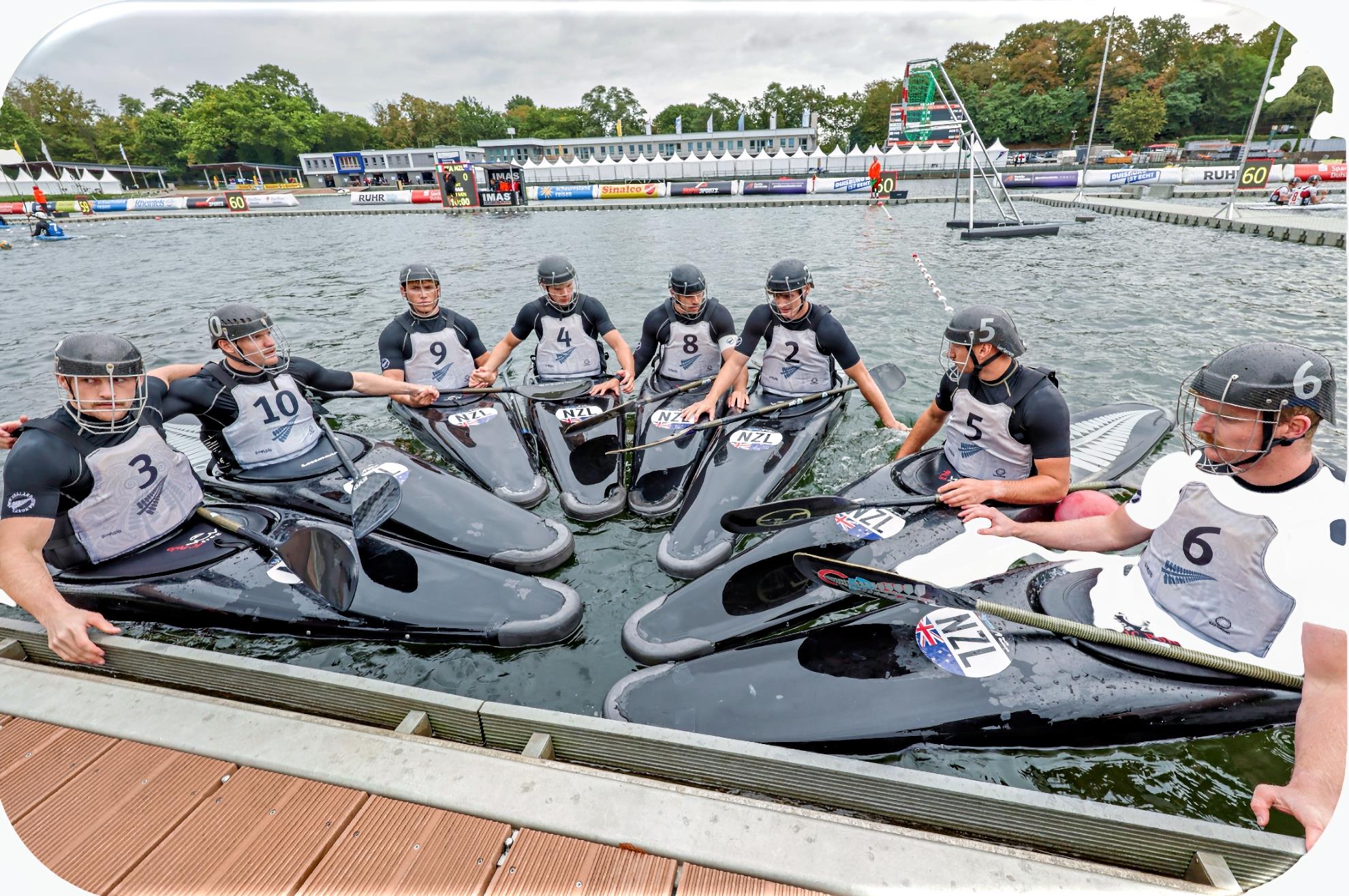

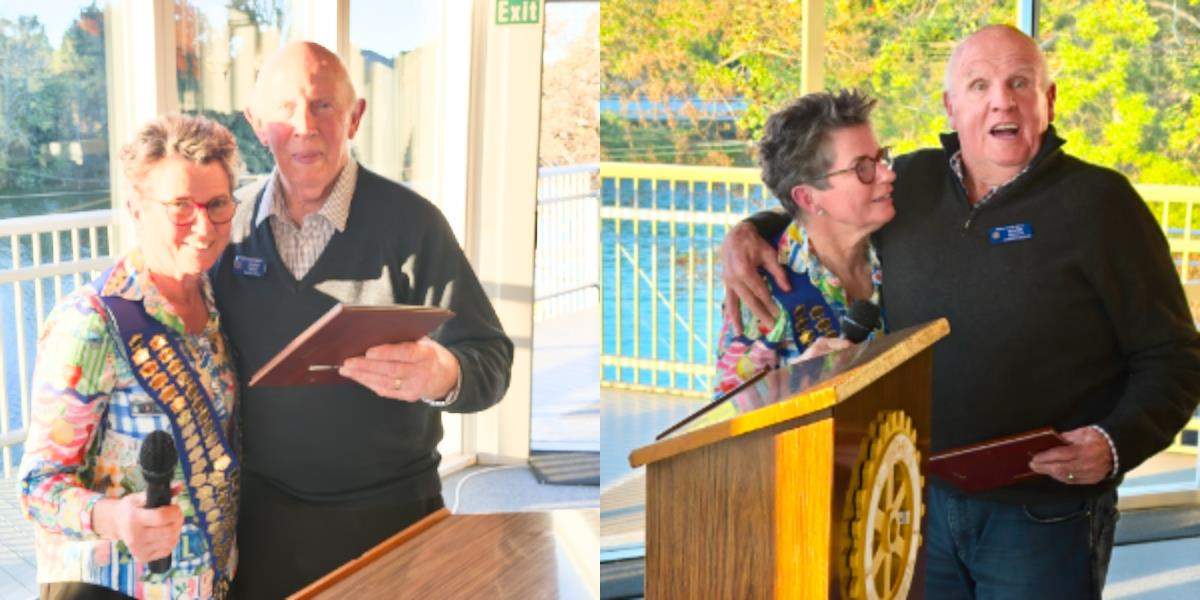





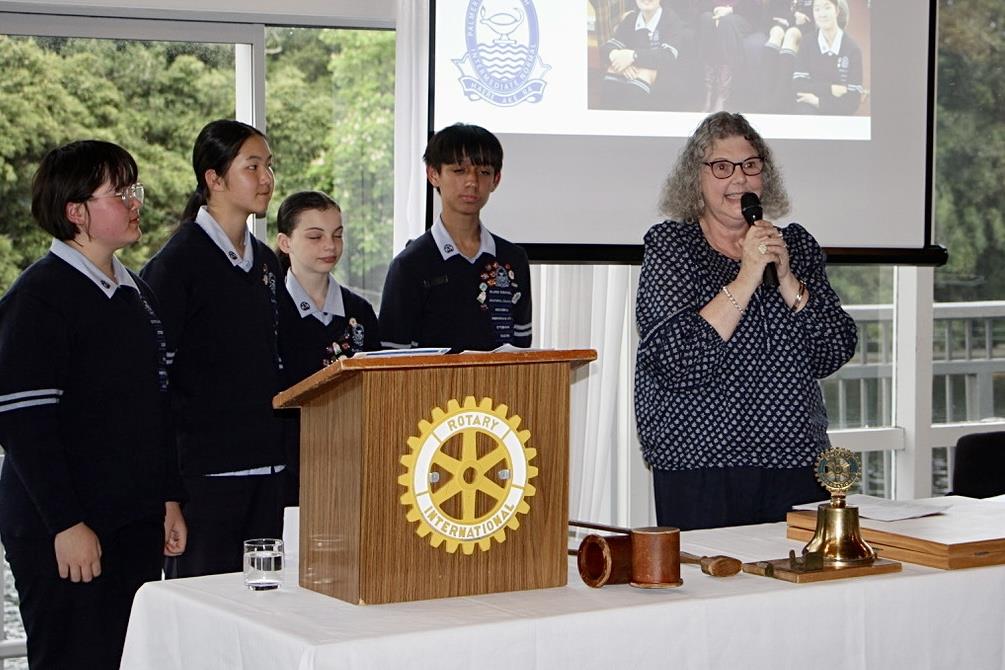


 Rudy’s most recent holiday took him sailing along the



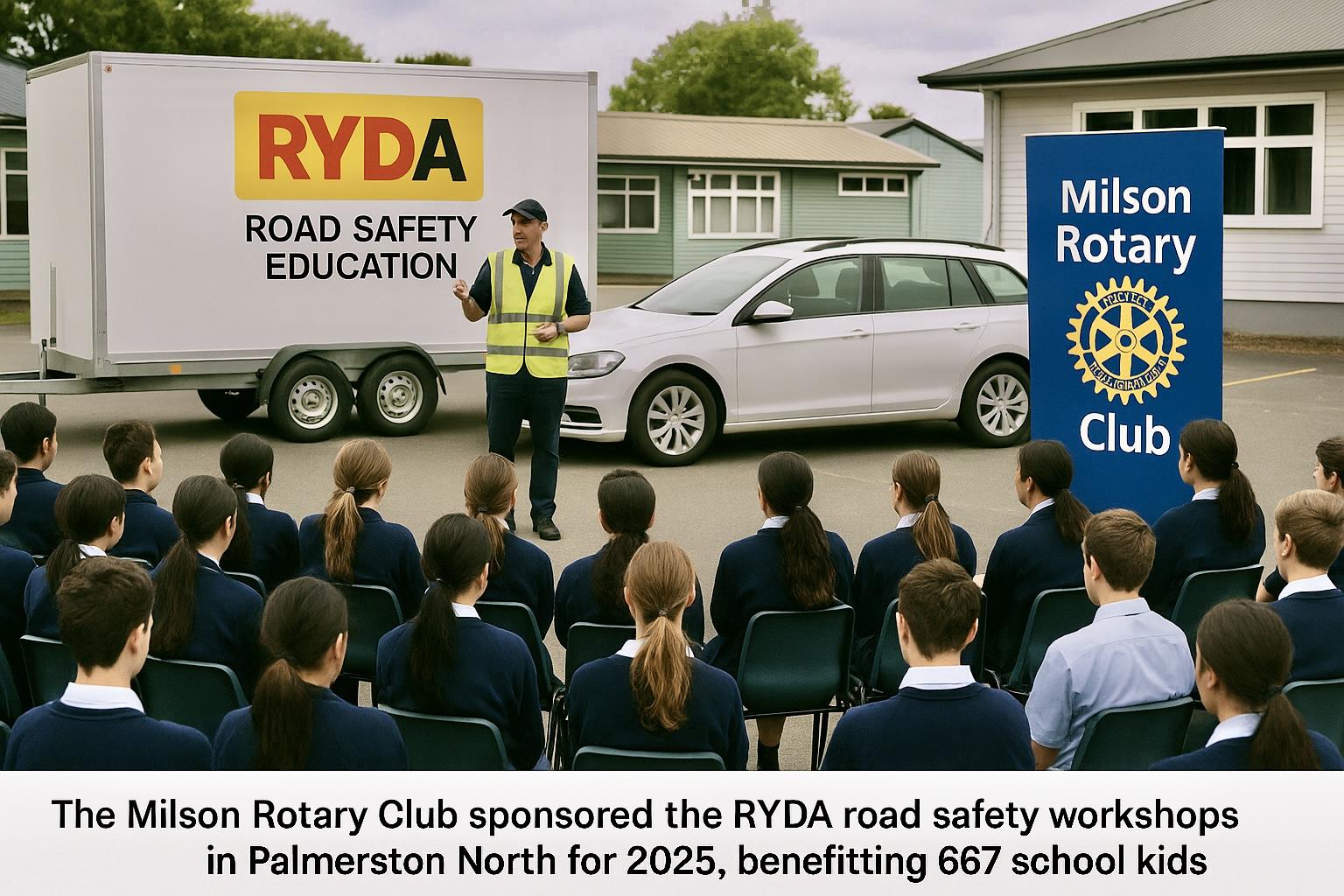




 Bruce Wackrow, a dedicated member of the Milson Rotary Club since February 1, 1974, has left a legacy of over 50 years of service, camaraderie, and community impact. Throughout his time with the club, Bruce held various leadership roles, serving as both President and as a Director on several committees. He was an active participant and a proud Rotarian, committed to both the club’s and the community’s growth.


 Doug Tietjen’s presentation to the Milson Rotary Club on Monday, August 19th, reflected on his journey and the lessons he gathered along the way. His story began on the rugby field, where he played as a flanker for Manawatu during an era of great pride when Manawatu held the Ranfurly Shield from 1976 to 1982. He was born in Australia but has deep ties to this region, having attended Palmerston North Boys’ High School and Massey University in the 1970s.


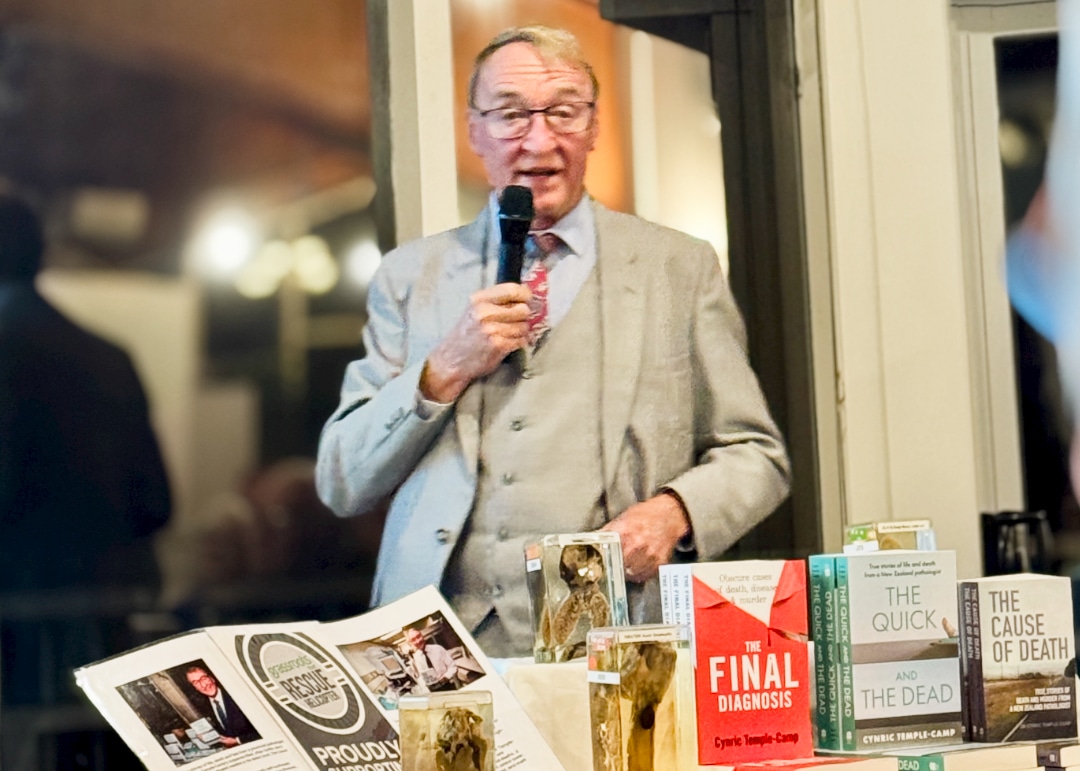


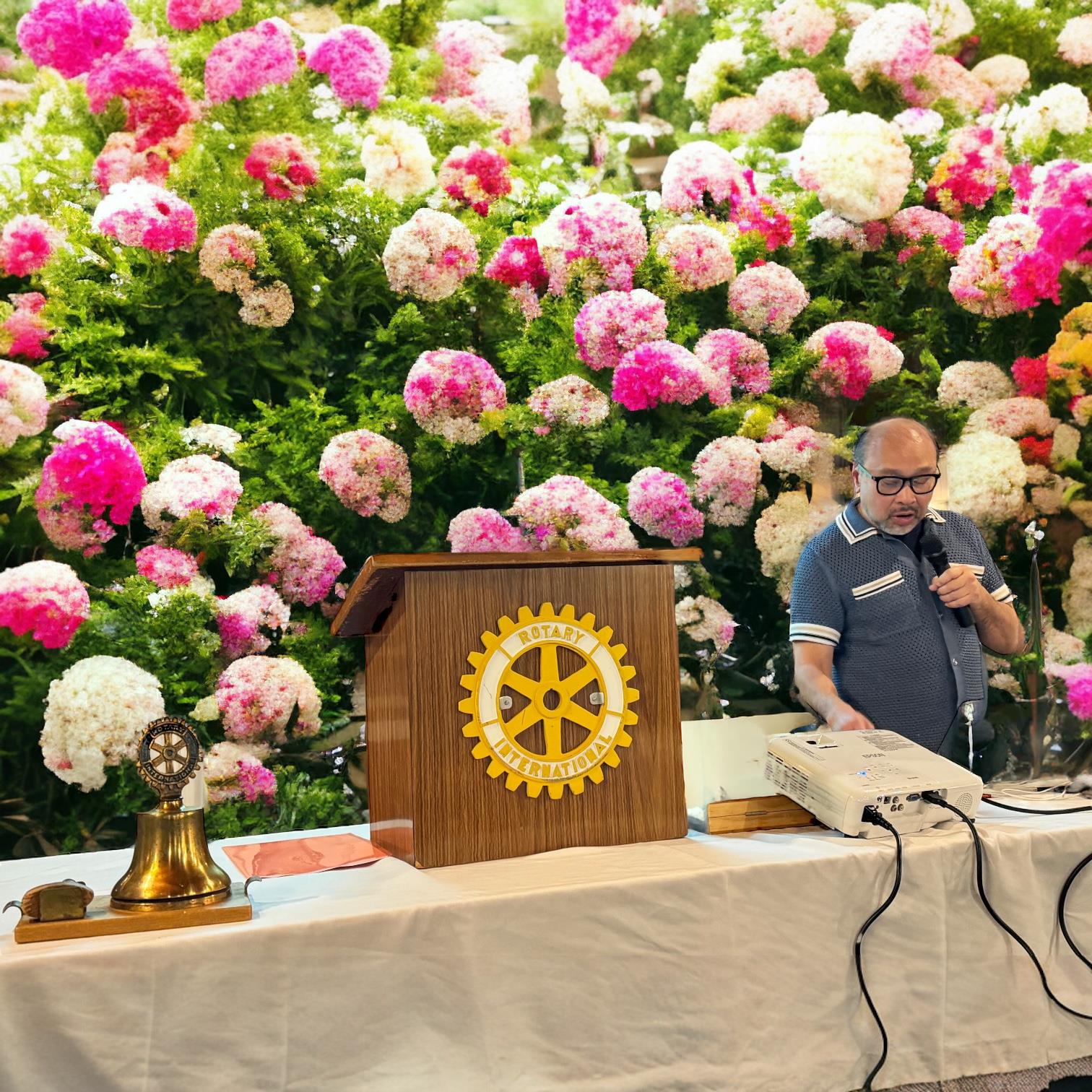


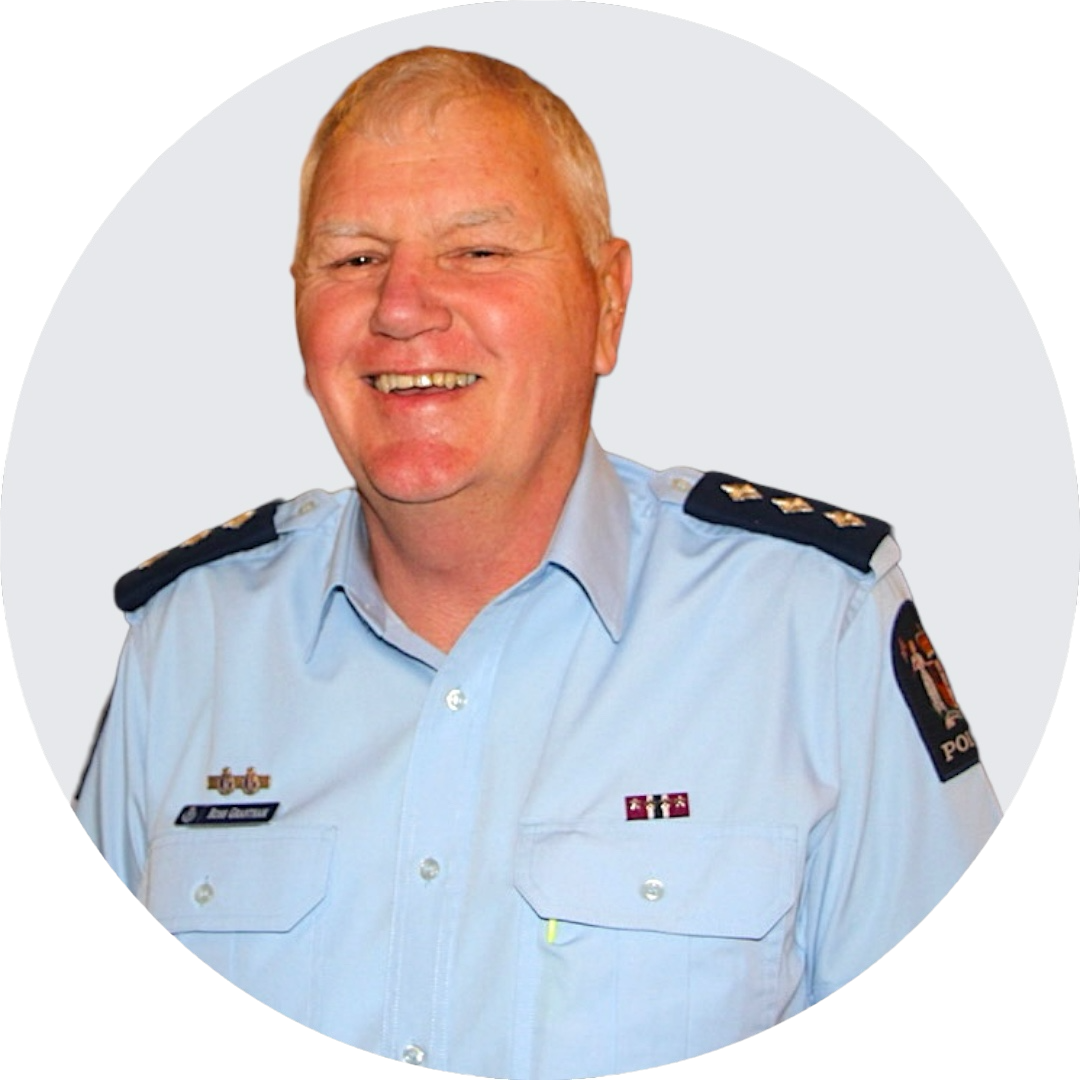 Inspector Ross Grantham, a seasoned police officer with 46 years of experience, offered insights into his career and the core values guiding his work as the Manawatu Area Commander. The Manawatu Area is part of the CentralPolicing District, which covers an area that stretches from the North Taranaki Bight across to Ruapehu, south to Otaki in the west and across to the Dannevirke, Eketahuna & Pongaroa in the east. It is a large and diverse geographical area. He considers his role a privilege, emphasising the honour of leading a community-focused team and collaborating with both his police colleagues and local citizens.
 Professor Ralph Sims, a distinguished researcher in energy studies and a Nobel Peace Prize co-recipient (2007), delivered a compelling presentation to our Rotary Club on the urgent challenges posed by climate change. Professor Sims’s expertise, developed since the 1970s at Massey University, focuses on innovative solutions to mitigate the effects of climate change.
 Olivia recently participated in the 2024 National Workers Science and Technology Forum, thanks to sponsorship from our Rotary Club of Milson. In her speech, she shared her transformative experiences and newfound perspectives gained from the event.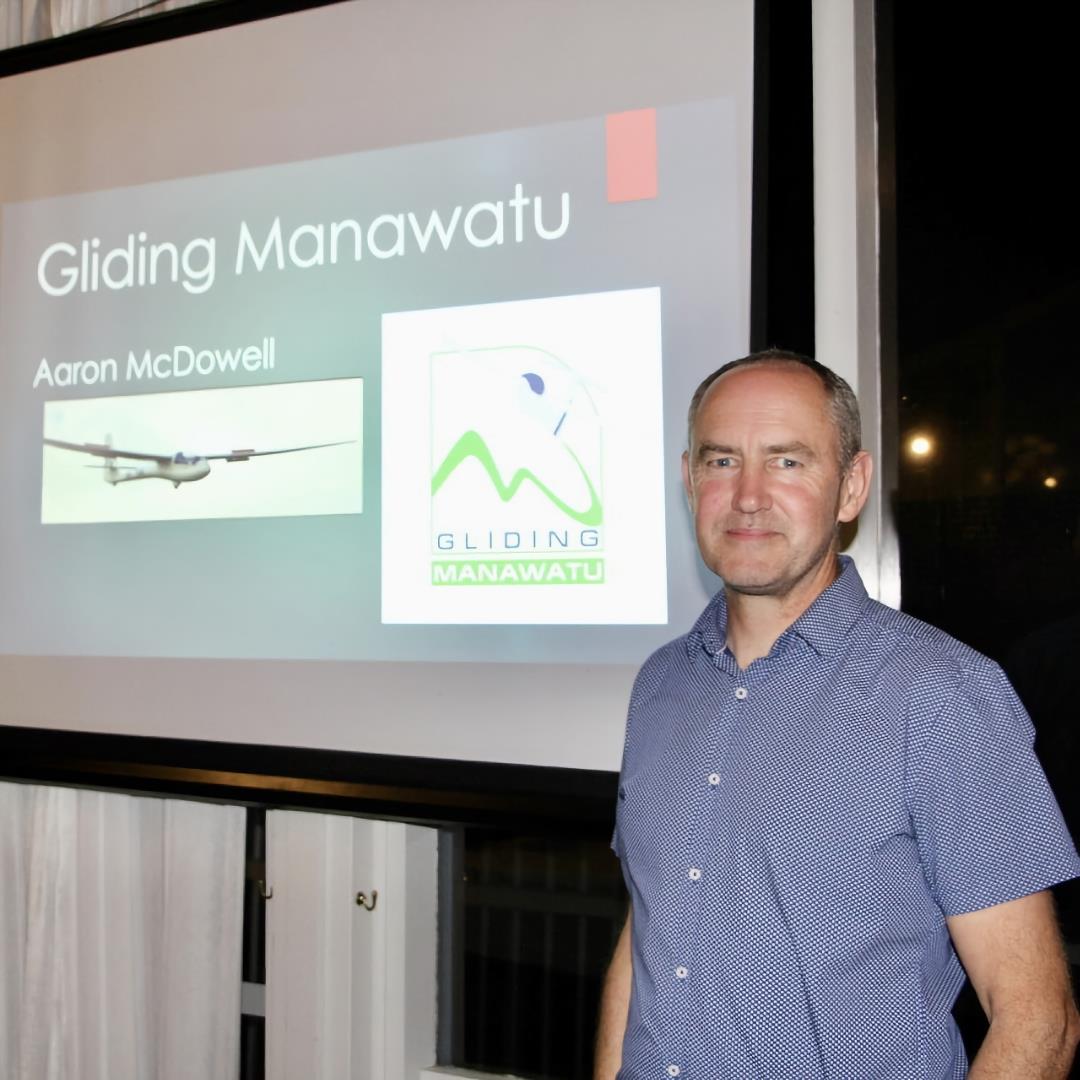
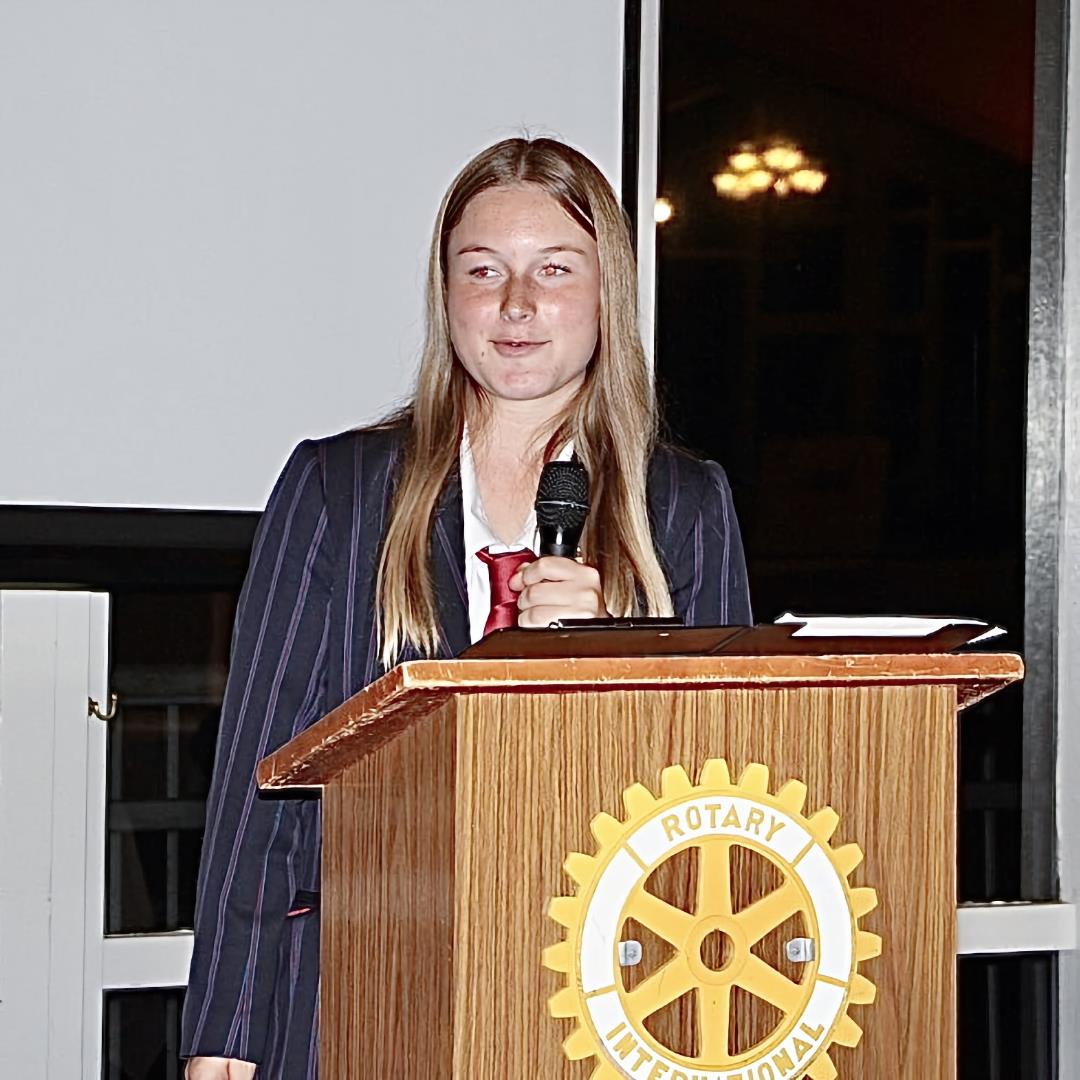
 Drawing from his extensive experience in insurance investigations, Nigel delivered a compelling presentation to the Milson Rotary Club that shed light on the intricate world of uncovering fraudulent insurance claims. He began by recounting his journey, which started with volunteer work after leaving school, a successful career in the Police force and eventually led to a career in insurance investigations. Through captivating case studies, He vividly demonstrated the complexities and challenges inherent in his work.
 Speaker: Ang Rainham, Programme Director, Midcentral DHB
 Amidst the rich tapestry of Edinburgh's festival season, one man found himself at the forefront of a global spectacle. Tim Cook, a seasoned Trumpeter with the New Zealand Army Band, embarked on a journey that took him from Palmerston North to the iconic Royal Edinburgh Military Tattoo stage. His experiences at the Royal Edinburgh Military Tattoo offered a glimpse into the dedication, artistry, and sheer scale of this iconic event.
 John, a recently retired specialist anesthetist, reflected on his illustrious 40-year career with a sense of fulfilment and pride. His journey, spanning from England to New Zealand, offers a compelling narrative of dedication, innovation, and transformation within the field of anaesthetics.
 Jacob Pritchard's speech to the Milson Rotary Club provided insights into his background, experiences, and the internship opportunity he received. Born in the Rangitikei and Manawatu regions, Jacob developed a passion for music early on, leading to his involvement with the Rotary Youth Exchange through mentors from the Feilding Rotary Club. He expressed gratitude to the Nelson Rotary Club for their generous assistance.
 The sun dips below the ancient stone walls of Edinburgh Castle, casting a warm glow on the cobblestone streets. The air is charged with anticipation as the crowd gathers in the historic esplanade. Bagpipers tune their instruments, and the beat of the drums echoes through the narrow alleyways.
 Notification of Passing - Wendy Blithe
 In the spirit of celebrating Milson Rotary’s 50th anniversary, President Glen invited three of our wise men to reflect on some significant events in our club's past. As we were running out of time, Glen wisely deferred the third until 2024.
 StarLight is a non-profit organisation that supports mentally ill patients in hospitals and the community by providing welcome packs and gifts. They aim to bring joy and hope to those who are struggling with mental illness. Kathy Simpson started the organisation in Auckland, New Zealand, where she gathered presents for mental health clients for about ten years. StarLight has also received donations from various organisations and community clubs such as Manawatu Rotary Clubs, Air NZ, BNZ, and McDonald’s Manawatu.
 Kane Parsons, a local artist and musician, was a Guest speaker at the Milson Rotary Club. He shared insights into his multifaceted artistic and educational endeavours. He started his speech with gratitude, acknowledging the pivotal role played by his parents and the late Pat Snoxell in making his creative journey possible.
 Ngā mana e ngā reo, nei rā te mihi nui ki a koutou. Nau mai ki tēnei wāhia tāhua o tātou, o Rangitāne, o tātou te iwi Māori, o te rā ki a koutou.
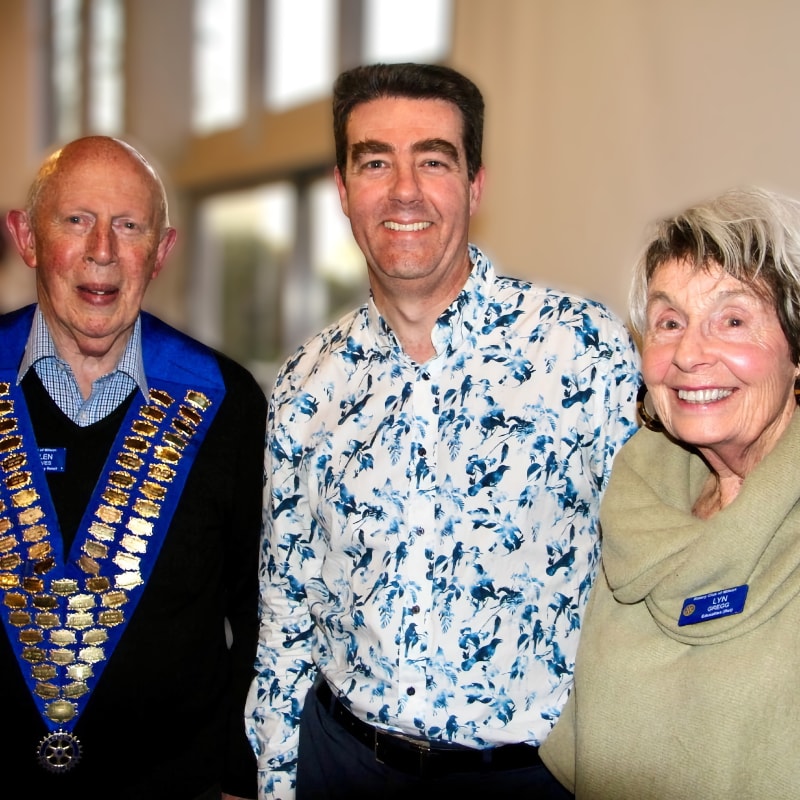 Mike Clark presented an inspirational and motivational talk to our club. He spoke about his personal journey leaving Zimbabwe and coming to live in NZ – talking about the huge contrast in personal freedoms and safety between the two countries. He challenged us to think about how we could help keep NZ unique. He noted that Rotary and other clubs like us are doing great things and making a real difference. However, people don’t always know what we do.
 Prepare for a riveting evening as we welcome an extraordinary leader to the Milson Rotary Club stage on October 16th! Te Pūao Māori ward councillor Debi Marshall-Lobb has emerged as a true force for positive change, exemplified by her appointment as Deputy Mayor on October 25, 2022.
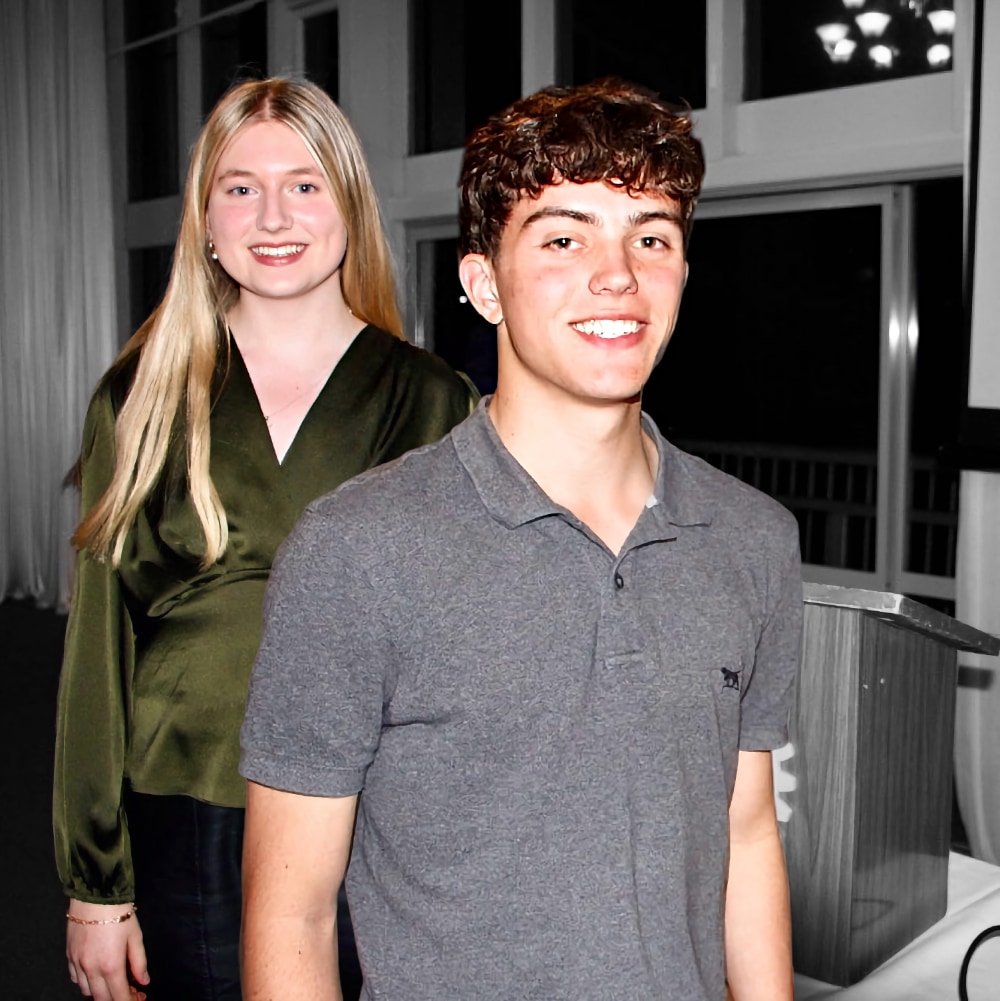
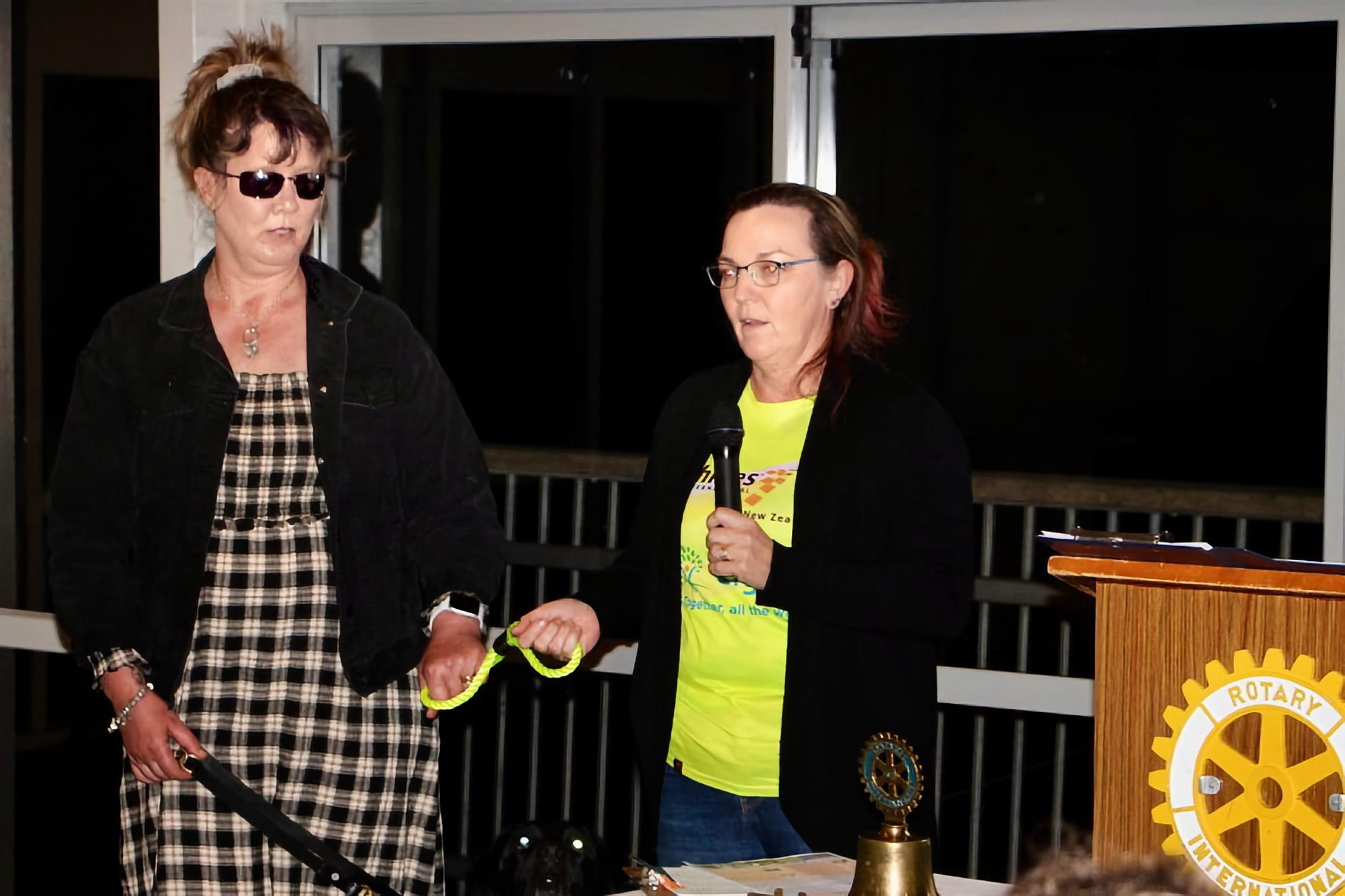

 Achilles Manawatu - Sponsorship for the Auckland Marathon

 On the 7th of August 2023, Milson Rotary hosted Marianne Poole. a true pioneer in women’s football. Marianne shared her experiences from the early days of women’s football when it faced limited recognition. Her contributions in Manawatu during the 1960s and 1970s were truly inspiring, laying the foundation for the sport’s growth.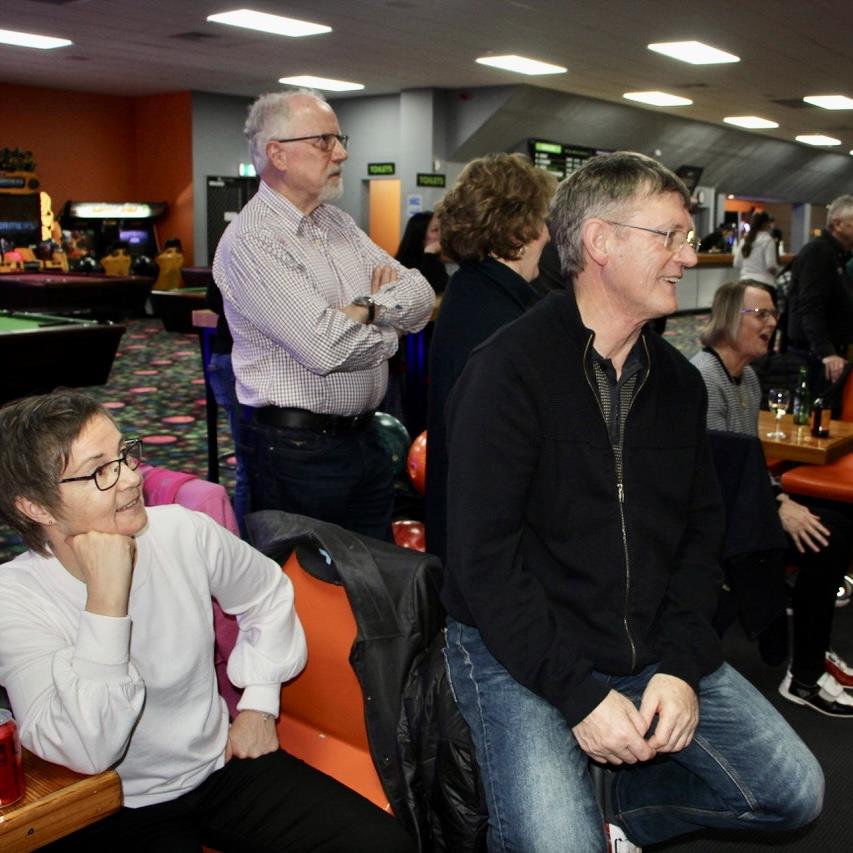
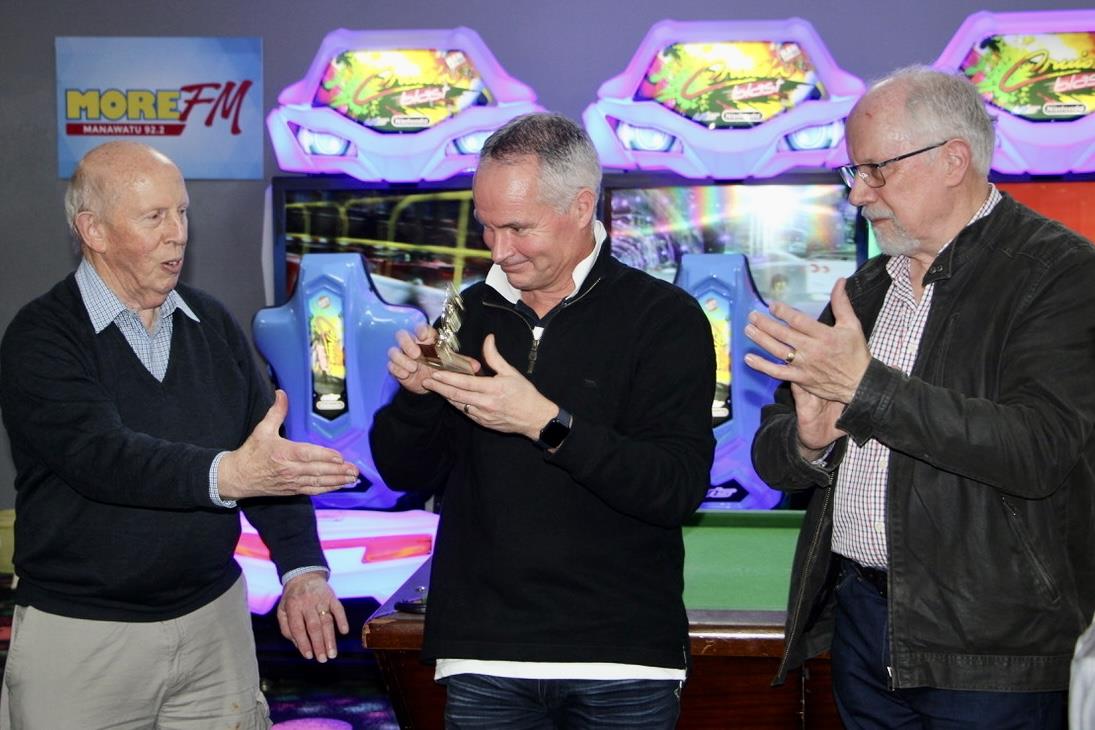
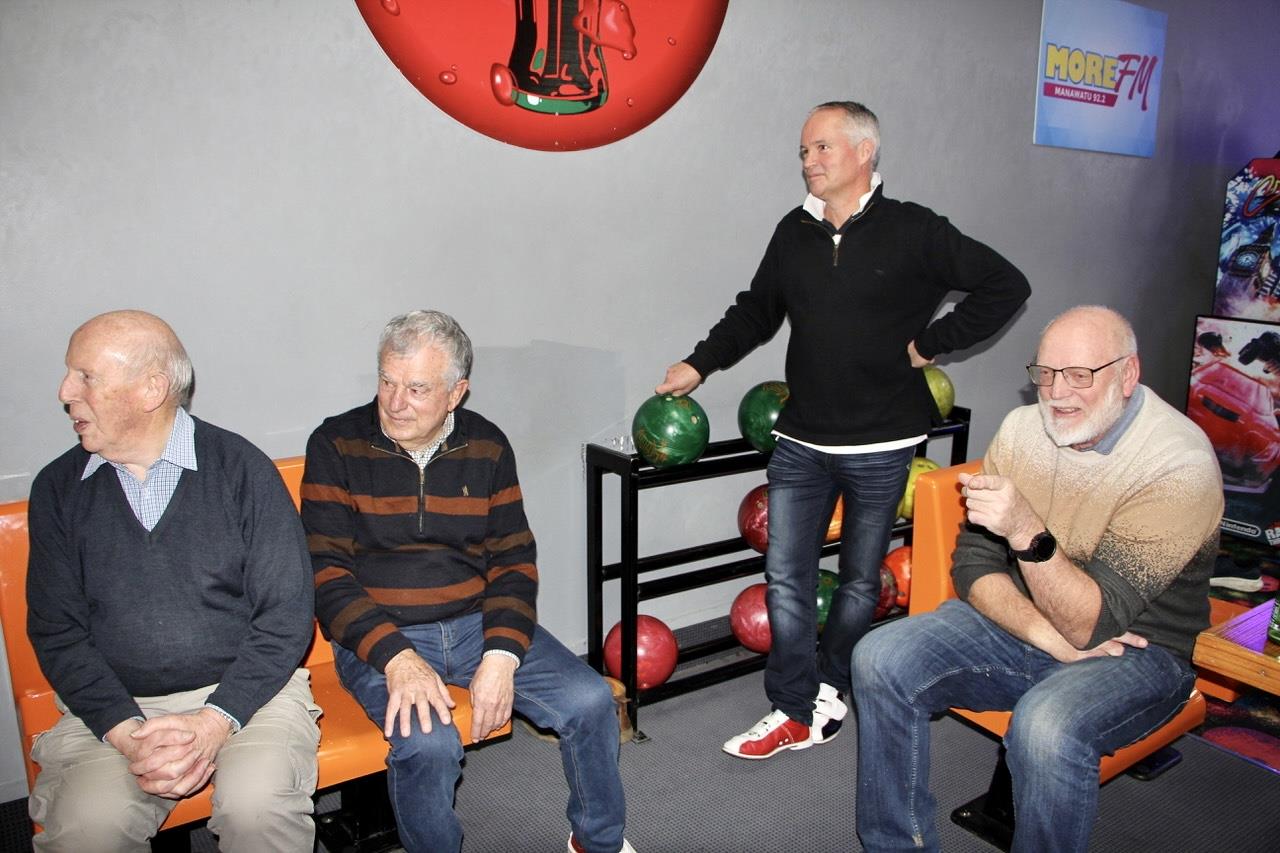
 Calling aspiring young leaders of the lower North Island. Are you ready for an electrifying and life-changing adventure? Introducing Rotary's sensational RYLA program, a five-day residential high-energy extravaganza designed exclusively for dynamic individuals between the ages of 18 and 24!
 Roger and Mike recently participated in this year’s “Bangers to Bluff” Rally, an annual charity event organised by the Rotary Club of Half Moon Bay (Inc). With its vision of assessing its potential as a future fundraiser for our very own Milson Rotary, this event offered them an opportunity they couldn’t resist. And what an adventure it turned out to be!


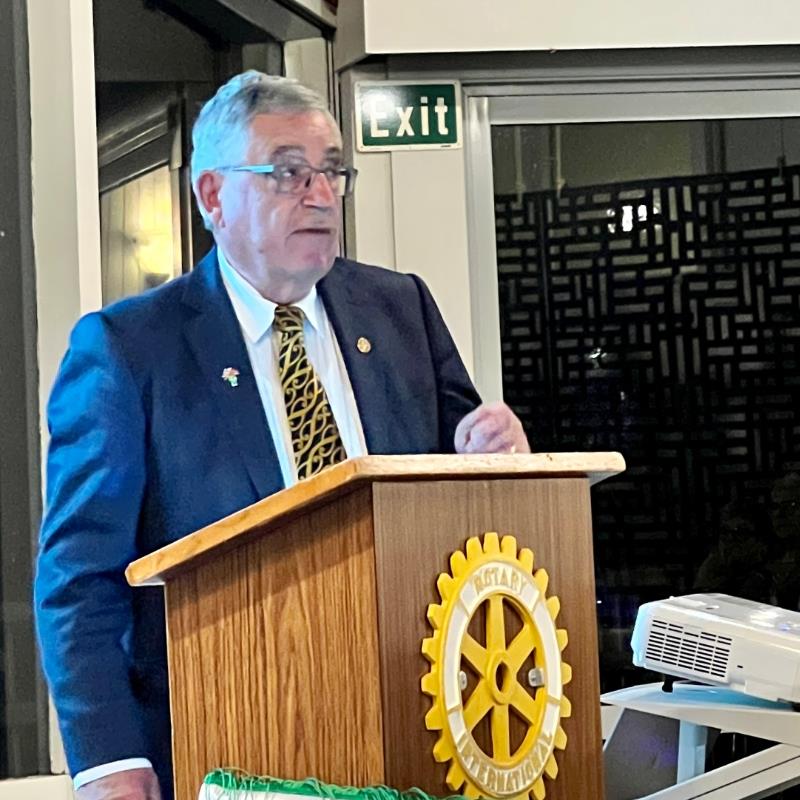
 On Monday, 12th June, we heard from Milson Rotary Club member Susie Elms, who had recently travelled to Nepal. She spoke on "Everest Base Camp, the prep and trekking at altitude."

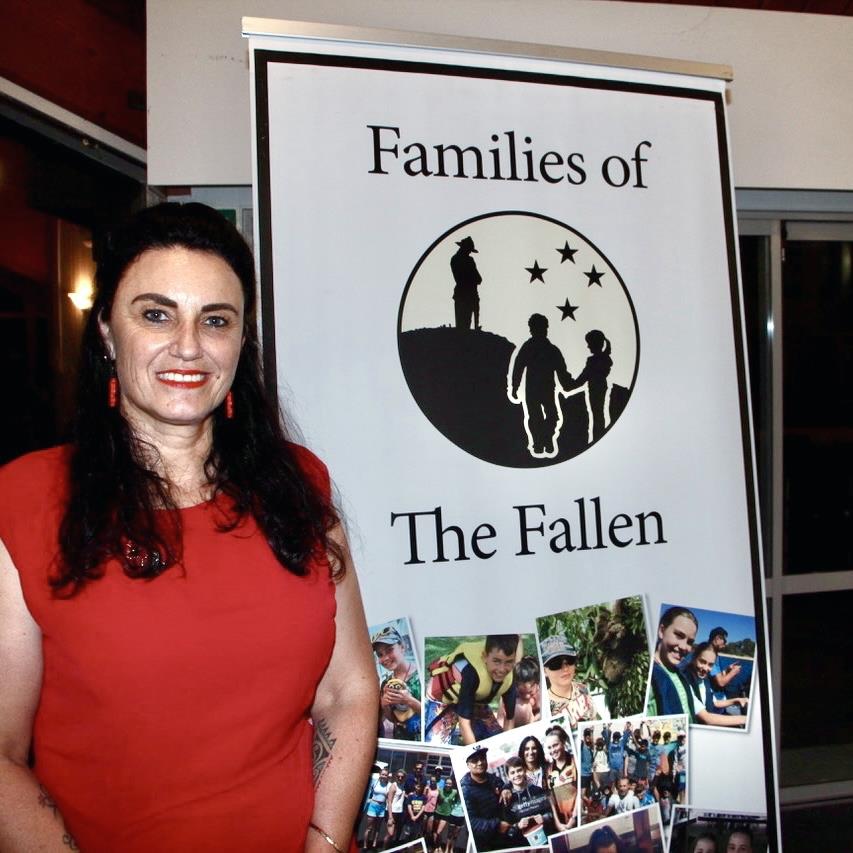 Tina is a JP, a trained teacher, and a death doula who accompanies a person (and their family/whānau) as they transition out of their life (also known as a Death Midwife or Deathwalker). She joined the meeting to share her journey and how she now serves her community following the death of her husband (Corporal Douglas Grant) in Afghanistan 12 years ago.
 Since 2003 the Milson Rotary Club’s major fundraiser has been the Courtesy Ford Charity Golf Classic.


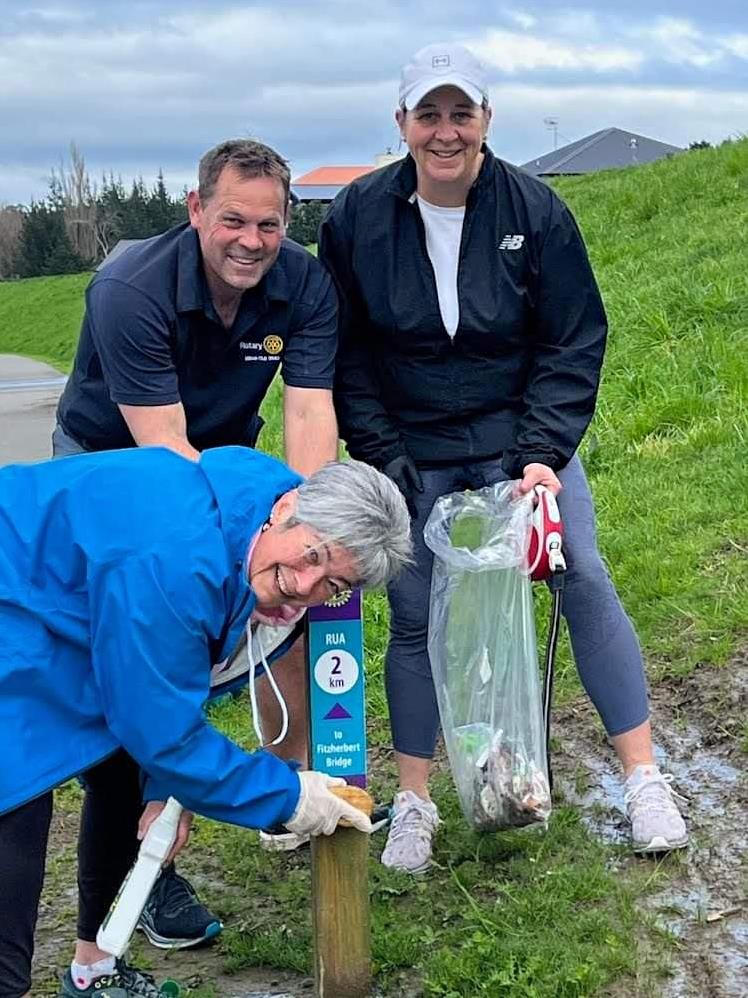
 The final community fundraiser for Milson Rotary was our annual car parking duties at the Christmas Night Market held at Awapuni Race Course on the 6th and 7th of December 2022. Visitors to the Night Market were asked to donate a gold coin in exchange for car parking. The result was a large sum of money being donated to the Arohanui Hospice.






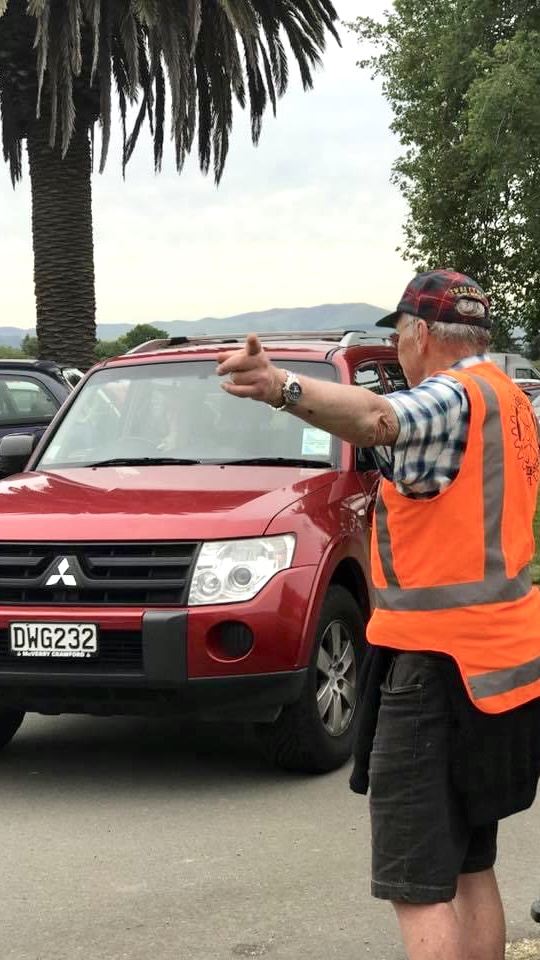 The Magic of Christmas Night Market and Mid Winter Markets are held at the Awapuni racecourse annually.
 Simon began his talk by declaring that we were “. . . the perfect audience to preach to the converted!. .”
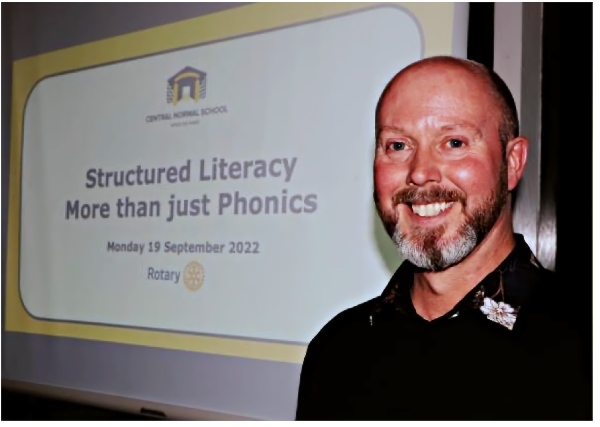 On the 19th of September, we were treated to an informative talk from Regan Orr, Principal/Tumuaki of Central Normal School and current President of the Manawatu Principals’ Association.
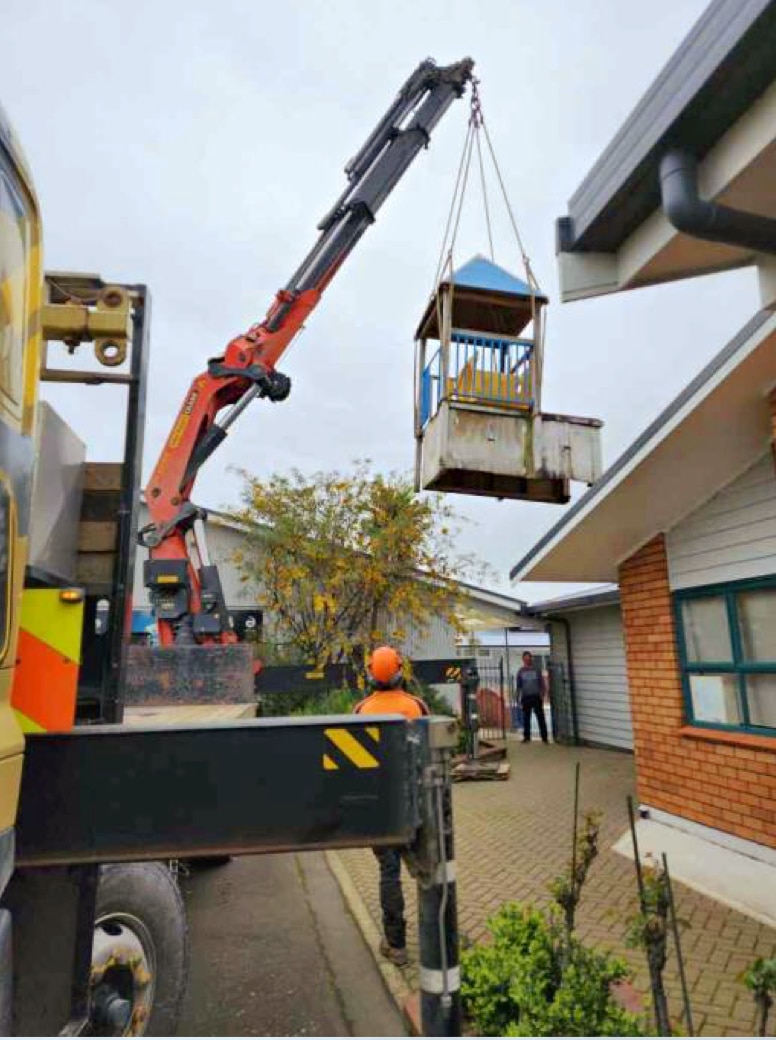 A big thank you to the group who removed a redundant piece of play equipment from Central Normal School. The process began on Friday afternoon and was completed Saturday morning. Brett contributed a crane, and several workers, Malcolm and his son Robert, Anthony, Evan and Alan, were all part of the team. With valuable help from McIntosh Cranes (Thank you, Brett)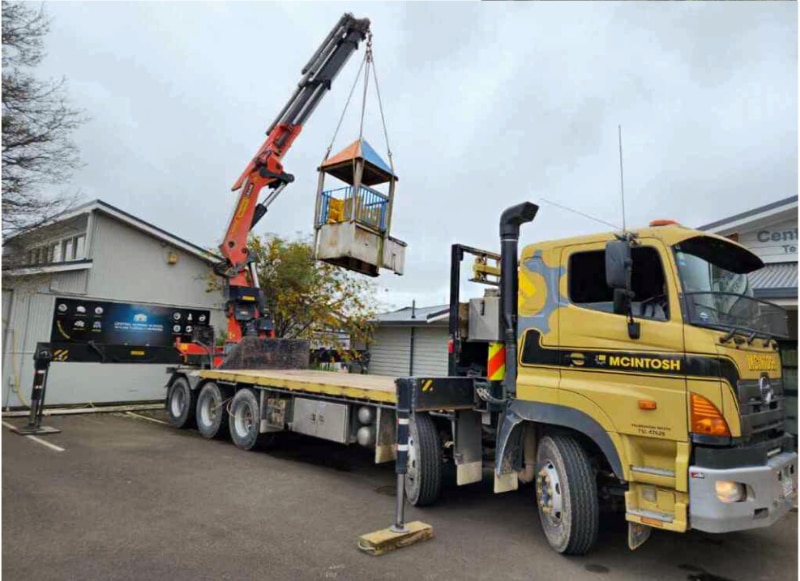

 Niki Burtenshaw, Team Leader, Community Libraries, is based at Highbury and provided the Club with insight into the Community Urban Food Forest and Maara Kai - vege gardens.
 Kevin has had a very interesting career to date, heading up some major companies and organisations. Alongside this, he has also admirably and successfully fought two battles with cancer.