Well, team, it has certainly been a busy month! The Roger Simms 10-pin Bowling Competition, held on 21 September, was once again a fun and friendly, if somewhat competitive, event. Congratulations to Derek, our overall winner, who took home the trophy. It was wonderful to see such a great turnout and everyone enjoying themselves. I know the late Roger Simms would have been delighted.
On 25 September, we held our first quiz night. We had a full complement of teams of varying sizes and abilities, which made for a fantastic evening. Sam at the Local did us proud, providing excellent service, generous platters and the necessary refreshments. Congratulations to Susie’s team, who took out first prize. It was also excellent to break even financially.
On Monday night, we enjoyed an excellent presentation from the SYLO Sing Your Lungs Out group. The group supports people experiencing breathing and chest difficulties, and it was inspiring to hear such positive comments about both the enjoyment participants gain and the physical benefits they experience. We are pleased to have contributed $500 towards the group’s ongoing costs.
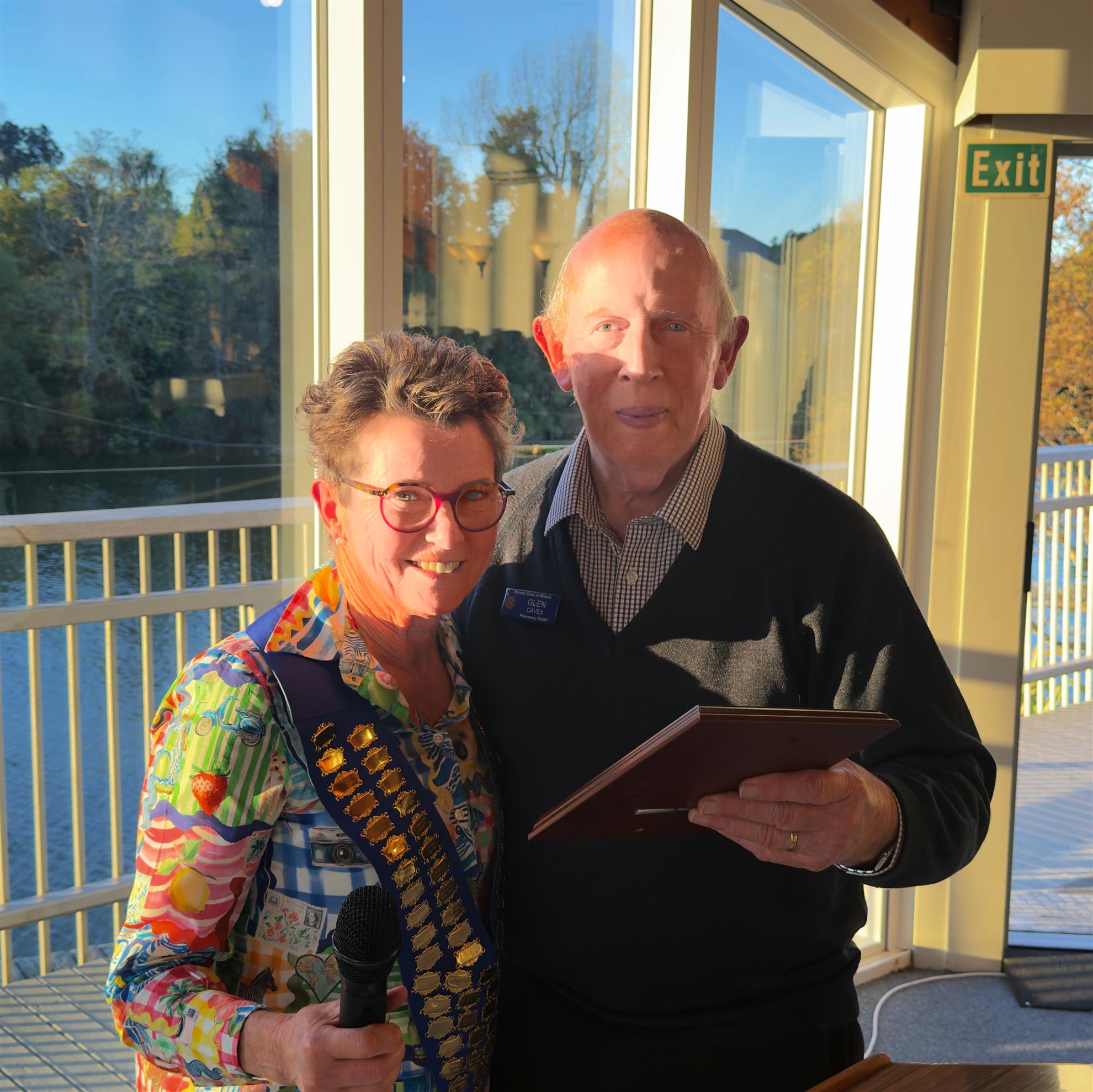
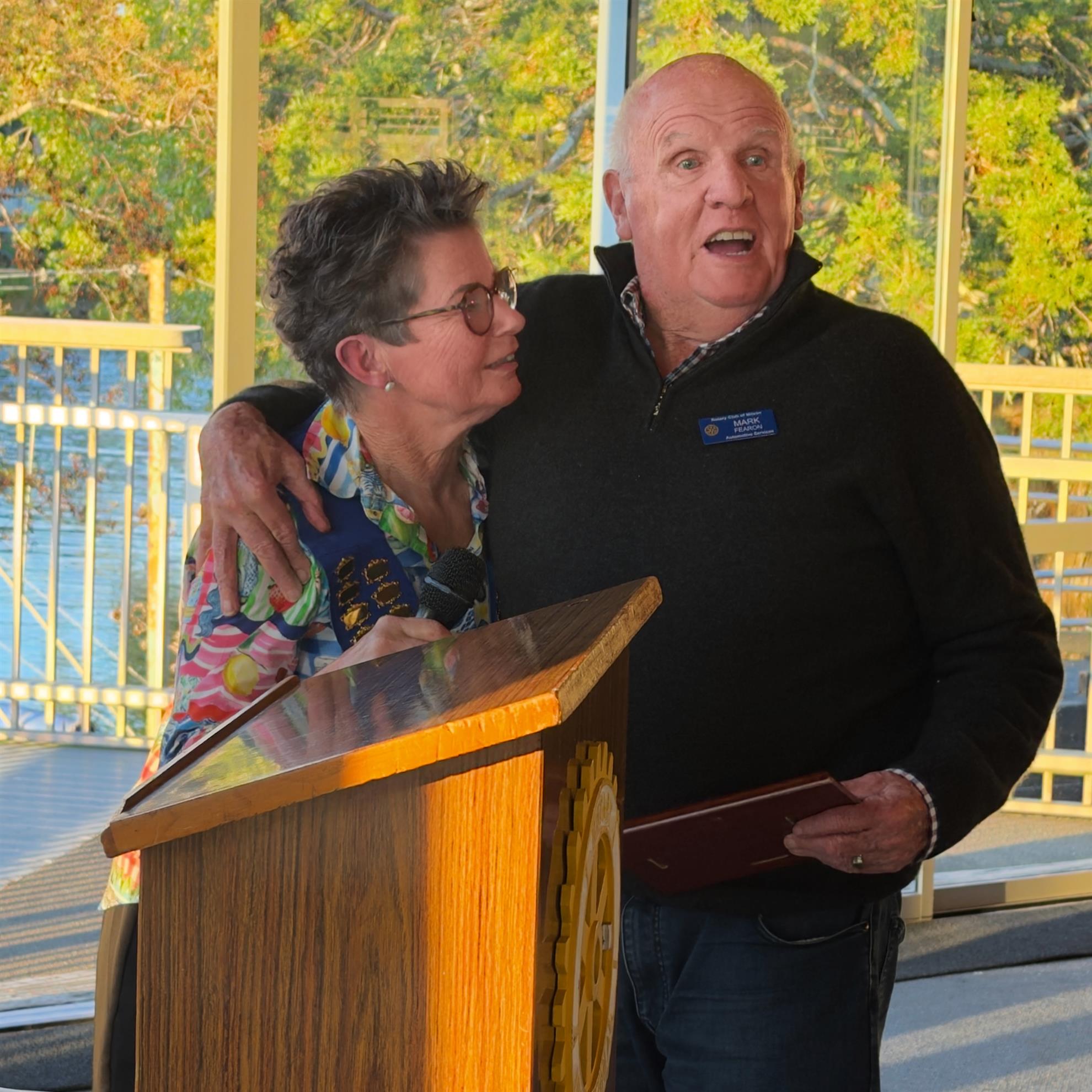
A special highlight of the evening was presenting plaques commemorating 56 years of Rotary service by Glen Caves and 50 years by Mark Fearon. It was a real honour to recognise these remarkable milestones and to reflect on the significant contributions Glen and Mark have made to Milson Rotary and to Rotary across Aotearoa New Zealand.
We are now heading into a busy end to the year, with our AGM on 19 October, our club meeting and Board meeting on 2 November, and changeover on 16 November.
We also have a few projects to complete before year-end, and Anthony has these well in hand. The marker post refresh is scheduled for 7 November 2026, and Anthony will confirm a date for our work at Alzheimer’s Manawatu. An email will also be sent shortly about a final visit to the TRYP Hotel. Our first visit was during the renovations, and the hotel is now getting very close to opening. Numbers are likely to be capped, so places will go to the first 20 people who register. Mark will organise the visit again, with further information to follow by email.
And finally, please remember World Polio Day on Saturday, 24 October 2026—an important opportunity to recognise Rotary’s continuing commitment to ending polio worldwide.
Have a wonderful two weeks and enjoy the sunshine!
Kind regards, Barb
P.S. If you decided to come to the Centrepoint show, you will need to pay for your tickets by the 16th October at Centrepoint
Christine Archer-Lockwood on singing your way to better breathing
Music therapist Christine Archer-Lockwood joined us to talk about Sing Your Lungs Out, known to its members as SYLO, a weekly singing group for people living with chronic lung conditions. She brought along two of her members, who shared stories that had the whole room listening closely.
Christine said it felt special to be with us, as walking in brought back memories of her late parents.
A Palmy girl comes home
Christine was born and raised in Palmerston North. She left school to follow her love of music, heading to London to train and study, and ended up spending some 43 years away. She returned to New Zealand in 2017, first to Wellington, but when her parents' health began to fail she came home to Palmy and set up here.
Where the idea came from
The idea of singing for lung health was already well established in England. A friend of Christine's, a fellow musician who is also a respiratory physician, set up the first Sing Your Lungs Out group in Wellington and researched it from the very beginning. Her findings were published in a British medical journal.
Christine was quick to make it clear that singing doesn't cure anything. Members still live with their lung conditions. But regular sessions help people manage their breathing much better, and the feel-good factor turned out to be huge. Participants reported things like getting through a winter without a hospital admission, or being able to cut back on medication.
There are now groups in Wellington Central, Wairarapa, Nelson and Palmerston North, where the local group has been running for nine years.
Why singing works
Most of us breathe without thinking about it, but not always well. Christine explained that many people breathe high in the upper chest rather than using the diaphragm the way we all did as babies. For people with lung conditions, the focus tends to be on getting air in, because that's where the anxiety sits.
The trick is actually to breathe out slowly. Relax at the end of the out-breath, and the air fills back in naturally through the nose, without you having to tell yourself to do it. And since you can only sing on the out-breath, singing becomes a far more enjoyable way to practise than counting slowly to ten. Christine chooses songs with an easy pace and enough space between lines for a comfortable refill.
"It's not about the singing. That just happens, and I can guarantee we'll find a song that you enjoy singing."
Christine Archer-Lockwood
Inside a session
The Palmerston North group meets weekly at the Learning Centre and is timed to follow an existing walking exercise group, so members don't have to go home and come out again. Getting out the door takes real effort for many of them. When Christine first spoke to the walkers, some told her they could hardly talk, let alone sing. She told them to just come along.
Each session opens with a picture on the screen, often a piece of New Zealand art or a photo of one of Palmy's public sculptures. Members trace its outline with long, slow breaths to settle in. Then it's on to the songs.
Christine picked the songs at first, but the group soon took over. Many members grew up on country music and have been teaching her some great songs. They sing Creedence Clearwater Revival and Crowded House, and they keep an eye on what's happening around the city, recently tackling numbers from 42nd Street. The members have become discerning too, telling Christine when a song's range is too big to sing comfortably. Without ever being taught, the group now drifts naturally into harmony.
The music has a proper rhythm section behind it. Christine leads from the keyboard, her partner plays bass, and pianist Chris Dan joins them for community events. Afterwards there's a cup of tea and plenty of chat about songs, singers and who's who, with lots of laughter.
From the back seat to the stage
Christine originally insisted SYLO was not a performance group. Then the members asked to perform. Each year they now sing a half-hour lunchtime concert at St Peter's Church, and they've been invited to sing at other venues around the city. The pride they take in those outings is plain to see.
Member Rina told us it was the first time in her life she had spoken to a group. She had always loved singing but had to give up singing in church because she would start coughing and couldn't stop. Her healthcare worker suggested SYLO, and after the first session she was hooked. Once the quiet one in the back seat, she now sings in public, and when family suggest she skip a session, the answer is simple: sorry, I've got singing.
Arn Evans grew up in a big family that sang constantly. He learned harmony at the kitchen sink, stuffing a tea towel in one ear so his older sister's harmony line wasn't drowned out by the others singing the tune. Years of heavy smoking took their toll, and by the time he quit, climbing stairs meant three steps and a rest. About nine years ago he heard singing coming from the room next door. Back then he could manage only two or three words before needing a breath. Today he sings long phrases with ease. He told us, with real emotion, that he doesn't know whether he would still be here without the group.
Keeping it going
Around 18 to 22 people come each week, with about 30 on the books. Some members have passed away, and Christine makes a point of honouring them and remembering how much they loved the sessions. One long-standing member recently messaged her from a hospital bed to say she was lying there doing the breathing exercises. For Christine, that's the real win: people taking what they learn home with them, especially for those anxious moments waking in the night.
Funding remains a struggle. For the first two years, Christine donated her time and paid the room hire herself. Grants have covered a projector; a keyboard was donated, and a one-off health grant of $3,000 helped for a year but wasn't renewed. Today a koha bucket goes around each week. Running the group costs roughly $5,000 a year, covering room hire of about $1,000 and a modest fee for Christine's sessions, with all her preparation time on top.
New members come through doctors, flyers and word of mouth. The group is kept for people with respiratory conditions, so everyone can feel comfortable with their glass of water, take their time, and never feel embarrassed about a cough.
Christine warmly invited club members to sit in on a session and see SYLO in action. If you know someone who might benefit but is convinced they can't sing, pass this on.
Our thanks to Christine, Rina and Arn for a moving and uplifting evening.



 The Chalet